
Last updated September 22, 2026
Free on-site gate assessment - hinges, posts, and your LiftMaster or Nice gate operator checked before anything is quoted
The assessment is free and the quote is the invoice.

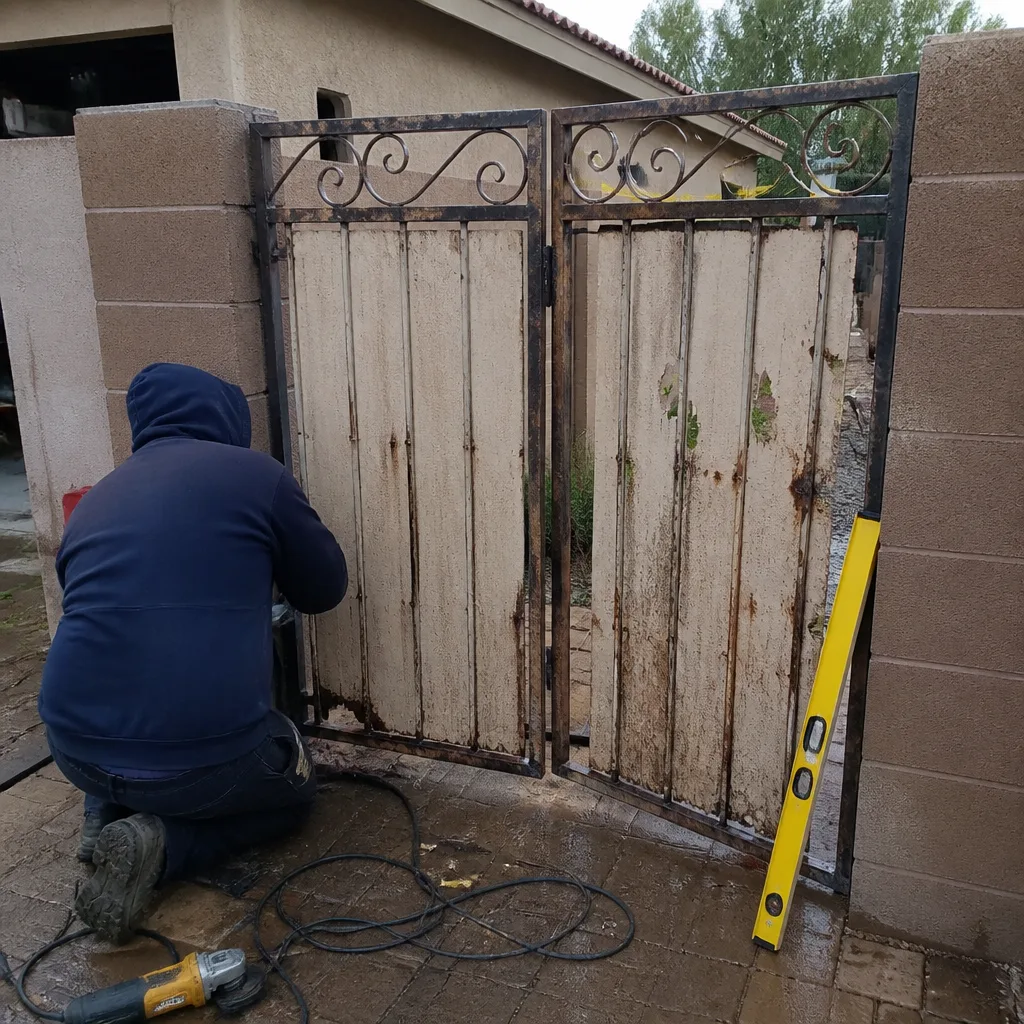 Before
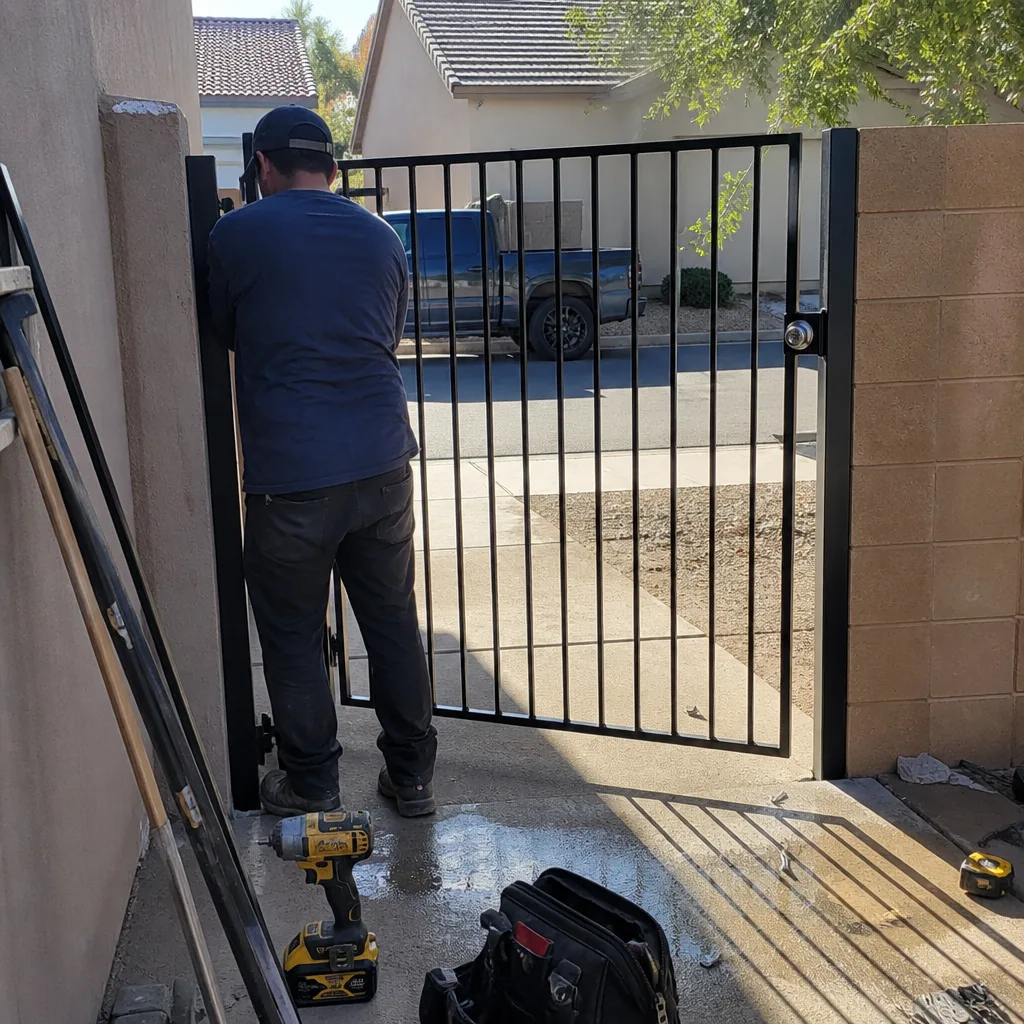 After
After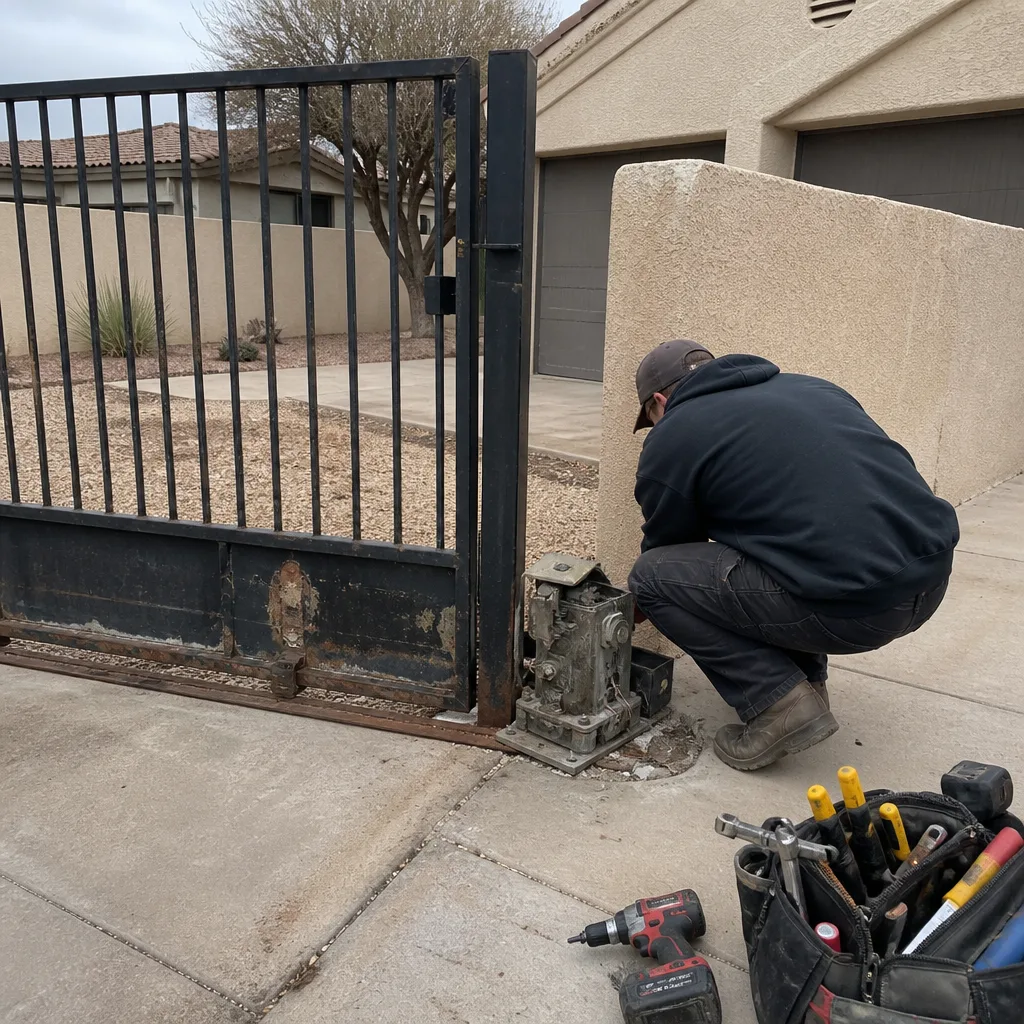 Before
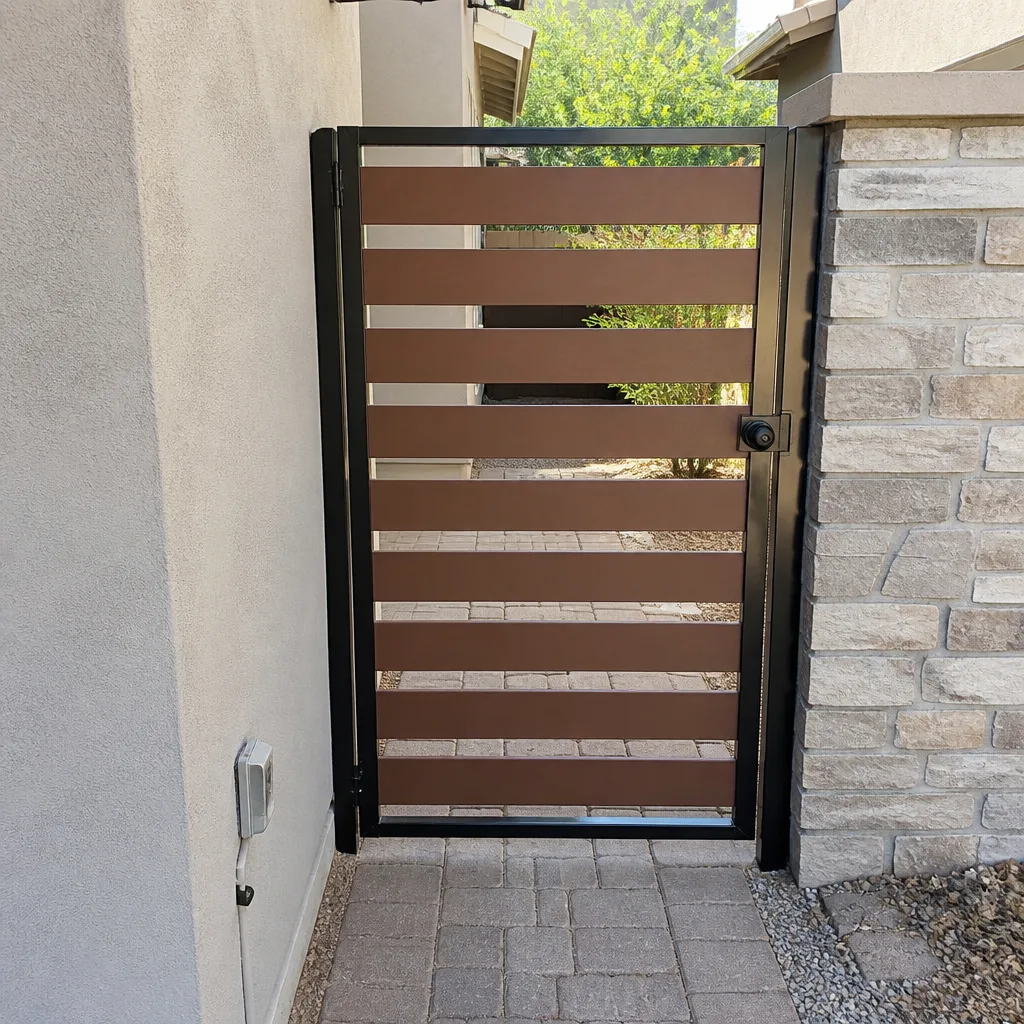 After
After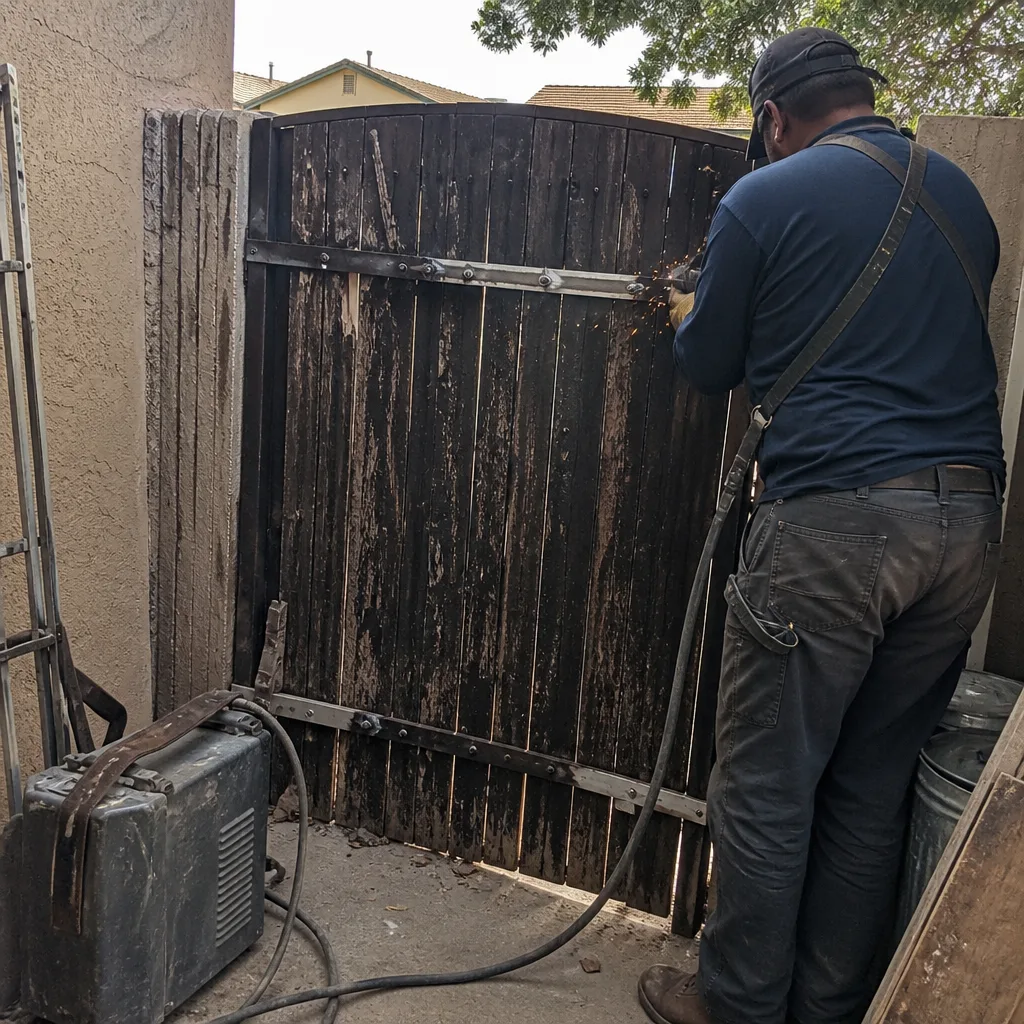 Before
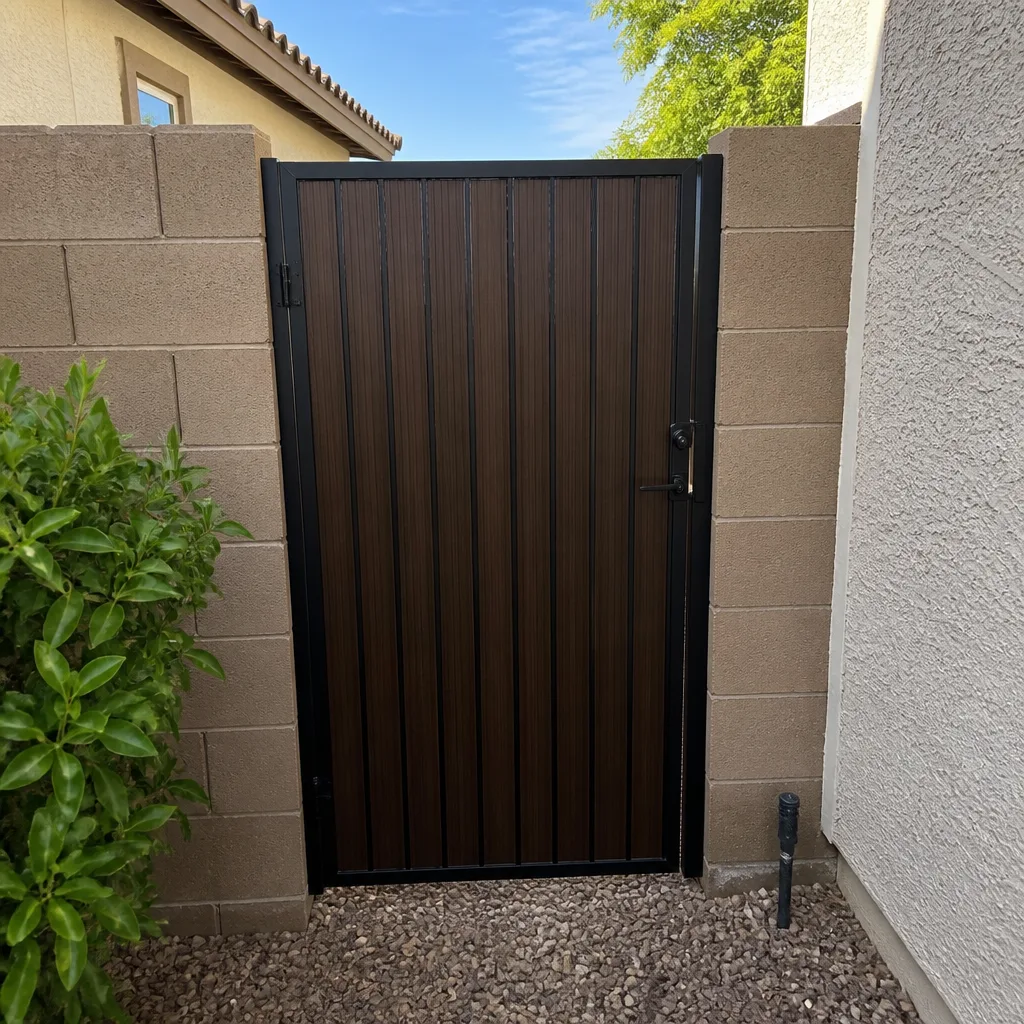 After
AfterThe Complete Guide to Gate Repair in Gilbert
Gilbert’s summer pavement surface temperatures exceed 160°F. Gate hardware bolted to south-facing masonry columns absorbs that heat daily, and most gate companies diagnose the motor without ever checking what the metal underneath it has done. We’ve found the same pattern across Gilbert neighborhoods from Power Ranch to Agritopia: a technician replaces a $400 circuit board when the real problem was a $45 thermal expansion gap that closed up and bound the drive arm. This guide maps every major gate system component to its Gilbert-specific failure pattern so you can speak precisely about what you have before anyone picks up a tool.
Quick Answer
Our Gate Repair Cost Breakdown: The Gilbert Homeowner’s Reference for 2026 details why Gilbert repair costs typically fall between $180 and $650 for most residential fixes, with full motor replacements running $850-$1,800 depending on brand and arm configuration. Most swing-gate and slide-gate repairs in Gilbert can be completed in a single visit if the homeowner can describe the failure pattern, the motor brand, and whether the gate started binding before it stopped moving entirely. The three root causes we document most often are heat-related hardware fatigue, caliche soil movement, and skipped limit-switch calibration.
Table of Contents
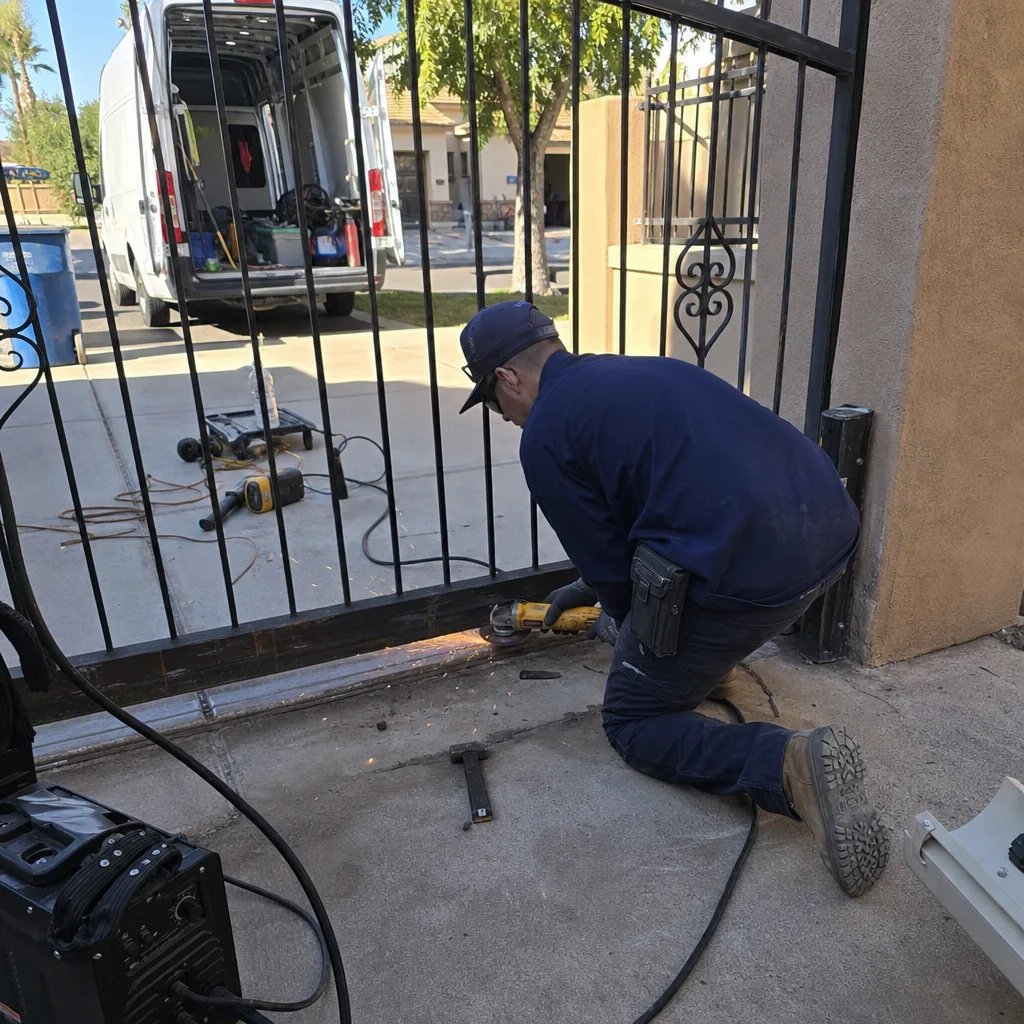
- How Gilbert’s Heat Destroys Gate Hardware
- Caliche Soil: The Hidden Gate Killer
- What Your Gate System Actually Includes
- How to Read a Gate Repair Quote Line by Line
- The Documentation You Should Have on File
- Motor Brands, Parts Availability, and Repair vs. Replace
- Seasonal Maintenance for Gilbert Gates
- Common Mistakes to Avoid
- When to Call a Professional
- Frequently Asked Questions
 Before
 After
AfterHow Gilbert’s Heat Destroys Gate Hardware
Gate automation equipment is rated for ambient temperatures, not surface temperatures. A motor housing sitting in direct sun on a south-facing column in Gilbert’s Agritopia or Morrison Ranch can reach internal temperatures 40-60 degrees above ambient air. That gap changes everything.
We document three heat-related failure zones that appear almost exclusively in Gilbert’s climate and rarely in cooler Arizona markets like Flagstaff or Prescott:
Photoeye Lens Fogging
The infrared photoeye (the pair of sensors that stop the gate if a child, pet, or vehicle crosses the path) uses a polycarbonate lens that outgasses slightly in sustained heat. In Gilbert, we see this on gates with western or southern exposure, particularly in Adora Trails and Spectrum at Val Vista where lot orientation concentrates afternoon sun. The outgassing creates a hazy film on the interior lens surface. The gate still receives a signal, but the margin for error shrinks. A leaf at 3 p.m. in July triggers a false obstruction. Most technicians clean the exterior and leave; we replace the lens assembly and document the serial number, because the fogging returns.
Battery Backup Drain
Gate openers with battery backup systems, including several Linear and Mighty Mule models common in Gilbert’s 2015-2020 construction, use sealed lead-acid batteries that degrade rapidly above 100°F internal temperature. The battery doesn’t fail catastrophically. It holds enough charge for one or two cycles, then drops below the threshold that lets the control board recognize it as present. The board throws a “low battery” error and refuses to operate on AC power, a failsafe design that protects the battery but strands the homeowner. We test battery internal resistance, not just voltage, and we log the ambient temperature at the time of reading.
Nylon Drive Gear Softening
The reduction gearbox in most residential operators uses a nylon worm gear to quiet metal-on-metal contact. Gilbert’s sustained 115°F days soften that nylon past its glass-transition temperature. The gear doesn’t strip immediately. It deforms slightly, increasing backlash, which the motor compensates for by running longer per cycle. The longer run time generates more heat, accelerating the deformation. By the time the gear fails completely, the motor has also overheated its windings. We photograph the gear tooth profile with a borescope and measure backlash in degrees of output shaft rotation. A $38 gear replaced at the first sign of deformation saves the $280 motor.
Under Haven Standard Clause 4, every heat-related repair we perform in Gilbert includes a thermal image of the operator housing and a written recommendation for shade or ventilation if the mounting location exceeds the manufacturer’s ambient rating.
Caliche Soil: The Hidden Gate Killer
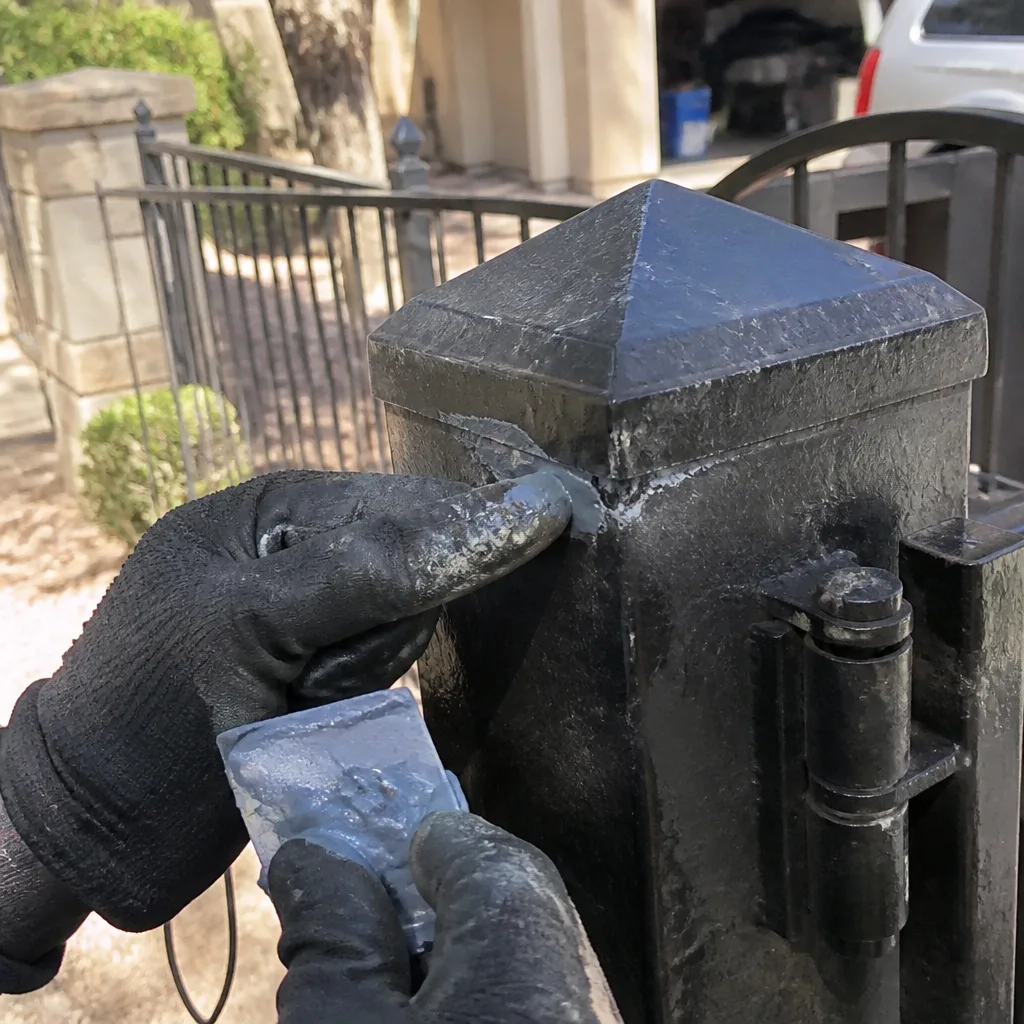
Gilbert sits on the northern edge of the Sonoran Desert’s caliche belt, a calcium carbonate hardpan that forms at depths from 6 inches to 3 feet depending on drainage and historical grading. Caliche expands when wet and contracts when dry, but not uniformly. A gate post set in caliche with inadequate footing depth moves in a slow ellipse over the course of a year, and that movement transmits directly to the drive arm geometry.
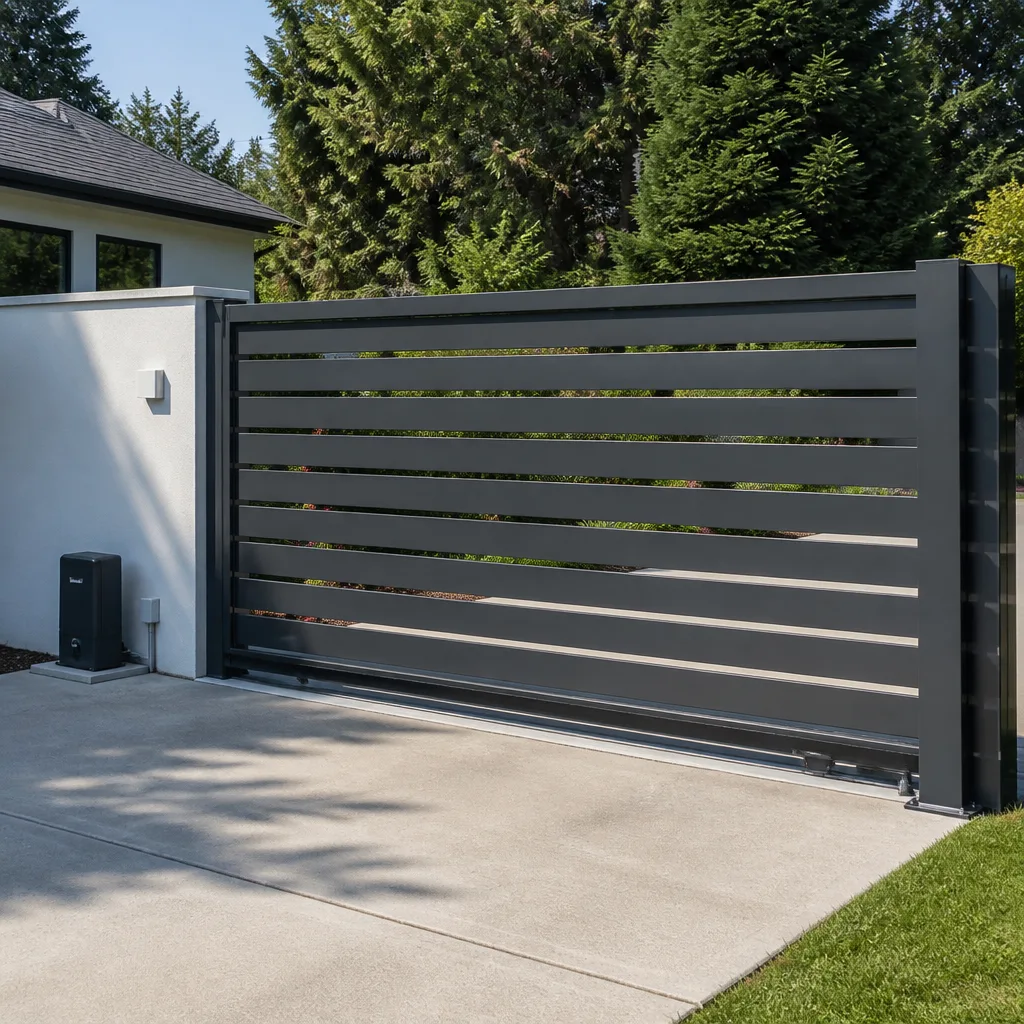
Here’s what that looks like in practice. In spring 2023, we documented a sliding gate in Gilbert’s Seville neighborhood that had worked perfectly for four years, then began stalling at the same point in its travel every cycle. The motor, a Viking G-5, showed no fault codes. The rack gear appeared straight. We measured the post-to-track distance at ten points along the travel length and found a 7/16-inch variance, enough to bind the nylon rollers at the midpoint. The concrete footing had cracked at the caliche line and rotated 2 degrees. The fix was not a motor replacement. We excavated to stable soil, poured a new 36-inch footing, rehung the gate, and recalibrated the limit switches. Total cost: $740. A competitor had quoted $1,850 for a new operator, arm, and “upgraded” track-exactly the scenario we cover in DIY vs Professional Gate Repair: The Gilbert Homeowner’s Decision Guide.
Caliche movement creates three specific failure signatures we teach our technicians to recognize:
- Stalling at consistent travel position: If the gate stops at the same inch of travel every time, suspect geometry, not electronics. Motors with fault memory will log an “excessive force” or “obstruction” code at that position.
- Seasonal pattern: Gates that fail after monsoon rains and work again in October are almost always footing-related. The caliche swells, shifts the post, then contracts when humidity drops.
- Arm bracket bolt loosening: The repeated flex of a misaligned drive arm works mounting bolts loose over months. We find washers missing and bolts backed out half a turn on gates that “just started making noise last week.”
Before we quote any motor replacement on a Gilbert gate more than three years old, we check post plumb with a 4-foot level and measure track variance. Under Haven Standard Clause 1, that measurement is written into the quote. If the post has moved, we name the footing repair as a separate line item with its own price. You see it before we start.
What Your Gate System Actually Includes
A “gate motor” is about 30% of what makes a gate open and close safely. The other 70% is what most repair quotes ignore, and it’s where most Gilbert-specific failures hide. Here’s the complete system, with the inspection record each component should generate:
Primary Operator (Motor)
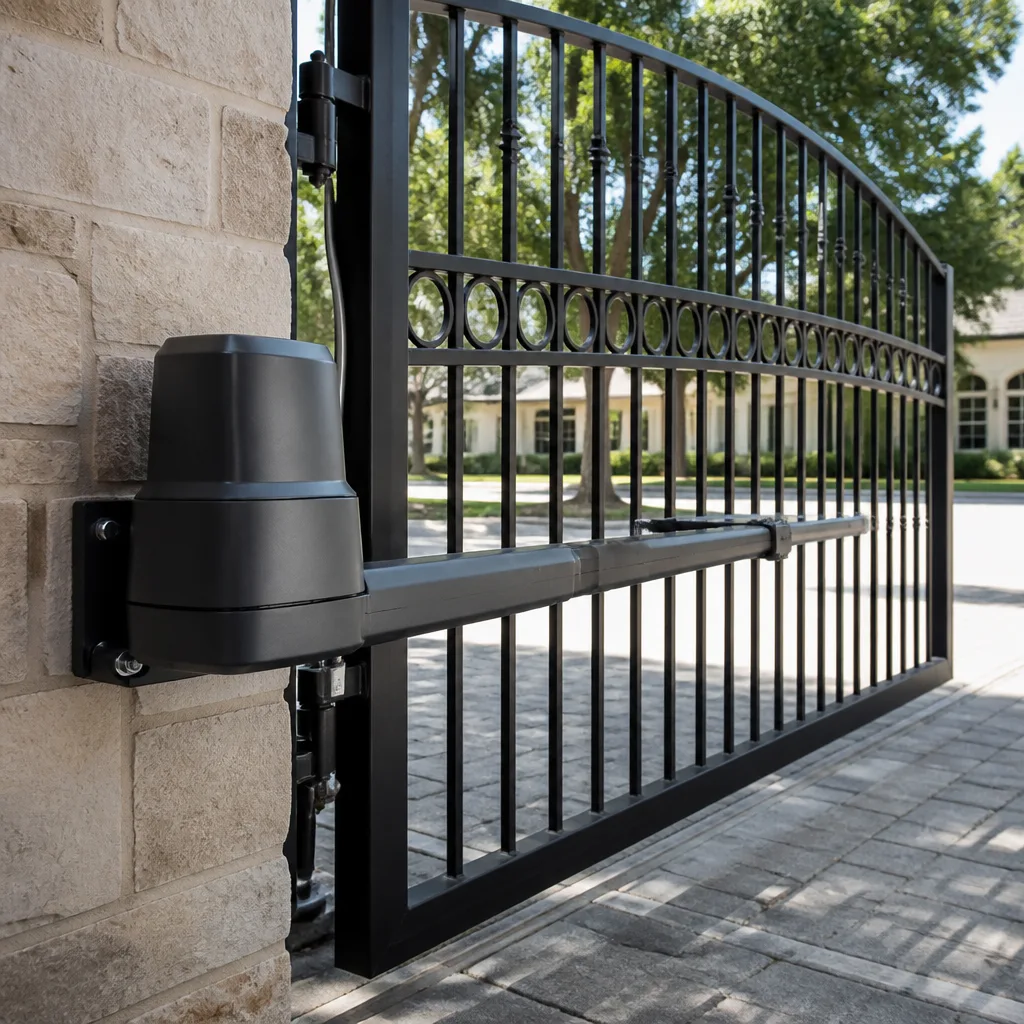
The operator provides motive force and contains the control logic. Brands we service in Gilbert include LiftMaster, FAAC, BFT, Linear, Viking, Ghost Controls, DoorKing, Elite, and Mighty Mule. Each has distinct diagnostic protocols. A Viking G-5 flashes fault codes on a two-digit LED; a Ghost Controls system uses a sequence of beeps; a BFT Deimos requires a proprietary programming remote to read internal logs. We carry the diagnostic tools for all nine brands and do not steer customers toward replacement to simplify our inventory.
Limit Switches
Limit switches tell the motor where the gate’s open and closed positions are. They come in two types: mechanical microswitches and magnetic Hall-effect sensors. In Gilbert’s heat, mechanical switches suffer contact arcing as the gate load increases from thermal expansion. Hall-effect sensors drift as magnet strength degrades at temperature. A limit switch set 12 degrees past actual travel point, a reading we find regularly in summer, causes the motor to stall against the physical stop at every cycle. The motor overheats. The control board logs “excessive current.” A technician who doesn’t check the limit setting replaces the motor.
We reset limit switches with a digital protractor, photograph the final reading, and log it in your job record. If the same switch drifts again within 12 months, we know to look for mechanical binding, not electrical fault.
Safety Devices
Every automated gate in Gilbert must have entrapment protection under ASTM F2200 and UL 325. The common types:
- Photoeyes: Infrared beam across the gate path. Misalignment by even 1/2 inch causes intermittent failure. In Gilbert, heat expansion of mounting brackets is the leading cause of misalignment we see.
- Safety loops: Inductive wire loops buried in the driveway that detect metal mass. Caliche heave breaks loop wire or shifts the loop position relative to the gate path.
- Contact edges: Rubber bumpers with internal switches that stop and reverse the gate on contact. UV degradation in Gilbert’s sun hardens the rubber and cracks the switch housing within 5-7 years.
A repair quote that names only the motor and does not list safety device testing is incomplete. Under Haven Standard Clause 4, we test every safety device on every visit, name the results in writing, and photograph the test method.
Access Control
Keypads, remotes, telephone entry systems, and smartphone apps are the user interface, not the gate mechanism. We separate access-control diagnosis from mechanical diagnosis in our quotes. A gate that doesn’t respond to the remote may have a failed receiver, a failed control board, or a mechanical bind that triggers the motor’s overload protection. We name which one we’ve found before we price the fix.
How to Read a Gate Repair Quote Line by Line
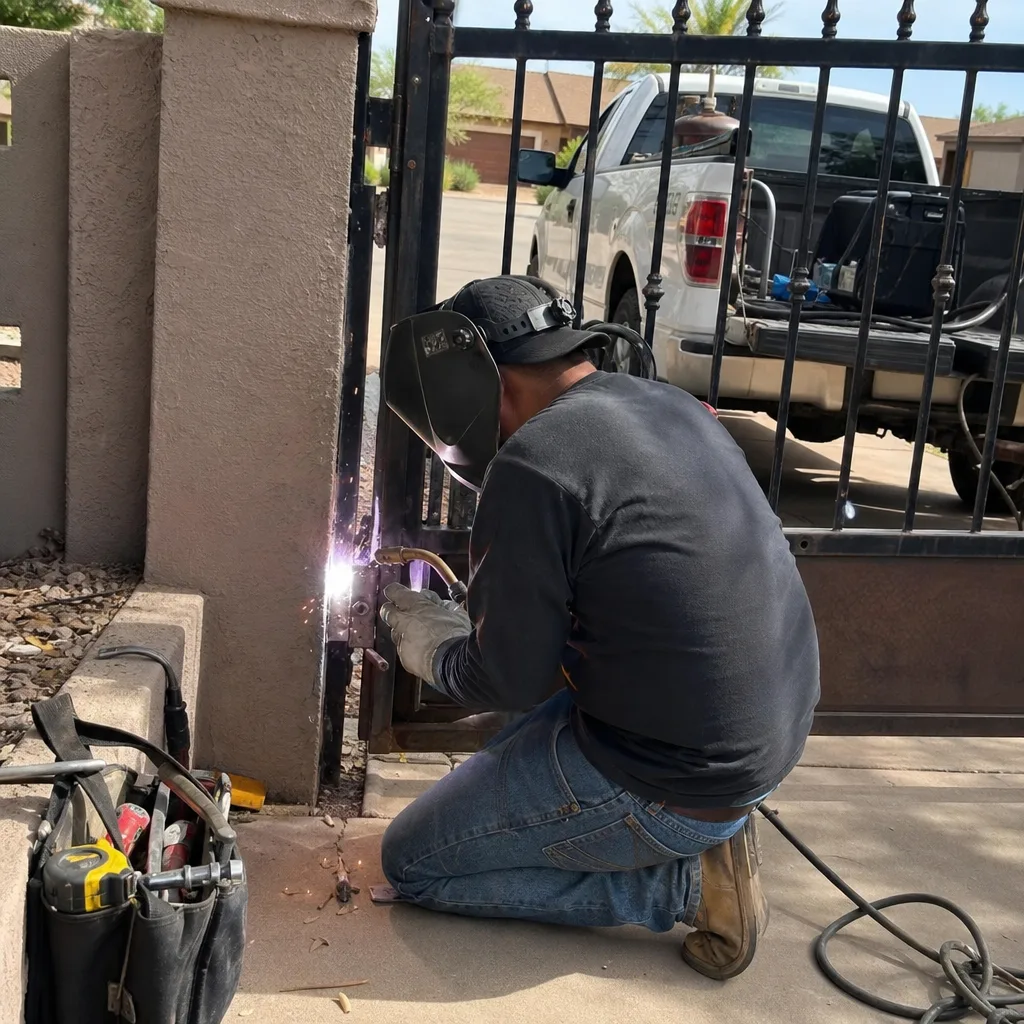
The Haven Standard exists because most our Gate Repair services competitors in Gilbert deliver quotes that are verbal, or a single number with no itemization, or a list of parts with no labor separation. Here’s how to read a quote that actually protects you, and what missing line items signal about the contractor’s thoroughness.
The Quote Structure We Use on Every Gilbert Job
| Line Item | What It Covers | Red Flag If Missing |
|---|---|---|
| Diagnostic fee | Time to identify root cause, test all components, measure geometry | “Free estimate” that skips diagnosis; you’ll pay for guesswork later |
| Parts: named component | Specific manufacturer part number, not “control board” or “gear kit” | Generic description means aftermarket or used part |
| Parts: safety devices | Photoeye, loop, or contact edge if tested and failed | Missing safety line item means untested or ignored |
| Labor: repair | Time to replace component, adjust geometry, calibrate limits | Labor buried in “flat rate” with no hour estimate |
| Labor: documentation | Photo record, written settings log, wiring diagram update | No documentation means no warranty enforcement path |
| Total | Sum with tax itemized separately | Tax omitted or “included” without rate stated |
A quote with fewer than five line items for anything beyond a simple photoeye alignment is suspect. Here’s why: in 2019, we began offering free second opinions on any written estimate from another company. Bring the paperwork. We’ve found that 40% of single-line quotes we review in Gilbert describe a motor replacement when the actual failure is in the safety circuit or the gate geometry. The motor ships, gets installed, and the gate still doesn’t work. Then the customer pays again for the real diagnosis.
Under Haven Standard Clause 1, our written price is the price. If we find additional failed components during repair, we stop, explain, and write a supplemental quote. We do not proceed on verbal authorization. The invoice matches the quote or we discuss why before any further work.
The Documentation You Should Have on File
Every gate repair in Gilbert should leave you with three documents: a written quote, a photo log, and a settings record. Verbal summaries create expensive re-diagnosis fees later, because no technician can reconstruct what the previous technician found without evidence.
Here’s what we leave after every gate repair in Gilbert:
- Written quote copy: Your signed copy of the original scope and price, with any changes initialed. This is your warranty enforcement document.
- Photo log: Date-stamped images of what we found, what we adjusted, and what we installed. For a typical motor replacement, this includes: the old motor nameplate showing model and serial; the mounting bracket condition; the new motor in position; the limit switch setting; and the safety device test in progress.
- Settings record: For programmable operators, we record limit positions in degrees or inches, force settings in percentage or numerical value, and any custom features enabled (pedestrian mode, partial open, timer-to-close). For Ghost Controls and Linear systems, we also note the remote programming sequence used.
Why this matters in Gilbert specifically: our climate accelerates wear, so the same component may need adjustment twice in a year. A technician with the previous settings record can identify drift rather than starting from factory defaults. A technician without it must rediscover your gate’s geometry, and you pay for that time.
We file the same documents in our job record. If you call us back for any issue within 365 days, we pull the file before we dispatch. Our technician arrives knowing what was found, what was set, and what part number was installed. Under our 365-Day Done Right Promise, if the repair is not right, we make it right at no additional charge, and we use the documentation to determine whether the issue is related to our previous work or a new failure.
Motor Brands, Parts Availability, and Repair vs. Replace
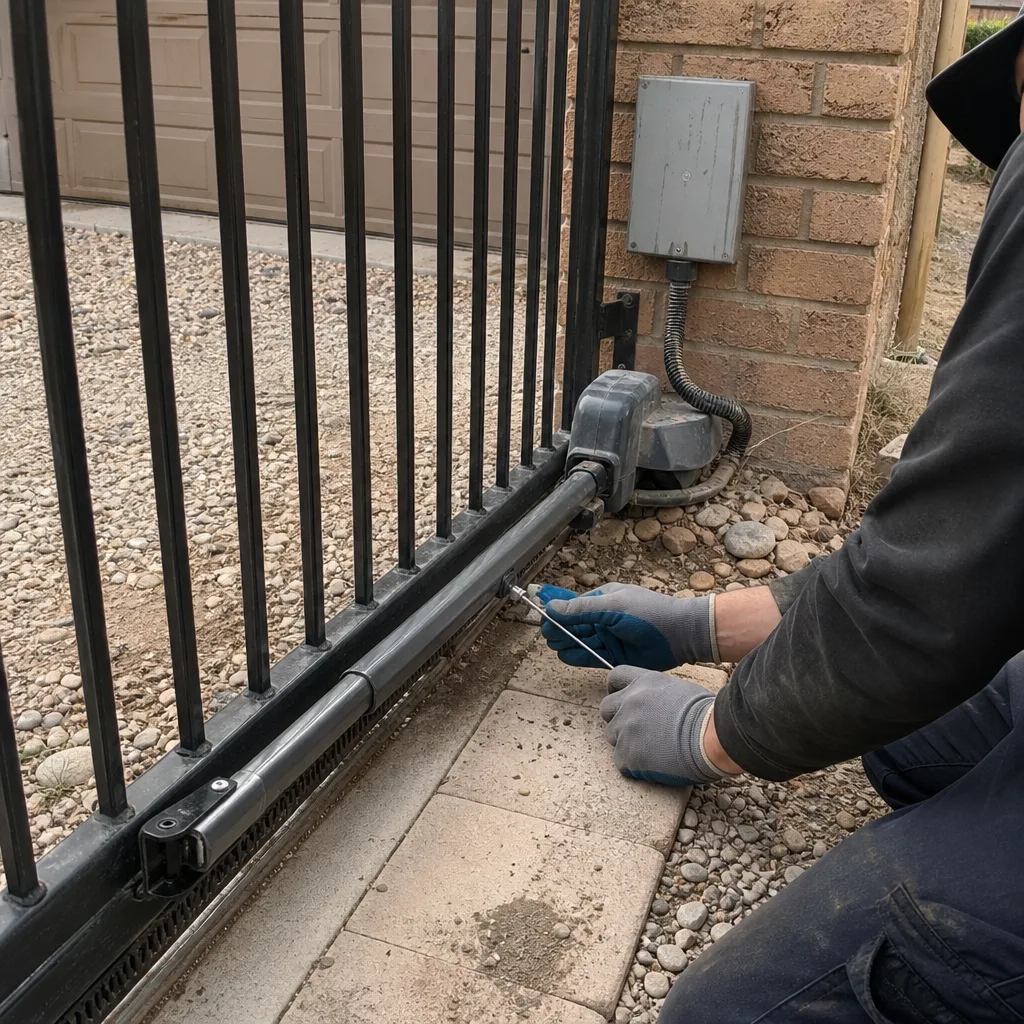
Gilbert’s gate stock breaks into two eras: pre-2010 installations, mostly LiftMaster and Elite with some FAAC commercial systems, and 2010-2023 installations, a wider mix including Viking, Ghost Controls, Linear, BFT, and Mighty Mule. Parts availability differs sharply by era and brand.
Brands We Repair Without Replacement Pressure
We carry common failure parts for all nine brands and do not steer customers toward a different brand to simplify our inventory. Here’s what that means in practice:
- Viking: G-5 and L-3 operators are common in Gilbert’s custom home market. We stock replacement control boards, gear kits, and arm assemblies. Most Viking repairs are completed in one visit.
- Ghost Controls: Popular for DIY installation in Gilbert’s newer subdivisions. We see limit switch drift and remote receiver failure most often. The company has good parts support; we can get uncommon items in 2-3 business days if not in stock.
- Linear: Widely used by Gilbert builders for spec homes. The Pro Access series has a known issue with condensation in the control housing during monsoon season; we carry the upgraded gasket kit.
- BFT: Italian manufacturer with strong commercial presence in Gilbert’s light industrial areas. Parts ship from Florida; we keep Deimos and Ares gear kits in stock for same-day repair.
The Repair vs. Replace Decision
We recommend replacement when three conditions align: the motor is more than 12 years old, the manufacturer has discontinued parts support, and the repair cost exceeds 60% of replacement cost. In Gilbert’s heat, we add a fourth condition: the mounting location exceeds the manufacturer’s ambient temperature rating and cannot be improved with shade or ventilation. Running a new motor at 140°F ambient is throwing good money after bad.
When we recommend replacement, we quote two or three compatible brands with feature comparisons, not just the one we prefer. The price is written before any work starts. The installation includes new safety device testing, limit calibration with photographic record, and a 365-Day Done Right Promise that covers both the motor and our installation labor.
Seasonal Maintenance for Gilbert Gates
Gilbert’s climate creates two maintenance seasons, not four: pre-monsoon (May-June) and post-monsoon (October-November). Here’s what each should include, based on the 22,000+ gates we’ve documented since 2014.
Pre-Monsoon Check (May-June)
- Clean photoeye lenses with optical-grade cleaner, not glass cleaner with ammonia that degrades polycarbonate. Inspect for interior fogging.
- Test battery backup under load, not just at rest. A battery that reads 12.6 volts open-circuit may drop to 10 volts under motor load and trigger failsafe shutdown.
- Check all mounting bolts for torque. Thermal cycling loosens hardware faster in Gilbert than in temperate climates.
- Lubricate chain or rack with dry graphite, not oil that attracts dust. Gilbert’s dust is abrasive; oil turns it to grinding paste.
- Verify limit switch settings against the written record from the last service. Drift of more than 3 degrees indicates mechanical binding developing.
Post-Monsoon Check (October-November)
- Inspect footing and post plumb. Caliche expansion from summer rains peaks in September; cracks and rotation are visible by October.
- Test safety loops with a metal mass, not just the loop tester. Caliche heave can shift the loop without breaking the wire, reducing detection sensitivity.
- Check contact edges for UV cracking. Rubber that was supple in May may be brittle after four months of 110°F days.
- Verify drain paths around operator housing. Monsoon debris blocks weep holes; trapped water plus winter humidity corrodes control boards.
We offer these maintenance visits as written-scope appointments with the same documentation as repairs: photo log, settings record, and written findings. No verbal summaries. No “it looks fine.”
Common Mistakes to Avoid
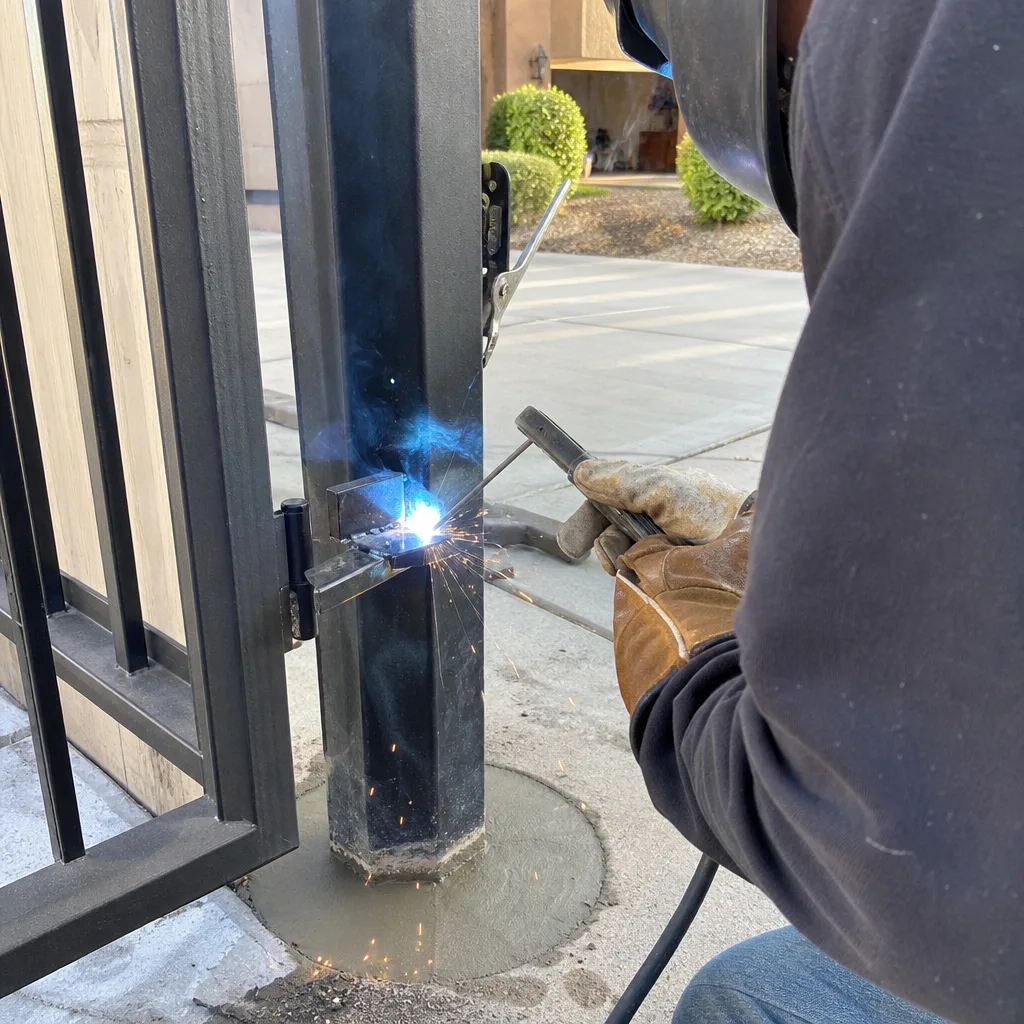
- Ignoring the binding before the failure: A gate that “just started making noise” has been binding for weeks. The noise is the motor straining against increased load. Continuing to operate it burns the windings. In Gilbert’s heat, that transition from noise to failure can be as short as ten days.
- Accepting a verbal warranty: Arizona does not require gate repair warranties to be in writing, but a verbal “it’s covered” is unenforceable. We provide a written 365-Day Done Right Promise on every job, with the scope and exclusions named.
- Skipping the safety device test after a motor replacement: A new motor with misaligned photoeyes or a failed contact edge is a liability hazard. Any quote that does not include safety device testing and written results is incomplete.
- Assuming all technicians know all brands: A technician trained on LiftMaster may not carry Viking diagnostic tools or BFT programming remotes. We service nine brands specifically so Gilbert homeowners are not forced toward replacement for lack of repair expertise.
- Not asking about the documentation record: If the technician cannot show you photos of what was found and what was adjusted, you have no evidence if the same failure recurs. Verbal summaries are forgotten; photos are facts.
- Delaying repair through summer: Heat accelerates every failure mode. A gear with slight deformation in June strips completely in July. A loose bolt in May falls out in August. The cost of delay in Gilbert is not just inconvenience; it’s escalation to additional failed components.
When to Call a Professional
Call a gate technician when the gate exhibits any of these: stalling at a consistent travel position, reversing before fully open or closed, responding intermittently to remote or keypad, making grinding or straining noises, or displaying any fault code on the motor housing. These symptoms indicate a root cause that will not resolve with repeated cycling.
Do not attempt to adjust or disable safety devices, and do not force a stalled gate manually on a motor with engaged gearing. The torque in a gate operator can cause serious injury. A trained technician can release the manual bypass, identify the bind, and correct it with the motor de-energized.
Vance Gate Repair Gilbert offers free estimates in Gilbert. For more guides & resources, visit our blog, or call (520) 482-3109 where a live person answers 24 hours a day. We dispatch background-checked, uniformed technicians with name and photo provided before arrival. Every quote is written before work starts, every visit leaves a documented photo record, and every repair is covered by our 365-Day Done Right Promise.
Frequently Asked Questions
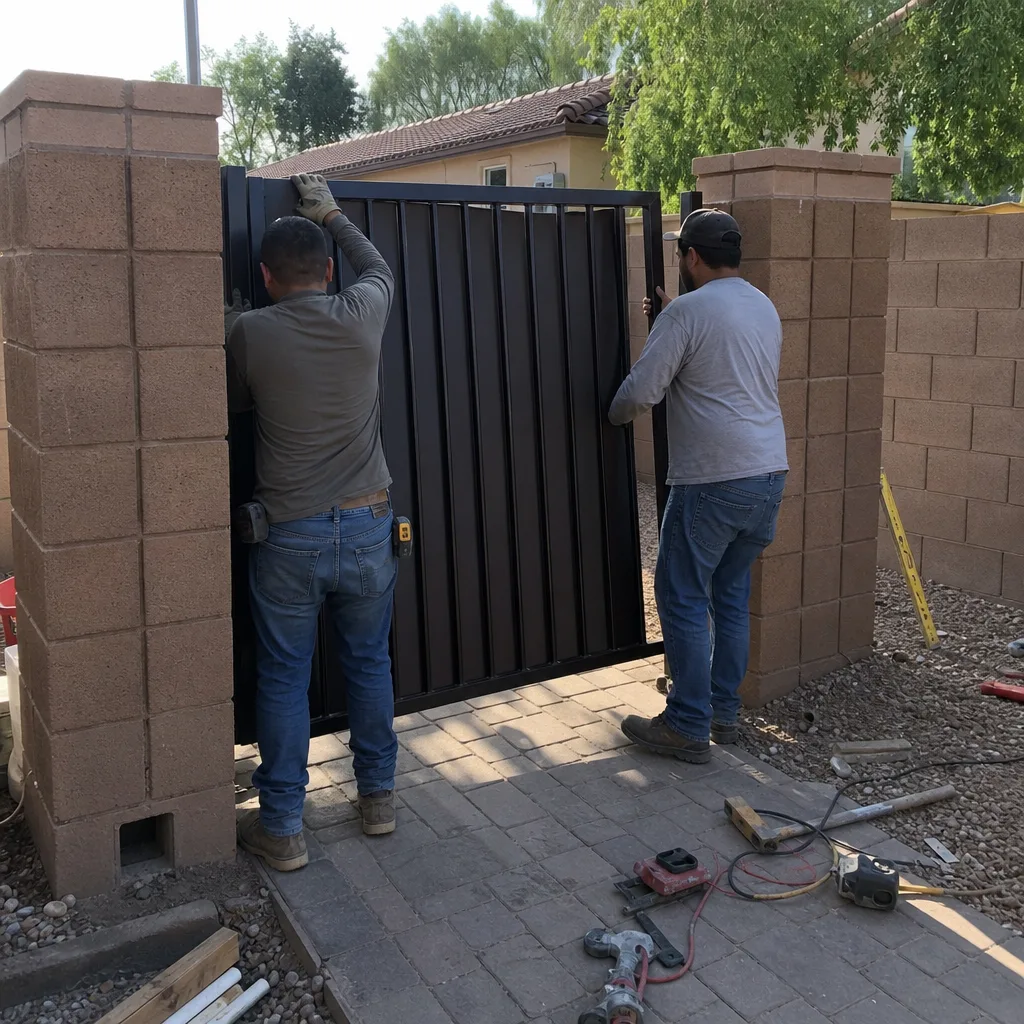
Most residential gate repairs in Gilbert range from $180 to $650, depending on the component failed and whether the gate geometry needs correction. Photoeye realignment or limit switch reset typically falls at the lower end; control board replacement or footing repair falls at the higher end. Full motor replacement runs $850-$1,800 depending on brand, arm type, and whether the existing safety devices are compatible. We provide a written, itemized quote before any work begins. Call (520) 482-3109 for a free estimate.
Same-day repair is available for most brands when the failure is in a component we stock. We carry common parts for LiftMaster, Viking, Linear, Ghost Controls, BFT, and other major brands. If the failure requires a special-order part, we secure the component, schedule the repair, and provide a written quote with the part number and expected delivery. We do not guess at delivery dates.
This pattern almost always indicates a heat-related failure: photoeye lens fogging, battery backup voltage drop, or thermal expansion binding the drive mechanism. In Gilbert, where afternoon surface temperatures exceed 160°F, we see this pattern most often on south- and west-facing gates. We diagnose with thermal imaging and component testing at operating temperature, not just at rest in morning cool. The fix is usually specific and less expensive than motor replacement.
A complete quote lists: diagnostic findings with specific component names and part numbers; labor separated from parts; safety device testing as a distinct line item; and documentation (photo log, settings record) included. A single-number quote or one that omits safety testing is incomplete and exposes you to additional charges. Under Haven Standard Clause 1, our quotes name every line item before work starts.
Most residential gate repairs in Gilbert do not require permits. Replacement of an existing motor on the same mounting typically qualifies as maintenance. New installation, structural modification to the gate or posts, or addition of access control to a previously manual gate may require permitting through the Town of Gilbert Development Services Department. We identify permit requirements in our written quote when applicable and can coordinate submittal as part of the project scope.
Keep the written quote, the photo log of work performed, and the settings record with limit positions and force values. These documents are your warranty enforcement path and your reference for future maintenance. If the same technician returns, the record prevents redundant diagnosis. If a different technician works on the gate, the record prevents redundant charges. Under Haven Standard Clause 4, we provide all three on every visit at no additional charge.
The Bottom Line
Gate repair in Gilbert is not generic mechanical work. The combination of extreme surface heat, caliche soil movement, and a specific inventory of automation brands creates failure patterns that a technician must recognize to avoid unnecessary replacement. The homeowner who can describe the failure timing, the motor brand, and whether the gate bound before it stopped moving will get a more accurate first quote and a faster permanent fix. The contractor who writes the price before starting, tests every safety device, and leaves a photo record provides accountability that verbal estimates cannot match. Those two habits, precise description and documented repair, are what the Haven Standard was built to protect.
Written by Adrian Vance, Owner at Vance Gate Repair Gilbert, serving Gilbert since 2014.