
Last updated September 22, 2026
Free on-site gate assessment - hinges, posts, and your LiftMaster or Nice gate operator checked before anything is quoted
The assessment is free and the quote is the invoice.

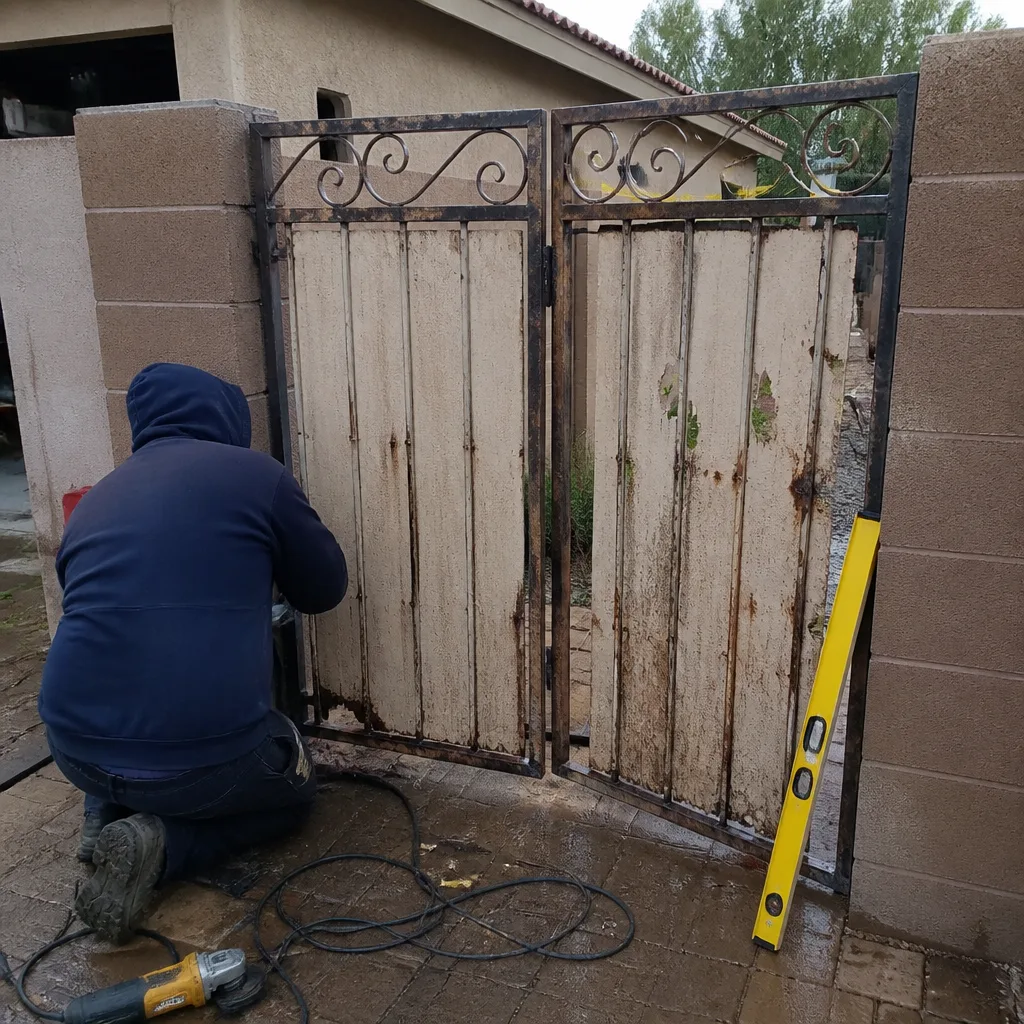 Before
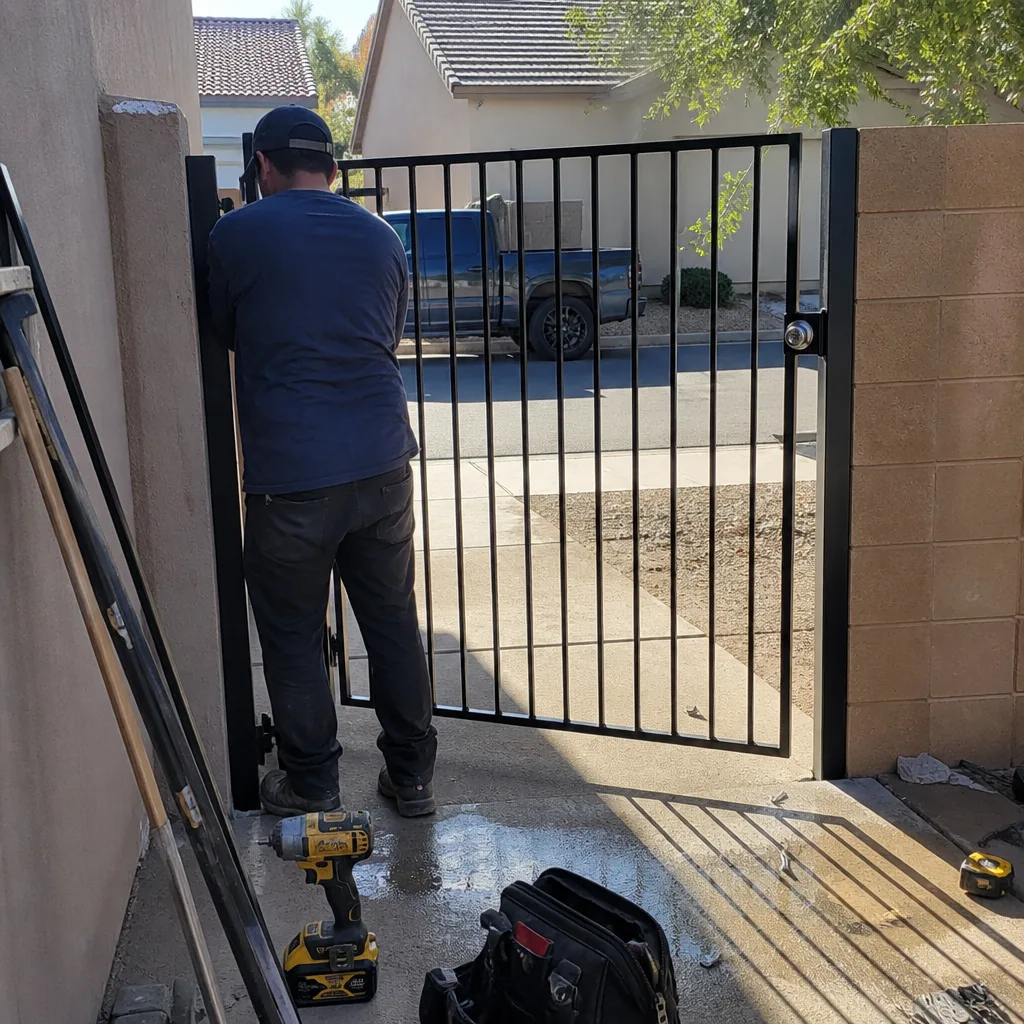 After
After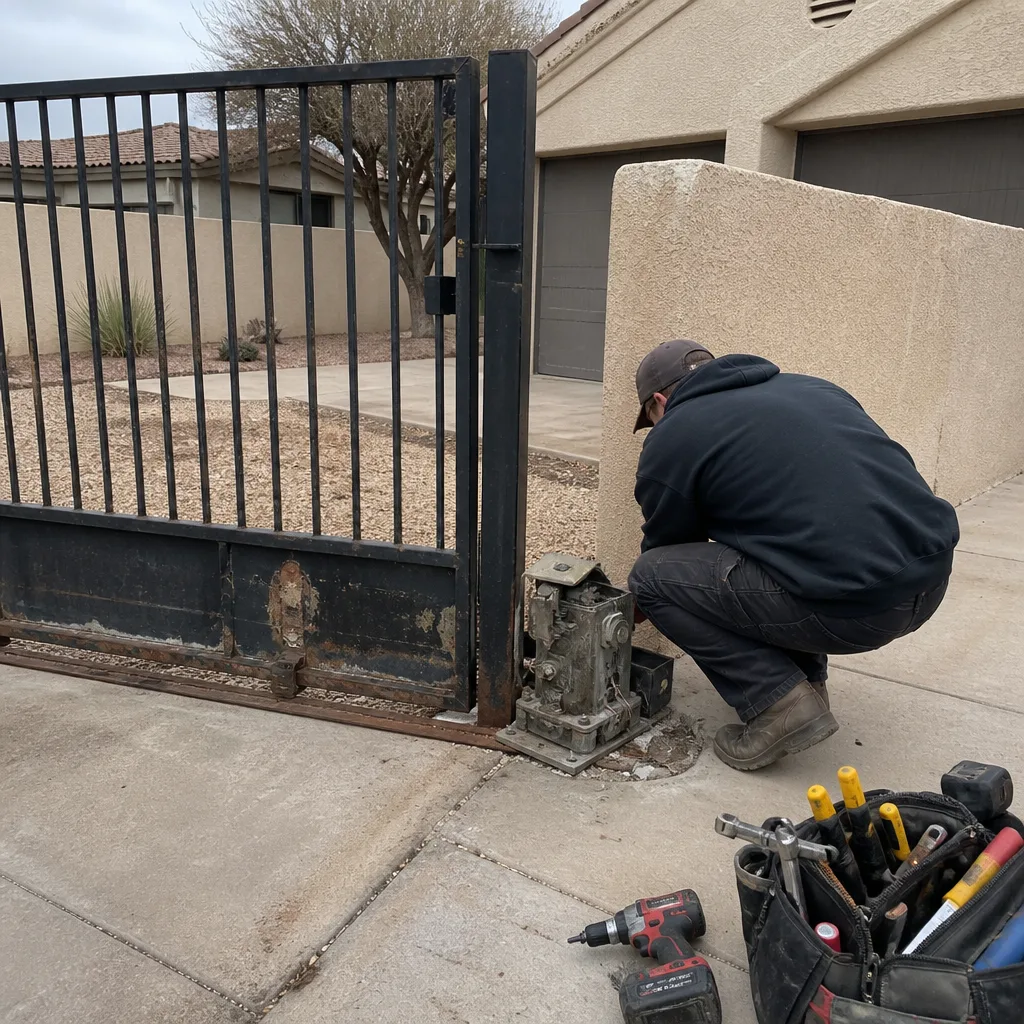 Before
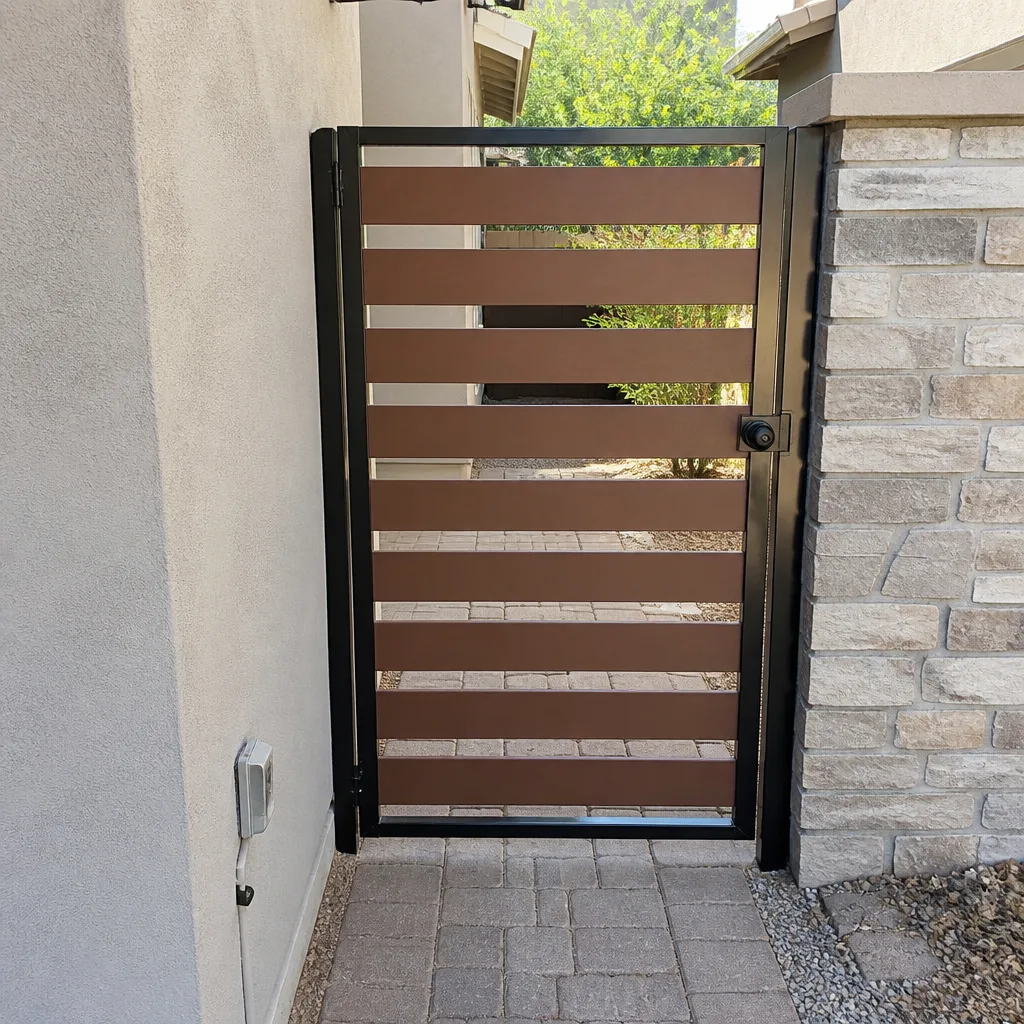 After
After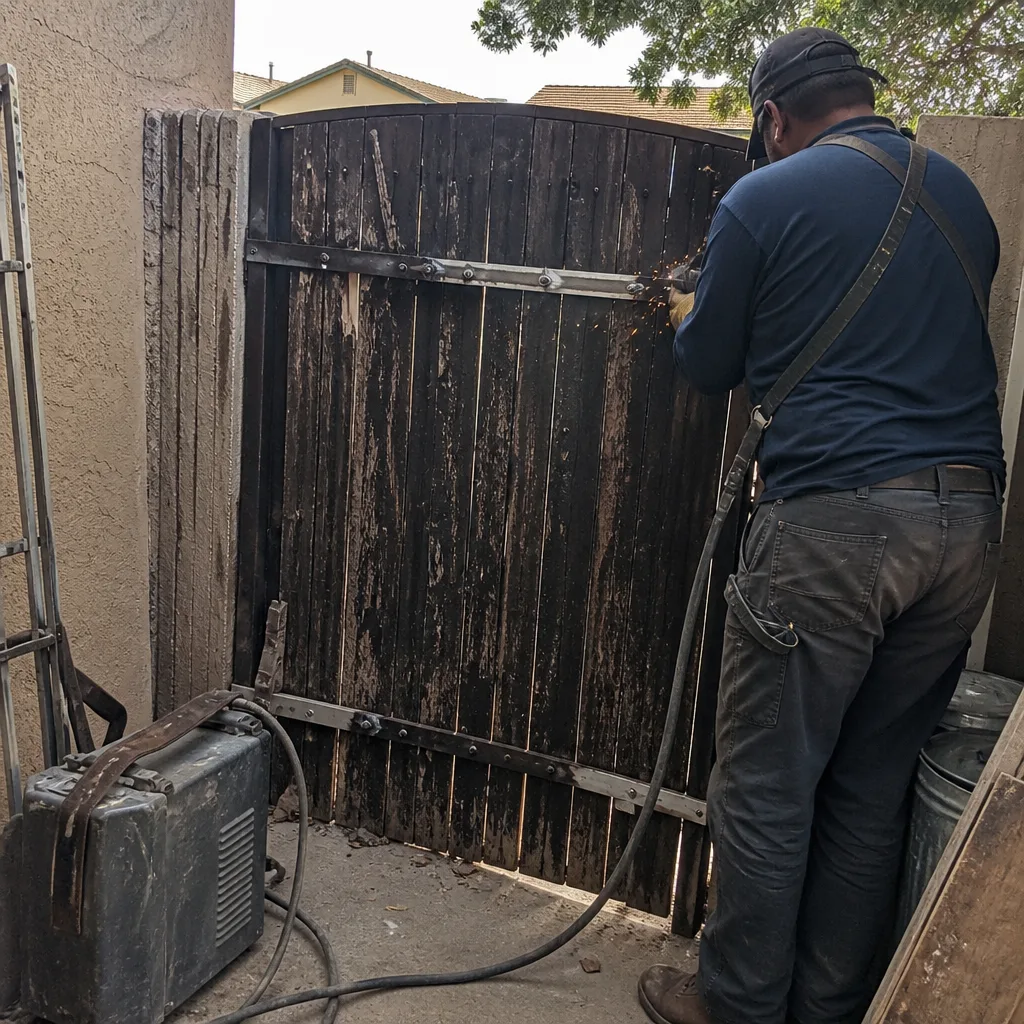 Before
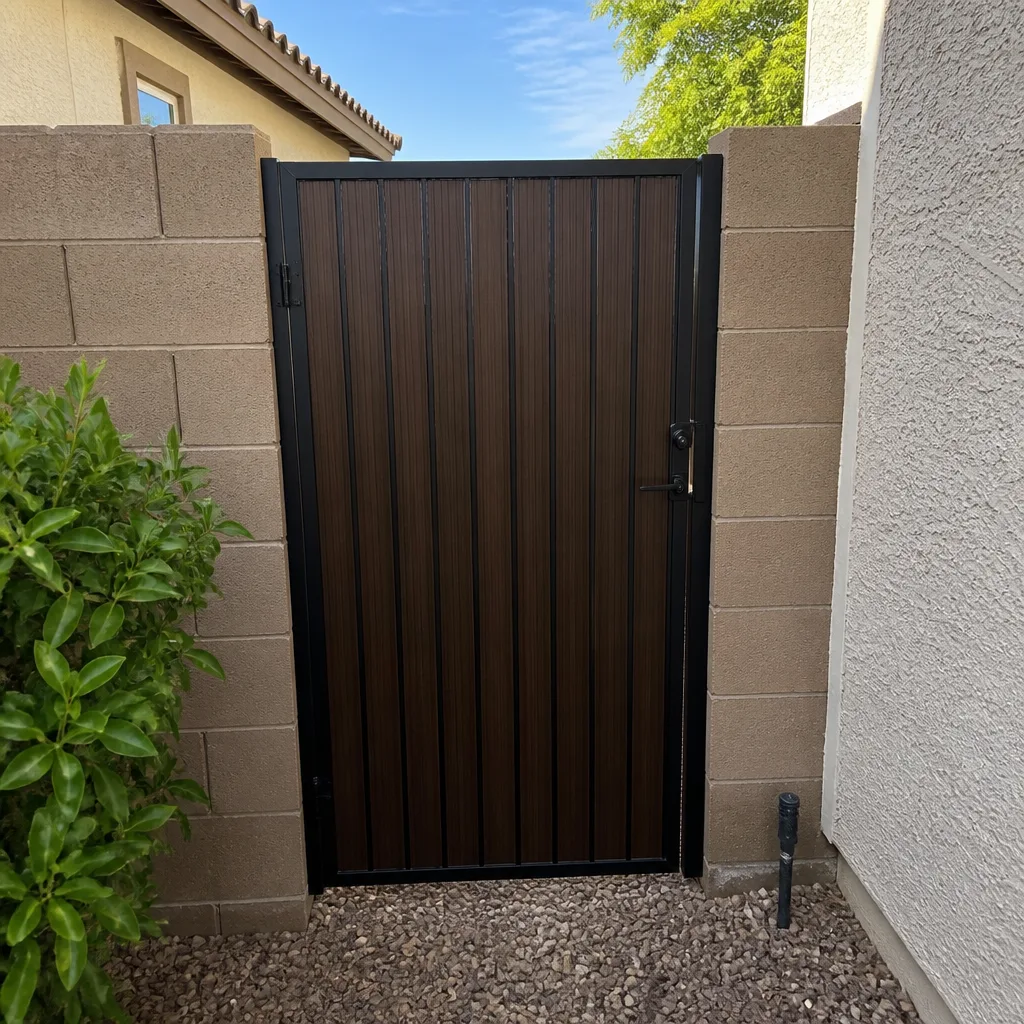 After
AfterSeasonal Gate Repair Care for Gilbert: Year-Round Homeowner’s Guide
More Gilbert gate motors fail in the two weeks after monsoon season ends than at any other point in the year. Not because of the storms themselves, but because surge damage done in July shows up as a dead control board in September, when temperatures finally drop and homeowners start using their gates again after weeks of manual override. Gilbert doesn’t have four seasons in any traditional sense. It has a pre-monsoon heat window, a monsoon surge window, a post-monsoon dust interval, and a mild winter that lulls people into skipping maintenance right before spring heat returns. This guide maps gate care to those four actual Arizona intervals, with specific tasks, warning signs, and documentation habits that keep automation running and repair bills predictable.
Quick Answer
Gate care in Gilbert follows four distinct intervals: pre-monsoon (May-June) for battery testing and surge protection, monsoon season (July-September) for storm protocols and damage documentation, post-monsoon (September-October) for control board inspection and hardware re-torque, and mild winter (November-February) for lubrication, rust repair, and weld work. A simple annual log with dates, voltage readings, and photos prevents repeat diagnoses and gives any future technician a documented baseline.
Table of Contents
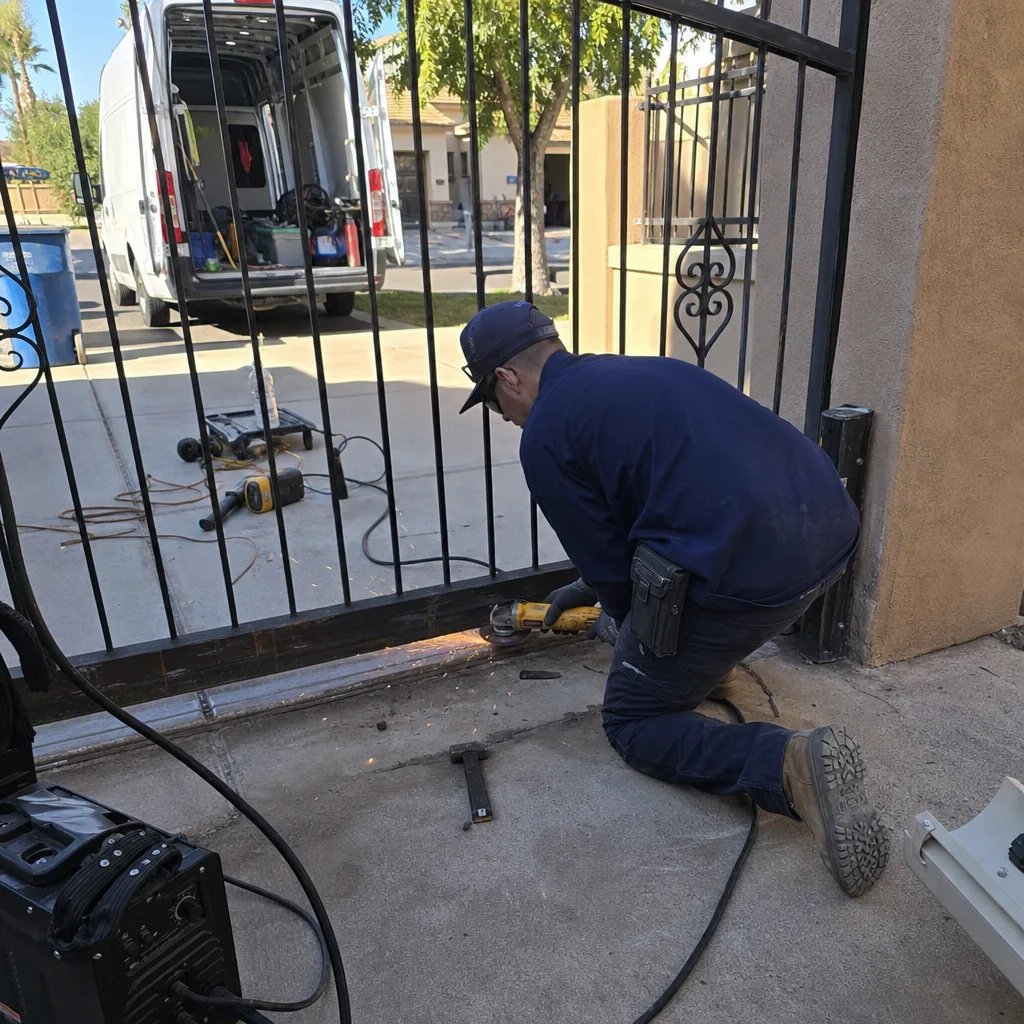
- Pre-Monsoon Window: May-June Preparation
- Monsoon Season: July-September Storm Protocol
- Post-Monsoon Interval: September-October Recovery
- Mild Winter: November-February Maintenance Window
- Building Your Annual Gate Care Log
- Common Mistakes to Avoid
- When to Call a Professional
- Frequently Asked Questions
 Before
 After
AfterPre-Monsoon Window: May-June Preparation
May in Gilbert means daily highs pushing past 105°F and the first dust storms rolling up from the south. Gate automation systems feel this before homeowners do. Heat expands metal, contracts lubricants, and accelerates battery chemistry. The two months before monsoon arrival are the only reliable window to test components that will be stressed by both temperature and electrical surge in the weeks ahead.
Battery Backup Load Testing
Every automated gate in Gilbert should have a battery backup. Municipal code requires it for safety egress, and the practical reality is that power outages spike during monsoon season when transformers take lightning hits. A battery that tests at 12.6 volts at rest may drop to 9 volts under gate motor load, which means the gate stalls halfway open during an outage and traps vehicles.
We test battery load with a carbon pile tester, not a multimeter. A multimeter shows surface voltage. A carbon pile tester applies actual load and reveals whether the battery can deliver the 15-20 amps a swing gate motor draws during start. In Gilbert’s heat, we typically see battery life cut to 18-24 months instead of the 3-4 years advertised by manufacturers. The electrolyte evaporates faster, and the internal plates sulfate more quickly.
Replace batteries showing more than 30% voltage drop under load. Document the test date and resting voltage in your annual log.
Surge Protector Inspection
Power surges in Gilbert aren’t gradual. They’re transformer strikes, monsoon-induced grid switching, and voltage spikes when utility crews restore power after outages. A surge protector installed three years ago may have sacrificed its metal oxide varistors in previous events and now offers no protection at all.
Inspect surge protectors for these warning signs:
- Burn marks or discoloration on the housing
- LED status indicators that are off, blinking, or a different color than specified
- Physical swelling of the unit, indicating internal component failure
- A date stamp more than 36 months old, regardless of indicator status
We recommend whole-circuit protection at the gate’s dedicated breaker, plus point-of-use protection at the control board. The two-stage approach costs more upfront but prevents the $400-$800 control board replacements we document every October in Gilbert neighborhoods like Power Ranch and Agritopia.
Photo-Eye Lens Cleaning and Alignment
Dust season in Gilbert starts in May, not July. Fine particulate from agricultural disturbance, construction, and desert wind coats photo-eye lenses before the first monsoon cloud appears. A photo-eye (the infrared beam that stops the gate if something crosses the path) with 20% light transmission loss will cause intermittent failures: the gate reverses for no visible reason, or the close cycle aborts halfway through.
- Power down the gate at the disconnect
- Remove the lens cover with a soft cloth, not compressed air, which drives particles deeper
- Clean with optical-grade lens solution or distilled water; household glass cleaners leave residue
- Check alignment: the transmitter and receiver should face each other within 2 degrees, with no vegetation encroaching
- Power up and test the obstruction response with a solid object, not a hand
- Photograph the lens condition and alignment marks before closing the housing
In Gilbert’s pre-monsoon dust, we clean photo-eyes every 6-8 weeks for clients on maintenance agreements. The 10 minutes of prevention eliminates the “gate won’t close” emergency calls that peak in early July.
Monsoon Season: July-September Storm Protocol
Monsoon season in Gilbert delivers 70% of annual rainfall in eight weeks, plus lightning, microbursts, and power fluctuations that gate automation systems are not designed to absorb. See our DIY vs Professional Gate Repair: The Gilbert Homeowner’s Decision Guide for when to handle protocols yourself versus calling a technician. The protocol for the morning after a storm is specific, and skipping steps risks turning recoverable surge damage into total component failure.
Post-Storm Morning Check
Before operating the gate after a significant storm:
- Visually inspect the control enclosure for water intrusion, insect displacement, or physical damage from wind-borne debris
- Check the disconnect switch and verify it moves freely; moisture can cause corrosion that makes the switch stick in an unsafe position
- Smell for ozone or burnt electronics near the control board, a reliable indicator of surge damage even if the gate still functions
- Listen to the first manual cycle: grinding, clicking, or hesitation suggests mechanical or electrical stress not yet visible
- Test all safety systems, including photo-eyes and edge sensors, before returning to automatic operation
Never force a gate that hesitates or makes unfamiliar noise. The motor may be drawing excessive amperage due to water in the gearbox or surge damage to the start capacitor. Forcing the cycle can destroy a $200 capacitor and turn it into a $600 motor replacement.
Documenting Surge Damage for Insurance
Homeowners insurance in Arizona typically covers surge damage to permanently installed equipment, but claims require documentation that most homeowners never collect. Under Haven Standard Clause 4 (Evidence on every job), we photograph surge damage with date stamps, meter readings, and physical evidence of the failure mode.
For your own documentation:
- Photograph the control board before touching anything, showing any scorch marks, blown traces, or swollen capacitors
- Record the exact time of the storm and the time you discovered the failure
- Save any surge protector that failed; the insurance adjuster may want to inspect it
- Get a written diagnosis from a licensed gate technician that specifies “electrical surge” as the cause of failure, not general wear
We provide this documentation on every surge-related call in Gilbert. The photo record and written diagnosis have supported successful insurance claims for clients in neighborhoods from Seville to Val Vista Lakes.
When to Switch to Manual Override
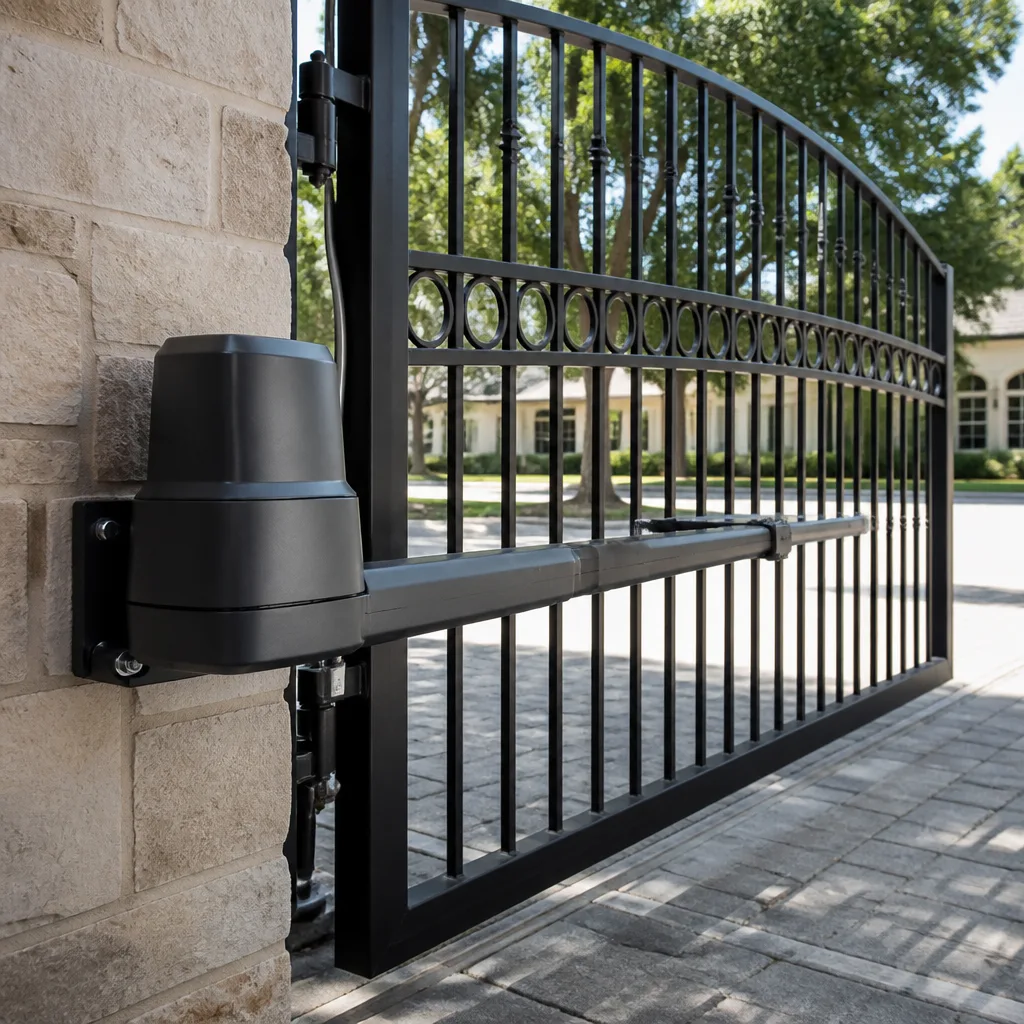
If the gate shows any sign of electrical irregularity after a storm, switch to manual override and leave it there until inspected. Operating a surge-damaged control board can propagate failure to the motor, the transformer, and in extreme cases, the household electrical panel. The manual release on most operators, including FAAC and Linear models common in Gilbert, is a keyed or lever-activated mechanism that disengages the motor from the drive chain or arm. Test the manual release monthly during monsoon season so you’re not learning its location during a power outage.
Post-Monsoon Interval: September-October Recovery
September temperatures in Gilbert drop from 105°F to 95°F, then to the mid-80s by October. Homeowners resume normal gate use. And the hidden damage from July surges reveals itself, as explained in The Complete Guide to Gate Repair in Gilbert.
Control Board Inspection
Control boards damaged by surge don’t always fail immediately. Capacitors weakened by overvoltage may hold charge for weeks, then fail when called upon for a cold start in cooler weather. Resistors may drift out of tolerance gradually, causing erratic behavior that homeowners attribute to “needs adjustment” rather than component failure.
We inspect post-monsoon control boards with a thermal camera and ESR meter. The thermal camera shows components running hot before they fail catastrophically. The ESR meter (equivalent series resistance) reveals capacitors that test at correct voltage but cannot deliver current under load. Both tests are non-destructive and take less than 15 minutes.
Warning signs that indicate board inspection is needed:
- Gate starts slower than it did in June
- Intermittent failure to respond to remote or keypad commands
- Unusual LED patterns on the board that don’t match the manufacturer’s status guide
- Photo-eyes or safety edges that test individually but fail in the control circuit
Control board replacement in Gilbert runs $350-$750 depending on brand and features. Viking and BFT boards tend toward the higher end due to proprietary programming requirements. Early detection through post-monsoon inspection often allows component-level repair at half the replacement cost.
Ground Wire Integrity Check
Monsoon moisture accelerates corrosion at ground connections, which are frequently the weakest point in gate electrical systems. A compromised ground won’t stop the gate from working, but it removes the path of least resistance for surge energy and directs that energy through control components instead.
Check ground connections at three points: the control board ground terminal, the motor housing bond, and the ground rod or building ground point where the gate circuit ties to the main electrical system. Look for green corrosion, loose clamps, or wire strands broken by vibration. Tighten and photograph. If corrosion is advanced, replace the connector and treat the joint with antioxidant compound.
Hardware Re-Torque
Heat expansion during Gilbert’s summer loosens hardware that was properly torqued in spring. Hinge bolts, track fasteners, and operator mounting brackets all experience thermal cycling that reduces clamping force. Post-monsoon is the ideal re-torque window: temperatures have moderated, but winter contraction hasn’t begun.
We re-torque to manufacturer specifications with a calibrated torque wrench, not by feel. A hinge bolt at 45 ft-lbs in May may read 28 ft-lbs in September. Left unchecked, it loosens further through winter and fails in spring when gate use increases. Document torque values in your annual log for year-over-year comparison.
Mild Winter: November-February Maintenance Window
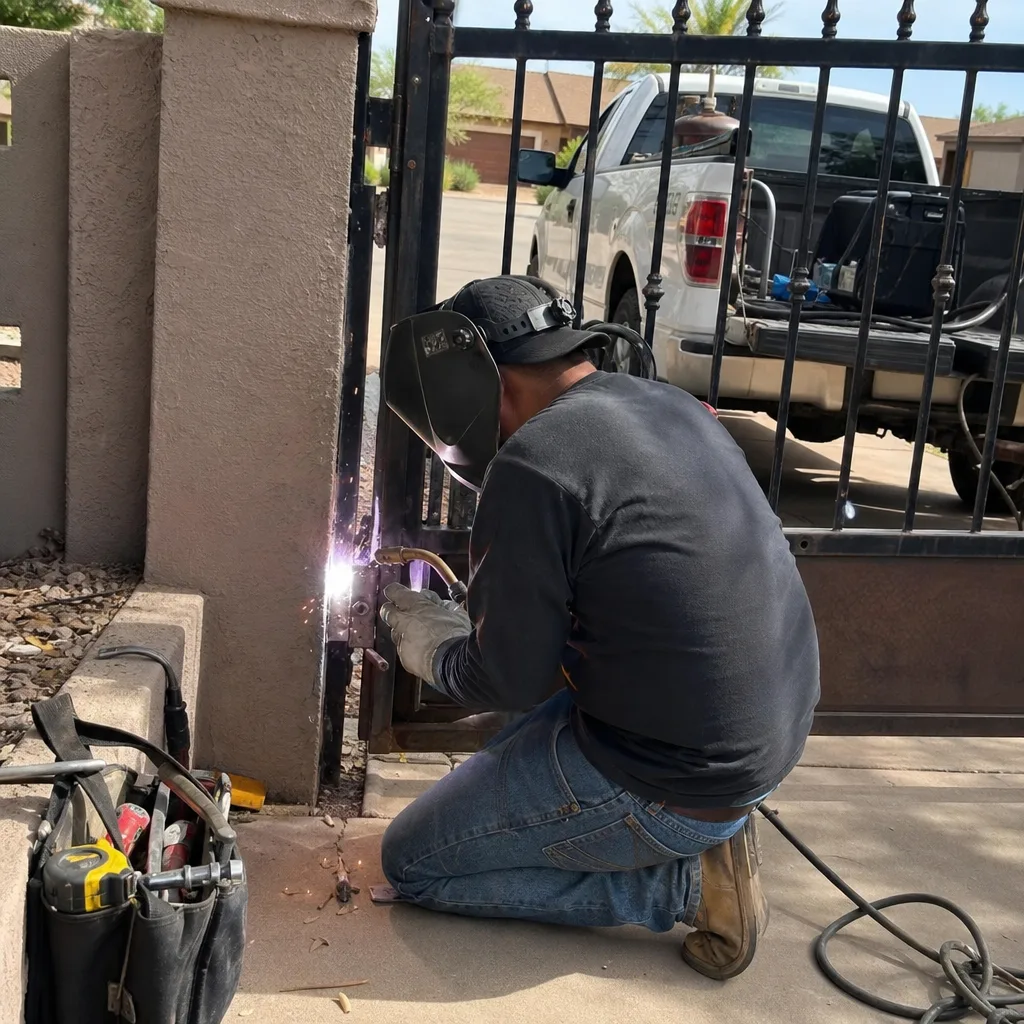
Gilbert’s winter is genuinely mild. Daytime highs in the 60s and 70s, occasional frost warnings, minimal precipitation. This is the only period when certain maintenance tasks are safe to perform, and the only period when homeowners have enough predictable weather to schedule non-urgent work. Browse our more guides & resources for seasonal maintenance checklists.
Lubricant Application
Never lubricate gate hardware in summer. The heat thins the lubricant, causing it to run off vertical surfaces and attract dust that forms abrasive paste. Winter in Gilbert is the only safe window for proper lubrication.
Use lithium-based grease on hinges, rollers, and chain drives. Avoid WD-40 for gate applications; it’s a solvent and light lubricant that evaporates within days. For screw-drive operators common in some Linear and Mighty Mule models, use manufacturer-specified grease only; incompatible lubricants destroy the acme thread.
- Clean old lubricant and accumulated dust with a solvent-dampened cloth
- Apply thin film of lithium grease to hinge pins, roller bearings, and chain contact surfaces
- Cycle the gate 3-4 times to distribute lubricant
- Wipe excess that could attract dust
- Photograph hardware condition and lubrication date
In Gilbert’s dry winter air, properly applied lithium grease lasts 4-5 months, carrying through to the next safe application window.
Rust and Weld Repair
Desert rust is real, just slower than coastal corrosion. The combination of monsoon moisture, alkaline dust, and temperature cycling produces oxidation at weld points, base plates, and any location where paint has been compromised. Winter is the right time to address this because:
- Surface preparation and welding can be done without heat-stressing adjacent components
- Paint and protective coatings cure properly in moderate temperatures
- Welded repairs have time to settle and reveal any stress cracking before summer load returns
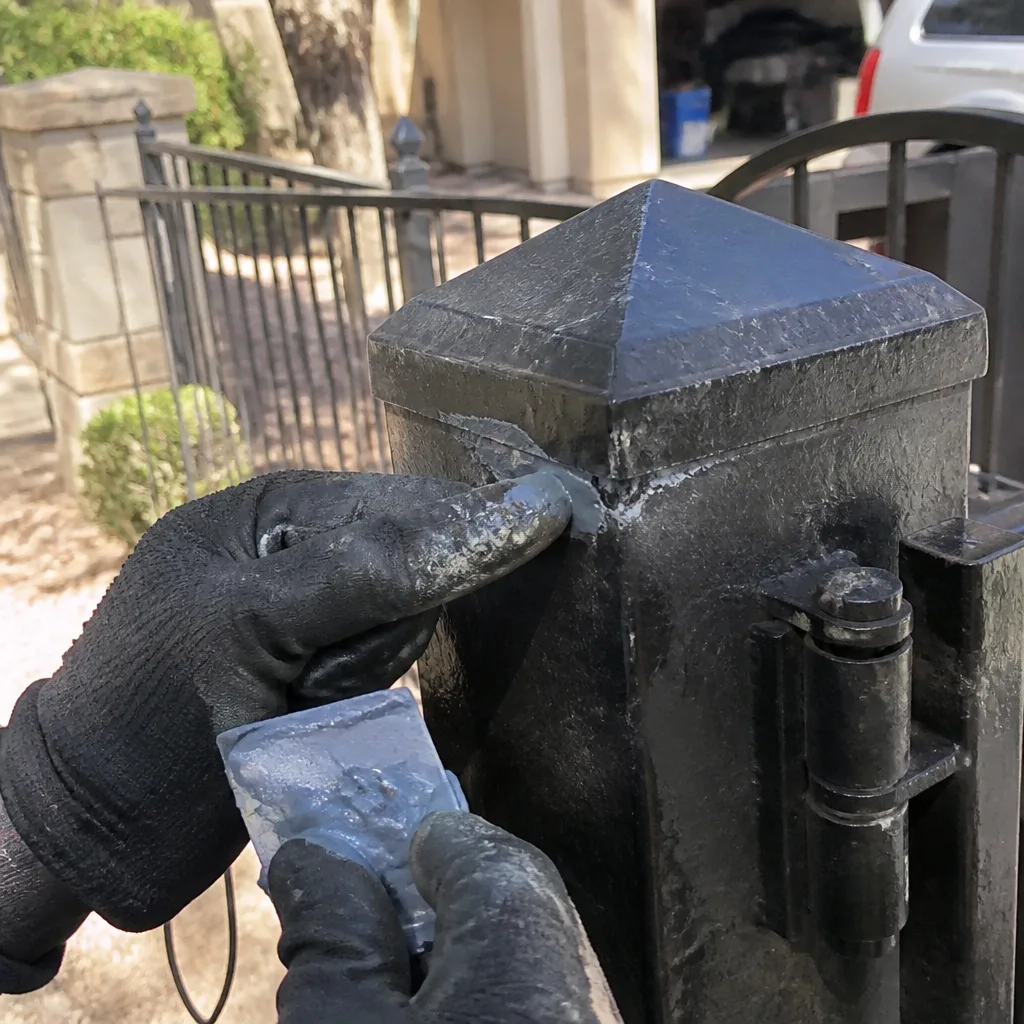
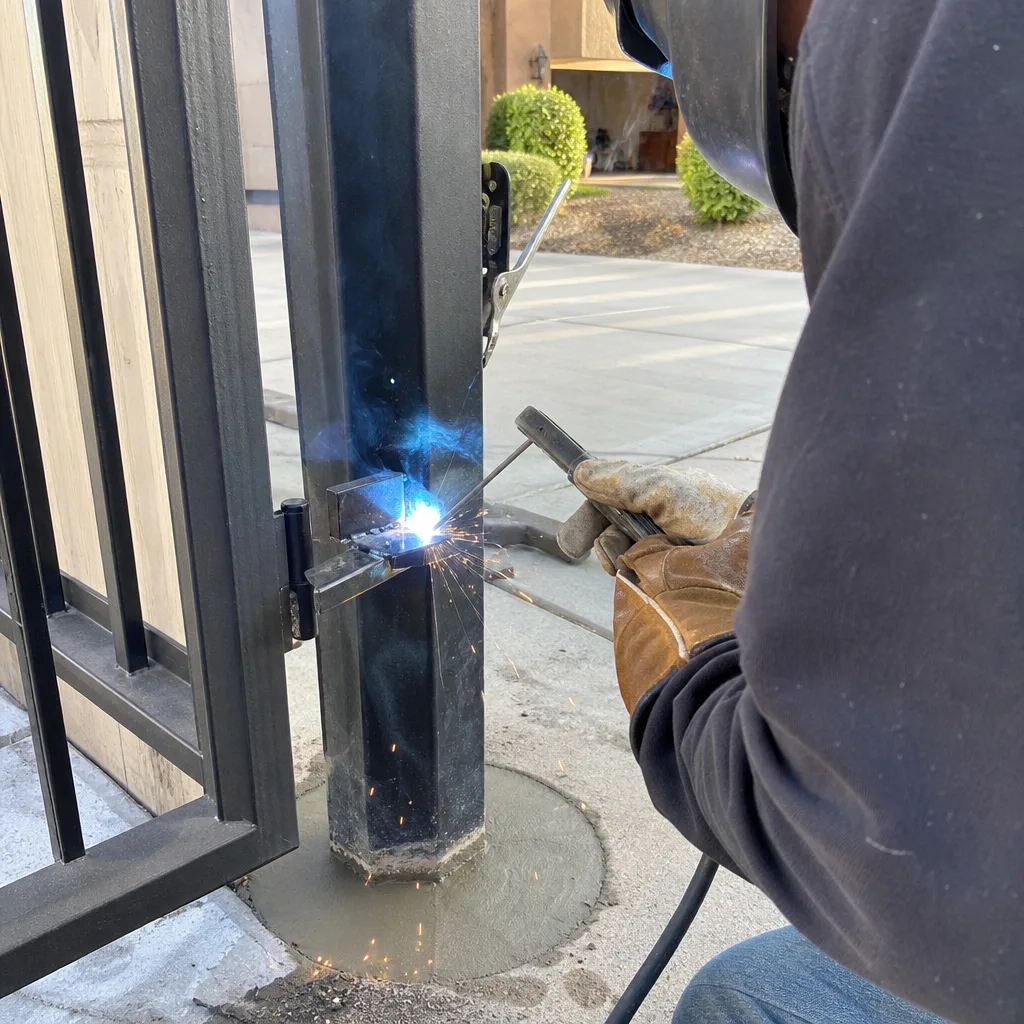
We see the most rust-related failures in Gilbert on gates installed before 2010, when galvanizing standards were less consistent, and on custom ironwork with field welds that didn’t receive proper post-weld treatment. The gate repair in Gilbert we perform most often in January involves cutting out corroded hinge pockets and welding in new plate, then re-hanging the gate with fresh bushings.
Weld repair pricing depends on access and material thickness, but most residential gate weld work in Gilbert runs $180-$340 for single-point repair, $450-$800 for full frame restoration. We quote these in writing before starting, under Haven Standard Clause 1.
Operator Replacement Planning
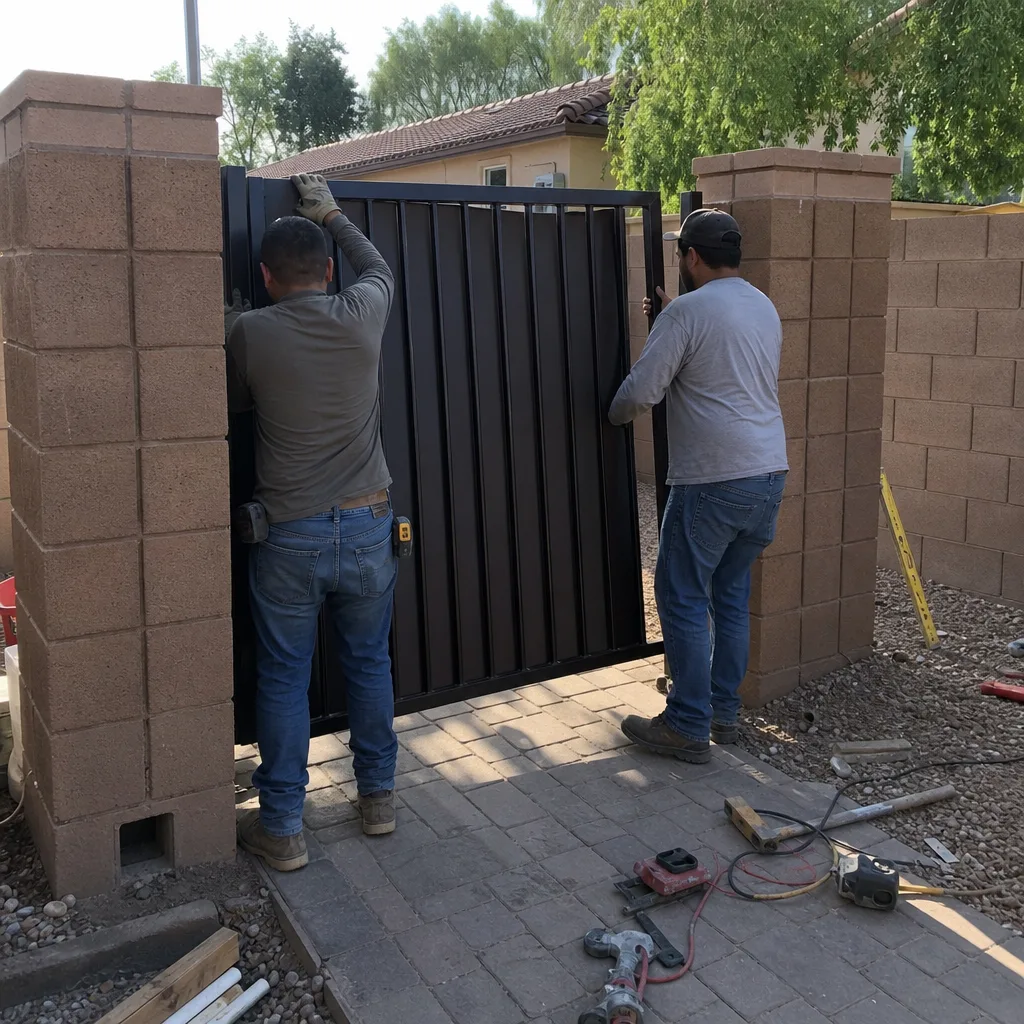
If your gate operator is showing age, winter is the planning season. Gate motor and opener in Gilbert replacement requires measurement, ordering, and scheduling that doesn’t fit emergency timelines. A dead operator in July means weeks of manual operation while components ship. A planned replacement in January means the gate is automated before spring heat returns.
We measure gate weight, cycle rate, and duty cycle to specify the correct operator from our nine serviced brands. For Gilbert’s heat, we typically specify operators with higher duty ratings than the minimum, knowing that thermal derating reduces effective capacity by 15-20% in summer conditions.
Building Your Annual Gate Care Log
The most valuable thing a Gilbert homeowner can leave for any future technician is a documented baseline. Without it, every new problem requires rediscovery: when was the battery last replaced, what torque were the hinges set to, what did the control board LEDs look like when it was working normally?
We model our documentation on the commercial access-control records Adrian Vance developed starting in 2014. The residential version is simpler but contains the same essential elements.
Minimum Log Contents
- Date and weather at time of service or inspection
- Battery test results: resting voltage, load voltage, replacement date if applicable
- Photo-eye alignment readings: most brands show a signal strength indicator; record the number
- Hardware torque values for hinge bolts, track fasteners, operator mounting
- Control board LED status photographed, not just described
- Lubrication type and date
- Any anomalies or changes from previous inspection
Photo Organization
Date-stamped photos in a dedicated album, cloud-backed. Not scattered across text messages and camera rolls. The photo that proves a crack was present in January, not caused by the March wind event, can save thousands in disputed repair costs.
Under Haven Standard Clause 4, we leave every client with a photo log of what we found, what we adjusted, and what we installed. We encourage homeowners to continue that record between our visits. A technician opening a log with three years of dated photos and voltage readings starts from knowledge, not guesswork.
Common Mistakes to Avoid
- Skipping pre-monsoon battery testing because “it worked fine last year.” Gilbert heat degrades batteries predictably; “fine last year” means nothing about load capacity this season.
- Using a pressure washer on gate automation components. Water at pressure drives moisture past seals designed for rain, not directed spray. We replace control enclosures every February for homeowners who “cleaned” their gate system in October.
- Applying lubricant in May because the gate squeaked. Summer application attracts dust, creates abrasive paste, and accelerates wear. Wait for November.
- Ignoring the manual release mechanism until it’s needed. The keyed release on a FAAC 415 or Linear LS220 should operate smoothly with moderate hand pressure. If it hasn’t been tested in a year, corrosion may have seized it.
- Calling for “adjustment” when the gate behaves erratically after a storm. Erratic behavior after electrical weather is almost always component damage, not misalignment. Adjustment masks the problem until catastrophic failure.
- Failing to document surge damage immediately. Insurance adjusters question claims filed weeks after the event. Photo and diagnose within 48 hours.
- Assuming winter mildness means no maintenance needed. The winter window is when safe lubrication, weld repair, and planned replacement happen. Skipping it compresses all maintenance into emergency summer calls.
When to Call a Professional
Call a technician when the gate makes unfamiliar noise, fails to complete cycles, or behaves differently after weather events. Call when you smell ozone, see scorch marks, or find the manual release seized. Call when your annual log shows a trend, declining battery voltage or loosening hardware, that you don’t have the tools to reverse.
We don’t recommend homeowner electrical work on gate systems. The 120V supply, high-torque mechanical components, and safety-system interlocks create multiple hazard categories. A gate that closes unexpectedly can cause serious injury; a control board miswired by guesswork can energize the frame.
Vance Gate Repair Gilbert offers free estimates in Gilbert. Call (520) 482-3109. A live person answers 24 hours a day. We’ll review your annual log if you have one, inspect what you haven’t documented yet, and give you a written price before any work starts.
Frequently Asked Questions
Professional seasonal inspection and maintenance in Gilbert typically runs $120-$180 per visit, with most homeowners needing two visits annually, pre-monsoon and post-monsoon. Battery replacement adds $85-$140 depending on capacity. We provide written pricing before any work begins under Haven Standard Clause 1. Call (520) 482-3109 for an exact quote, estimates are free.
Yes, most Arizona homeowners policies cover surge damage to permanently installed gate operators if you document properly. Photograph damage before any repair, record storm timing, and obtain a written technician diagnosis specifying “electrical surge” as cause. We provide this documentation on every surge-related call in Gilbert.
Surge-damaged components often survive initial impact but fail under the stress of renewed use when temperatures drop and homeowners resume normal gate cycles. Capacitors weakened in July lose residual capacity over August, then fail on the first cool-morning start in September. This pattern is so consistent in Gilbert that we schedule extra post-monsoon inspection capacity every year.
We service nine major automation brands: LiftMaster, FAAC, BFT, Linear, Viking, Ghost Controls, DoorKing, Elite, and Mighty Mule. One company that can work on whatever motor is already installed, rather than steering you toward replacement with a different brand. For gate installation in Gilbert, we specify based on your gate’s weight, cycle rate, and duty requirements.
In Gilbert’s climate, yes. Summer heat thins lubricant and attracts dust that forms grinding paste. Winter temperatures allow lithium grease to stay where applied and provide protection through the spring heat return. Lubricating in May or June typically requires re-lubrication by September and accelerates component wear.
Check the status LED against the manufacturer’s guide, inspect for physical damage or swelling, and note the installation date. Replace any surge protector over 36 months old, or immediately after it absorbs a significant surge. Indicators vary by brand: some show green for protected, others use separate “protected” and “grounded” lights. When in doubt, replace. The $40 protector prevents the $600 board replacement.
The Bottom Line
Gilbert gate care follows the rhythm of desert weather, not a four-season calendar. Pre-monsoon preparation in May and June prevents the failures that peak in September. Monsoon protocols in July and August protect against surge damage and document it when it occurs. Post-monsoon inspection in September and October catches the deferred failures before they strand you. Winter maintenance in November through February is the only safe window for lubrication, weld repair, and planned operator replacement.
The homeowners who spend least on gate repair over a decade are not those who buy the most expensive equipment. They’re those who keep an annual log, perform interval-appropriate tasks, and call for inspection at the first sign of change rather than the first complete failure. Documentation is cheaper than rediscovery. A written price before work starts is cheaper than surprise invoices. And a technician who can open a three-year photo record starts from knowledge, not guesswork.
Written by Adrian Vance, Owner at Vance Gate Repair Gilbert, serving Gilbert since 2014.