
Free on-site gate assessment - hinges, posts, and your LiftMaster or Nice gate operator checked before anything is quoted
The assessment is free and the quote is the invoice.
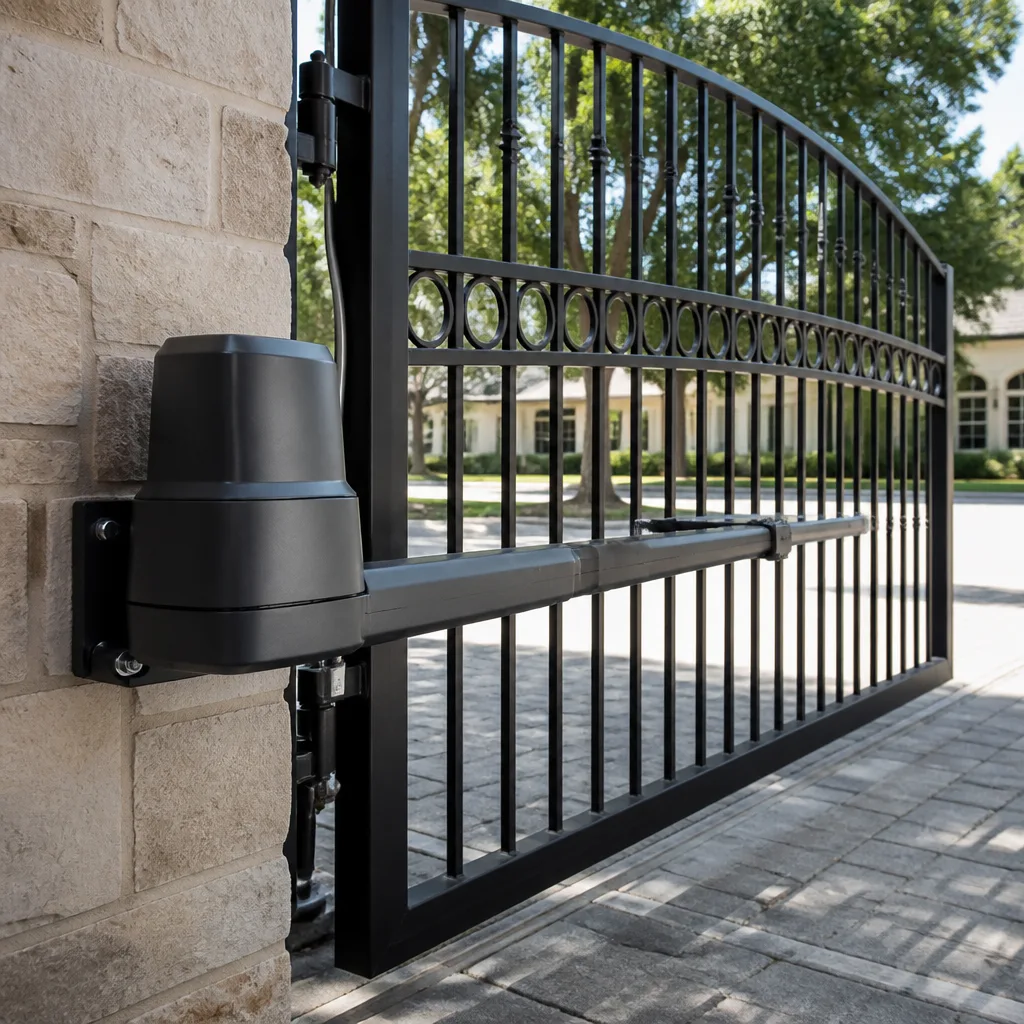
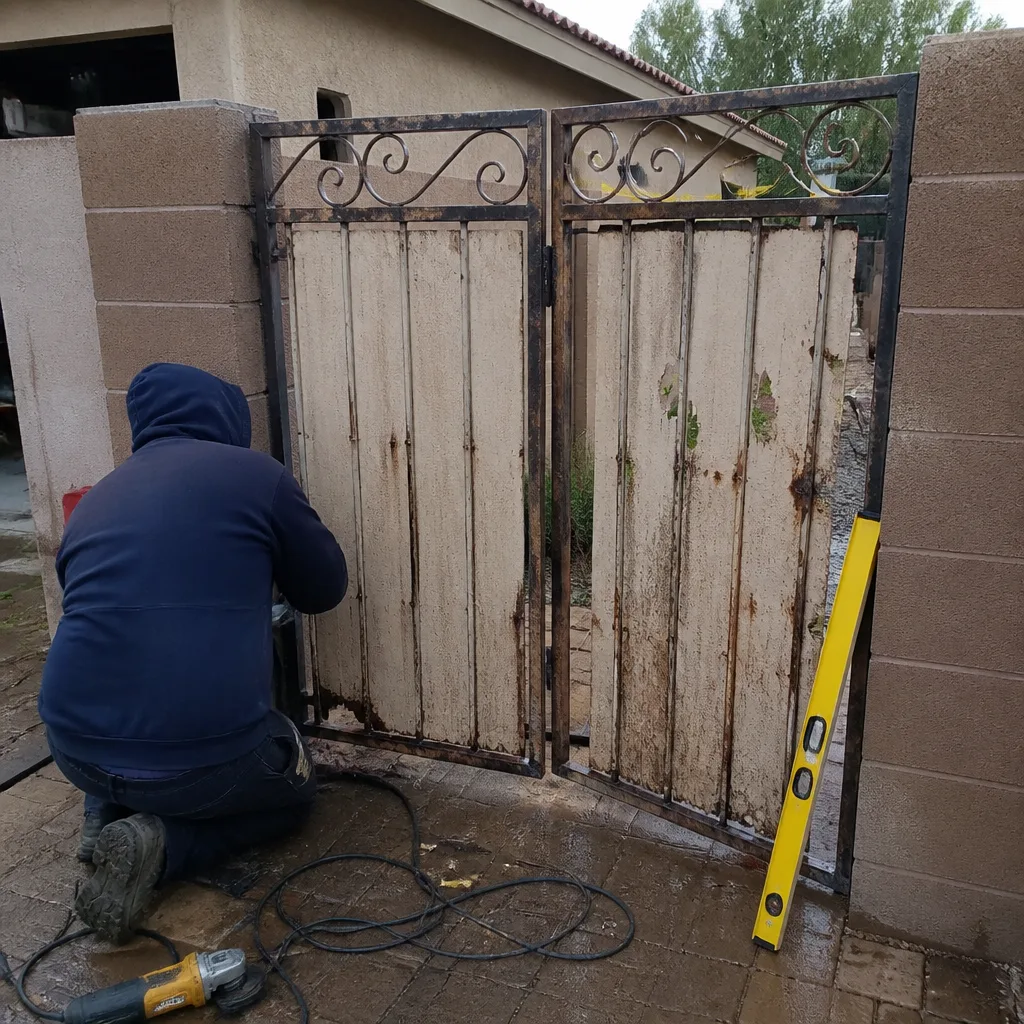 Before
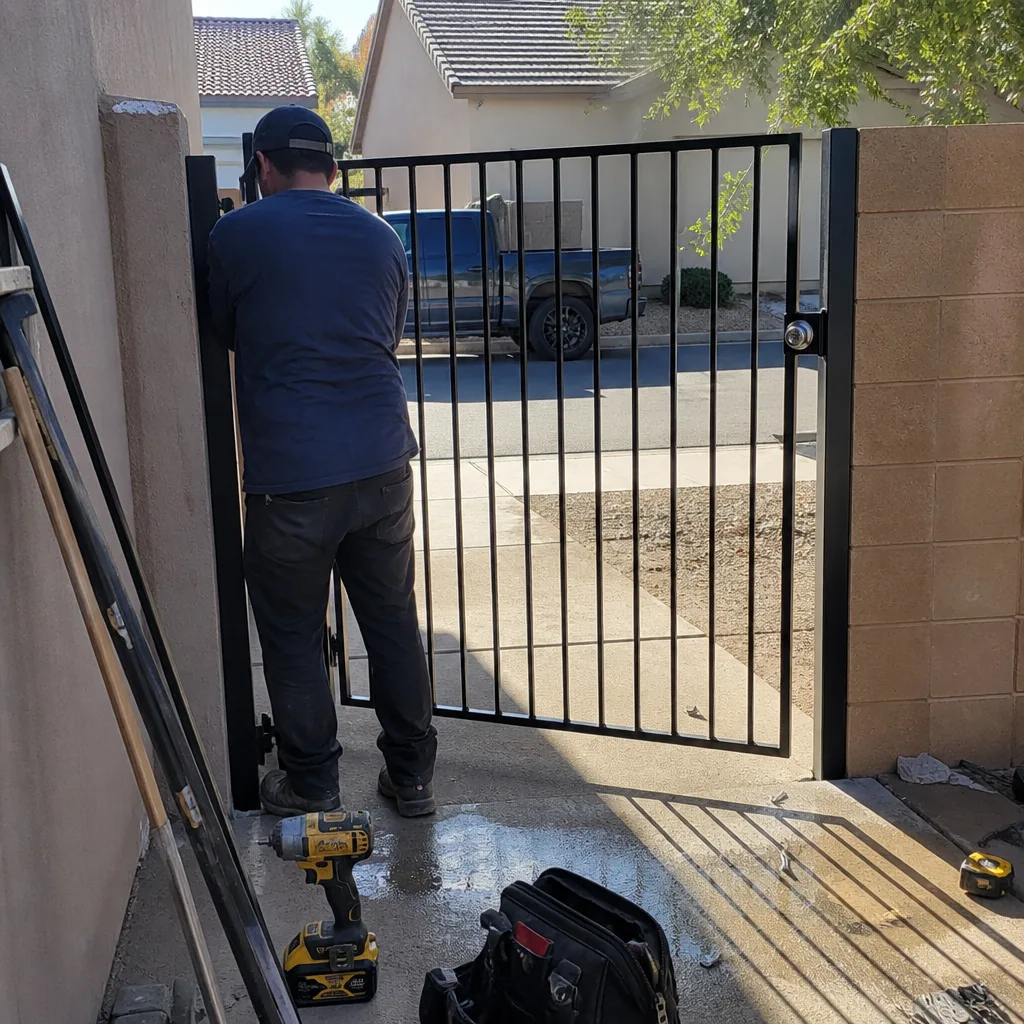 After
After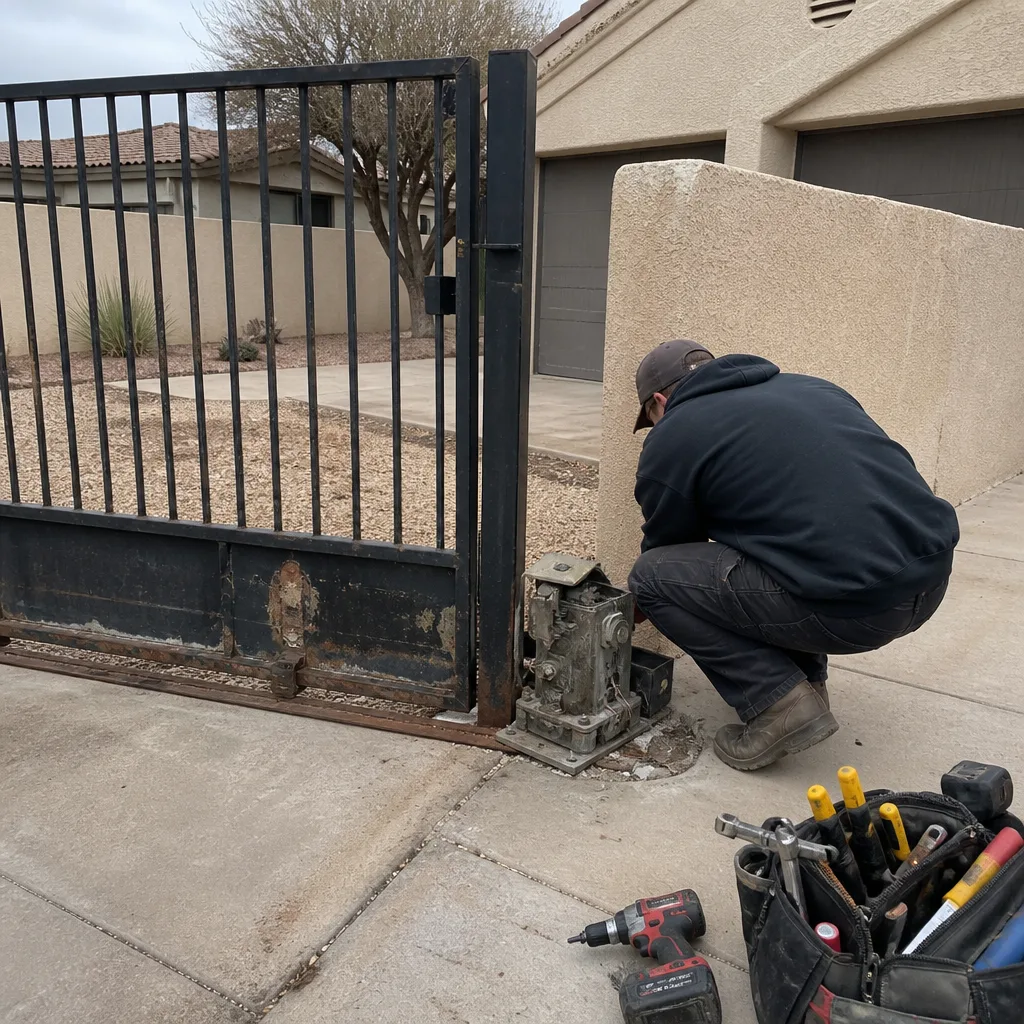 Before
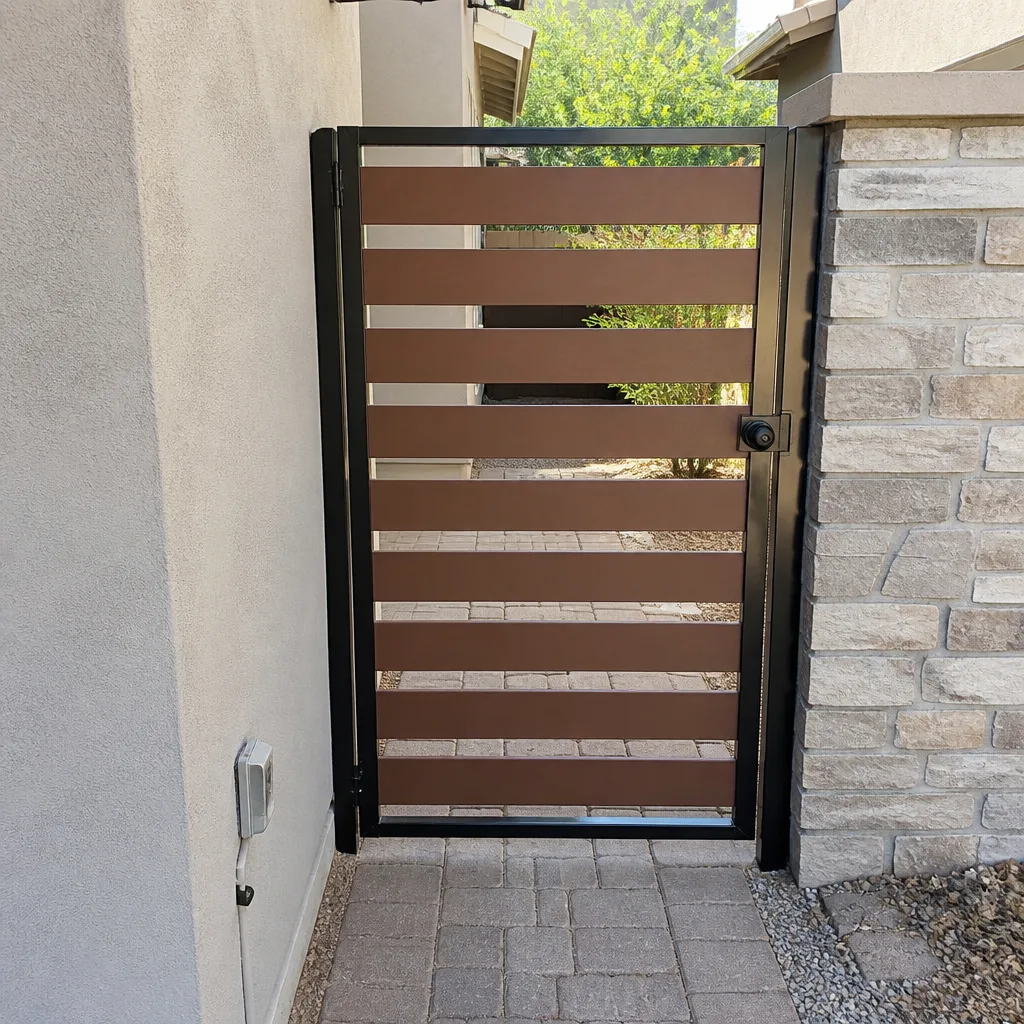 After
After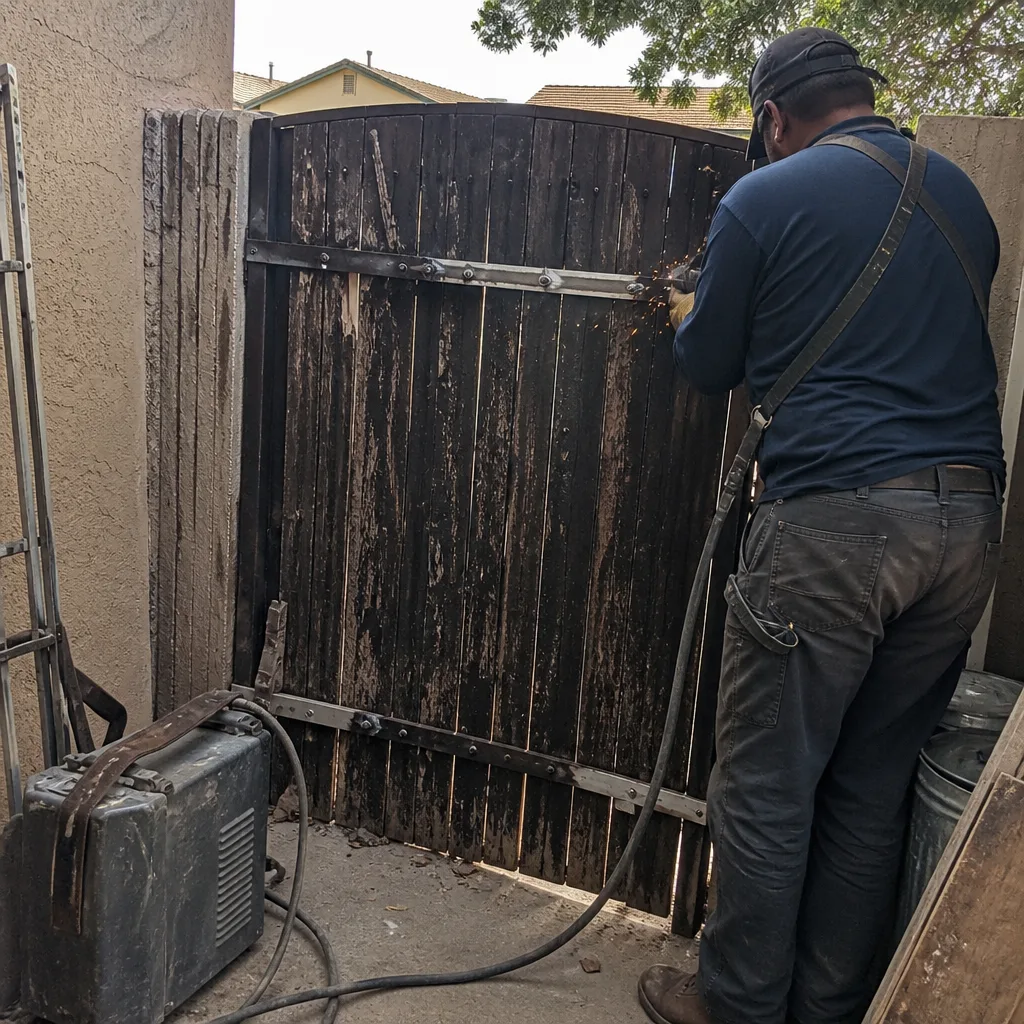 Before
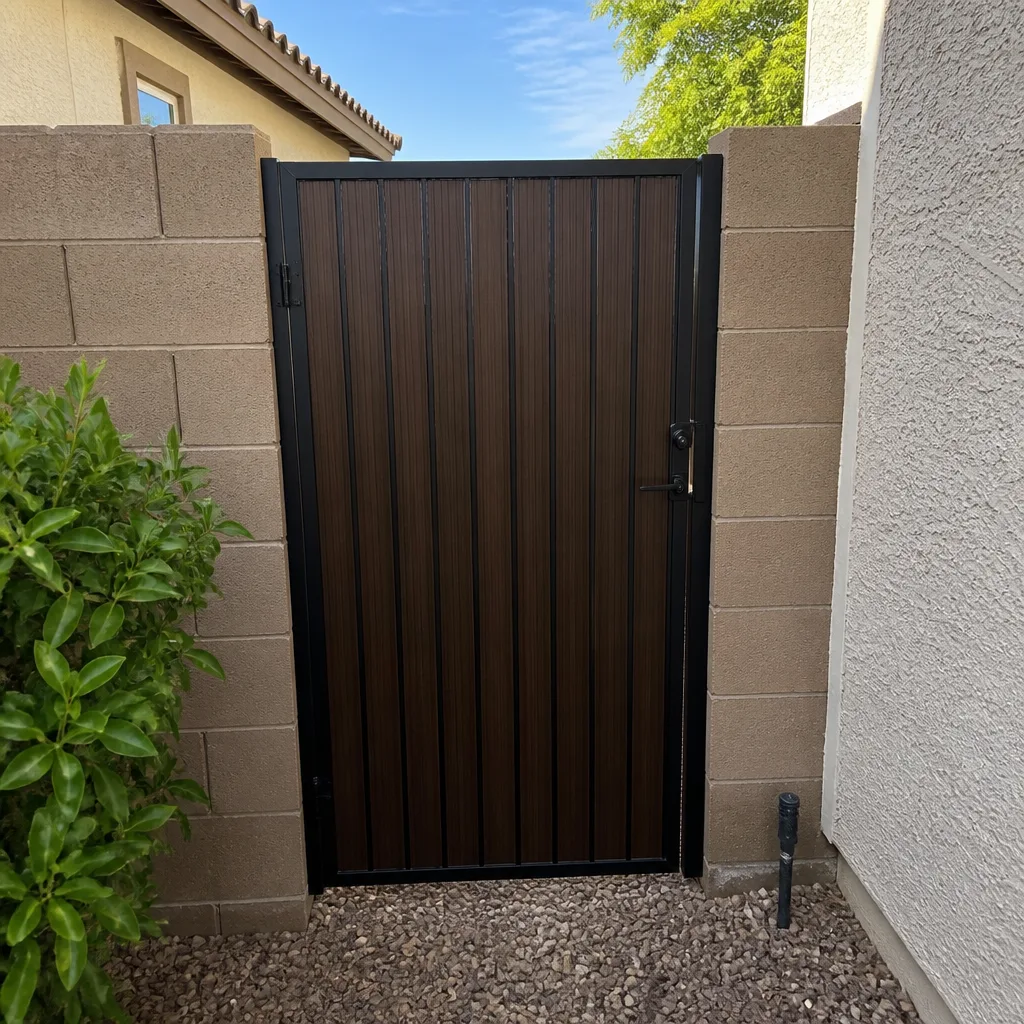 After
AfterDoorKing Access Control Installation: The Gilbert Owner’s Guide
DoorKing access control installation in Gilbert typically runs $1,200-$2,800 for a complete keypad or telephone entry system, depending on whether we’re wiring a single-family driveway gate or a multi-tenant commercial entry. Most residential DoorKing 1802 or 1812 telephone entry systems we install are quoted, priced in writing, and completed within one scheduled day. We stock DoorKing-compatible components on our trucks throughout Gilbert, including the Power Ranch and Agritopia areas where we’ve replaced heat-fatigued entry systems after multiple Arizona summers.
Most owners realize their DoorKing access control is failing when the keypad stops responding to codes that worked yesterday, or when visitors press the call button and hear static instead of ringing through to the house phone. In Gilbert’s climate, the failure pattern is usually gradual: intermittent beeps, dimmed displays, then total silence.
Which DoorKing Models This Applies To
DoorKing has manufactured entry systems across several series, and the part you need depends on the model number stamped on the unit’s faceplate or inside the housing. We regularly install and replace the 1802 and 1812 telephone entry systems for residential gates in Gilbert, the 1833 and 1834 multi-tenant systems for townhome communities, and the 1835 wireless entry units where trenching for conduit isn’t practical.
To identify your system, check the silver label inside the housing door. The model number will start with “18” followed by two digits. Note the firmware revision as well, printed on a smaller sticker near the main board: a 1812 running revision 4.1 or earlier cannot accept the newer proximity card readers without a board swap. This is a compatibility gotcha we’ve run into at several Gilbert HOAs that ordered card readers online and found them physically compatible but electronically unrecognized.
For the keypad membrane itself, DoorKing uses two part families: the 8066-080 series for 1800-series residential units and the 8066-185 series for 1900-series commercial pedestals. The mounting hole pattern differs by 3/8 inch, which matters if you’re sourcing your own part. We carry both OEM DoorKing membranes and quality aftermarket equivalents from Security Brands on our trucks; the aftermarket units match the tactile response and carry a comparable warranty at roughly 15% lower cost.
Signs Your DoorKing Access Control Installation Is Failing
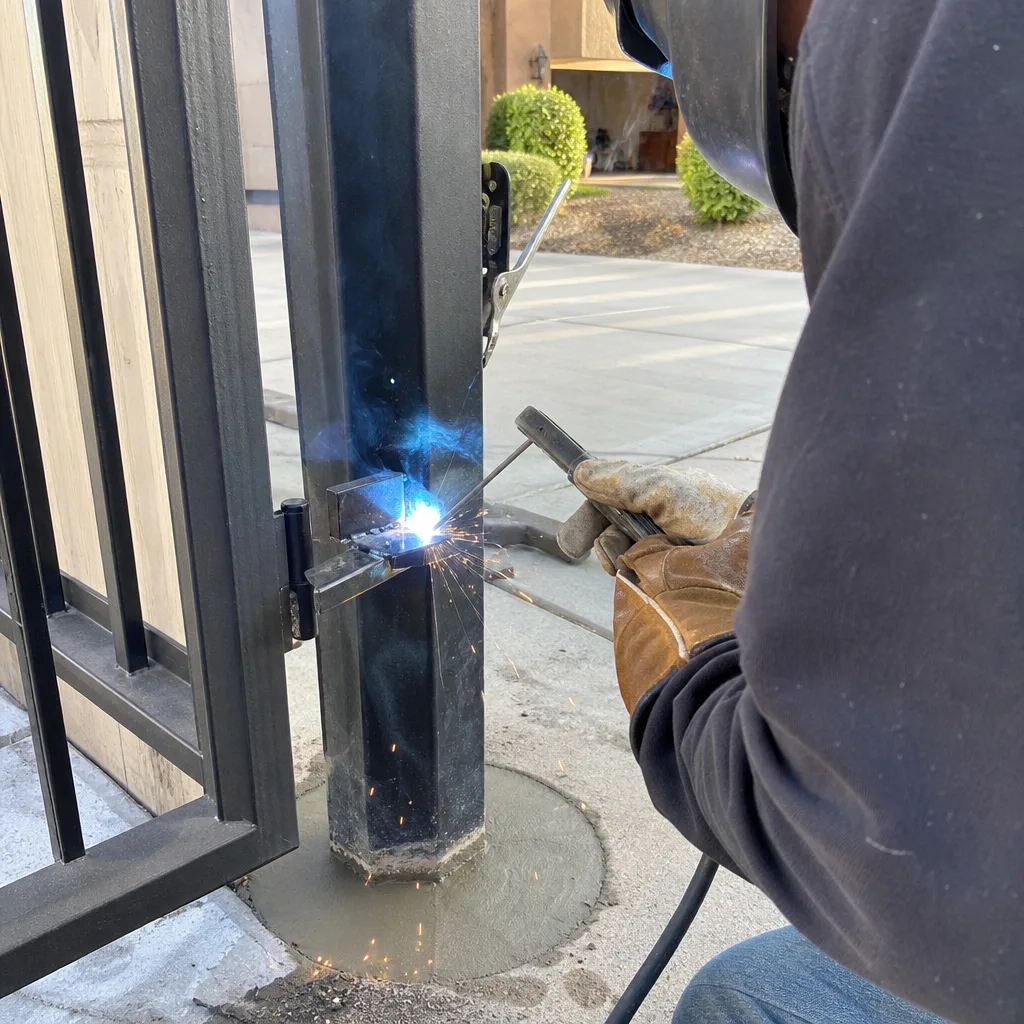
- Keypad buttons require multiple presses to register. The silicone membrane beneath the buttons has cracked from UV exposure and thermal cycling. In Gilbert, we see this accelerate after three to four summers on south-facing pedestals with no shade.
- Display is dim, flickering, or shows incomplete characters. The backlight inverter or the LCD ribbon cable is degrading. Heat causes the adhesive on the ribbon to release; the fix is either cable replacement or full display module swap.
- Call button dials the house but drops after two rings. The relay that seizes the phone line is pitting from repeated arcing. DoorKing specifies a 24V relay in this position; we’ve found that aftermarket relays rated for 30V last longer in Arizona’s low-humidity, high-dust environment.
- Gate opens on its own at odd hours. The main board’s clock circuit is drifting, or the programmable timer has corrupted its memory. This is more common on 1833 units running firmware below revision 5.0; the update resolves it, but requires a laptop connection at the pedestal.
- Proximity cards work intermittently or not at all. The reader head has lost calibration, or the antenna coil inside the housing has shifted from expansion-contraction stress. We check this with a known-good card and a field-strength meter; if the read range has dropped below 2 inches, the reader is failing.
 Before
 After
AfterReplacement Cost & What’s Included
In Gilbert, a complete DoorKing access control installation breaks down as follows:
| Component / Service | Typical Range |
|---|---|
| DoorKing 1802/1812 telephone entry unit, installed | $1,200 - $1,800 |
| DoorKing 1833/1834 multi-tenant system, installed | $1,800 - $2,800 |
| Keypad membrane replacement only | $280 - $420 |
| Main board replacement with programming | $650 - $950 |
| Proximity reader add-on or swap | $340 - $580 |
| Low-voltage wiring run (per 100 ft of trench) | $180 - $260 |
What drives the range: whether the existing conduit is reusable, how far the pedestal sits from the gate motor and the house phone line, and whether we need to reprogram existing resident codes or start fresh. Every quote we write in Gilbert specifies which of these applies before any work starts, under Haven Standard Clause 1. The 365-Day Done Right Promise covers all completed installations; if the display goes dim or the relay chatters within that year, we return and make it right at no charge.
DIY or Call Us?
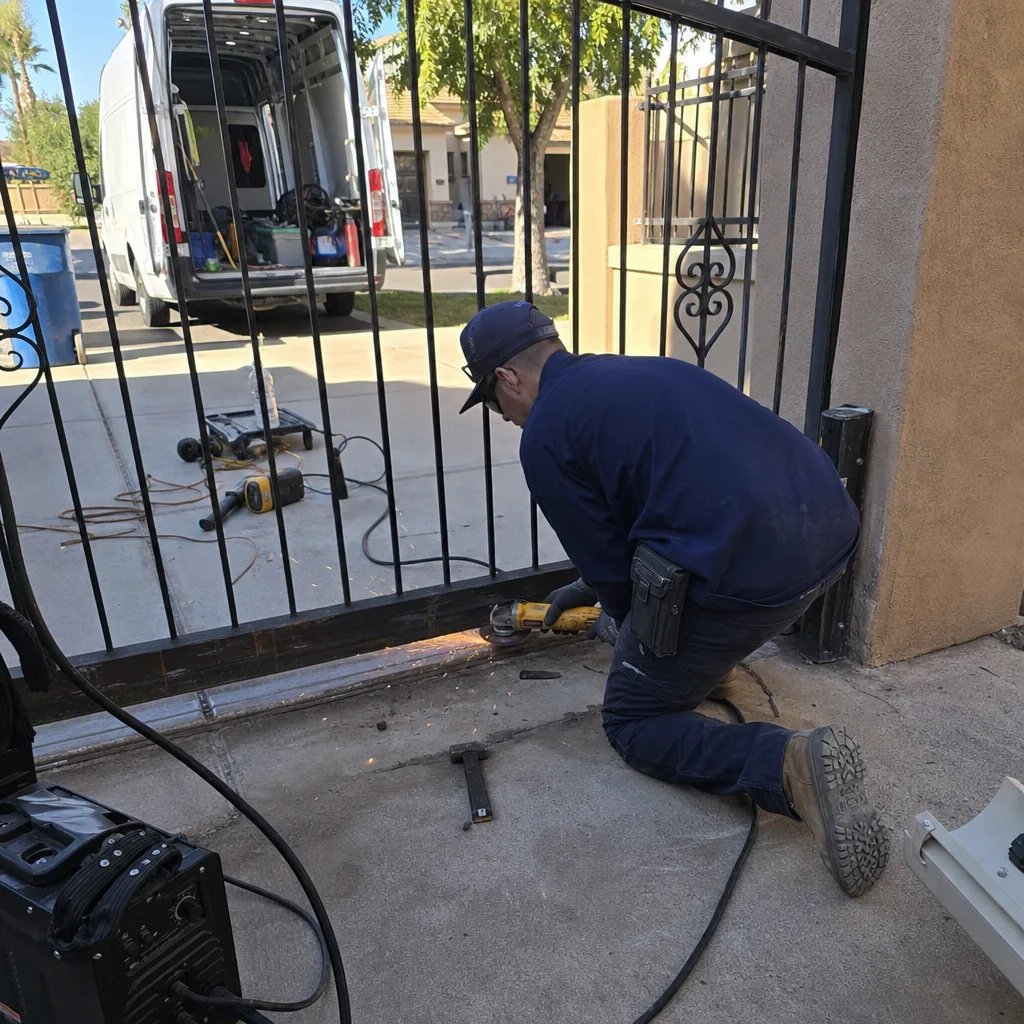
There is one thing a Gilbert owner can safely check: whether the low-voltage transformer inside the house is delivering 16-24 VAC at the pedestal. If it’s not, the problem is upstream and no keypad swap will fix it. Test with a multimeter at the pedestal’s terminal block, power off first.
What goes wrong with DIY on DoorKing systems: programming the call-forwarding sequence requires entering a master code, then a timing sequence, then testing with an actual phone call. Get one digit wrong and the unit locks for 15 minutes. Worse, the main board stores resident codes in volatile memory during programming; lose power mid-process and you’re rebuilding the directory from scratch. We’ve had three calls this year from Gilbert homeowners who bought a replacement unit online, installed it physically, then discovered their firmware revision wouldn’t accept their old directory backup.
We carry programming cables and the full firmware library on our trucks. If you’re staring at a blinking “PROG” light and no manual, call (520) 482-3109.
FAQs
In Gilbert’s climate, a properly installed DoorKing telephone entry system typically lasts 8 to 12 years before major component failure. The keypad membrane is usually the first to go, at 4 to 6 years, because the silicone hardens faster in dry heat and intense UV. We replace membranes preventively on some commercial accounts after five years. For a current condition check on your unit, call (520) 482-3109 and we’ll photograph what we find.
Often yes, if the main board and power supply are healthy. We can replace the keypad membrane, the relay board, or the display module individually, which runs 40% to 60% less than a full unit swap. If the housing itself is cracked or the board has corrosion from irrigation spray, replacement is the better value. We document what we find and give you both options in writing before any work starts.
A direct replacement of an existing DoorKing unit, with no wiring changes, takes 2 to 3 hours including programming and testing. A new installation from scratch, with trenching and low-voltage runs, typically takes a full day. We schedule these, not dispatch for same-day completion, because the conduit path and pedestal location need measurement and agreement first. The written price covers the full scope before we start.
We stock DoorKing-compatible keypads, membranes, main boards, proximity readers, and relays on our trucks throughout Gilbert, including the same-day routes we run through Power Ranch and the Agritopia area. For specialized 1900-series commercial pedestals, we may need one business day to pull from our Phoenix supplier. We’ll tell you exactly what’s on the truck when you call (520) 482-3109.
Written by Adrian Vance, Owner, Vance Gate Repair Gilbert at Vance Gate Repair Gilbert, serving Gilbert and nearby areas.