
Last updated September 22, 2026
Free on-site gate assessment - hinges, posts, and your LiftMaster or Nice gate operator checked before anything is quoted
The assessment is free and the quote is the invoice.

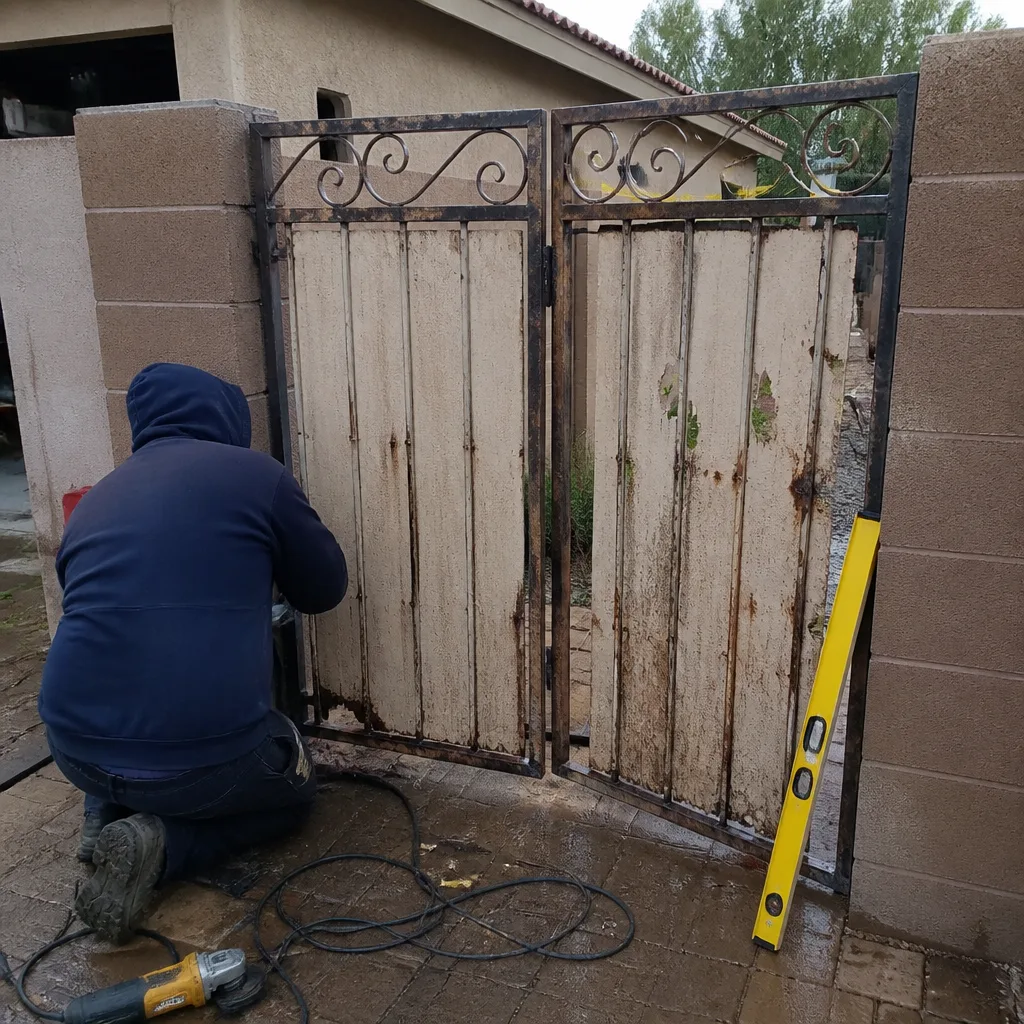 Before
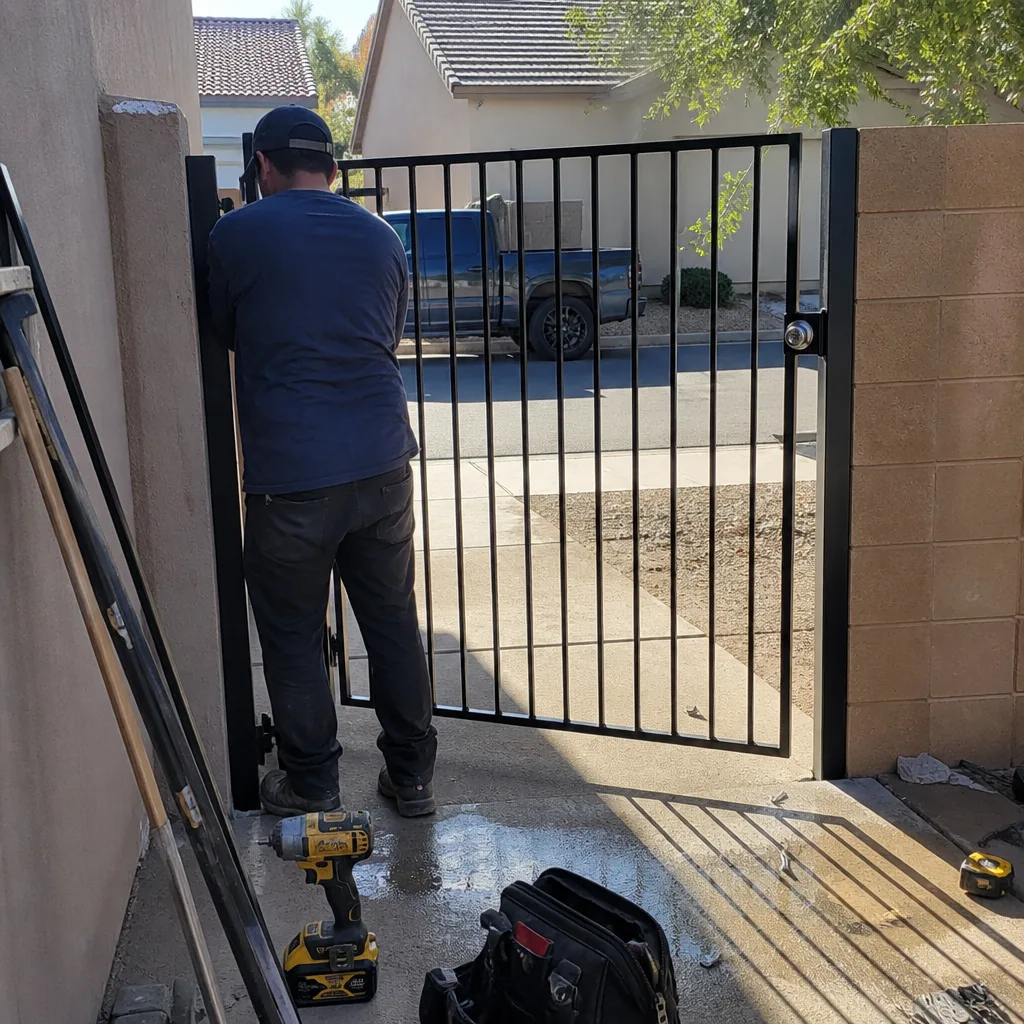 After
After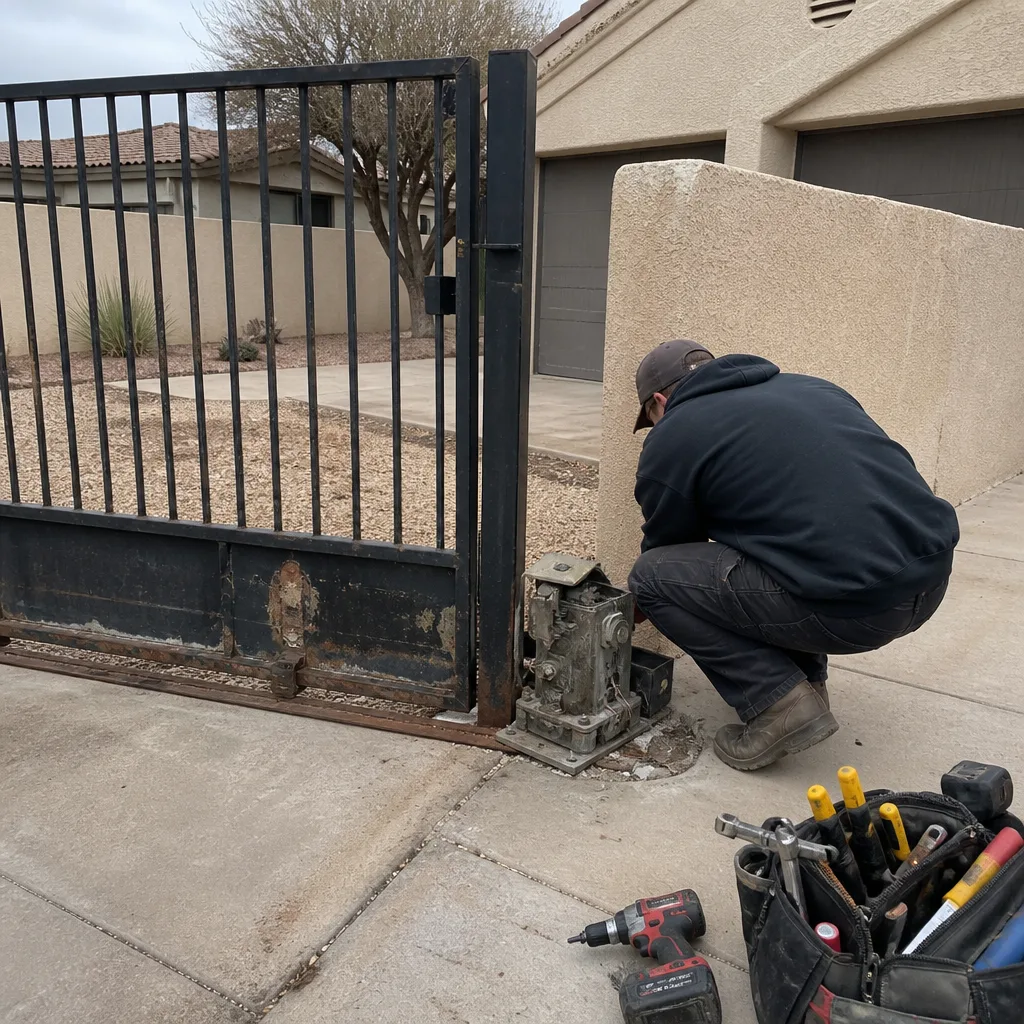 Before
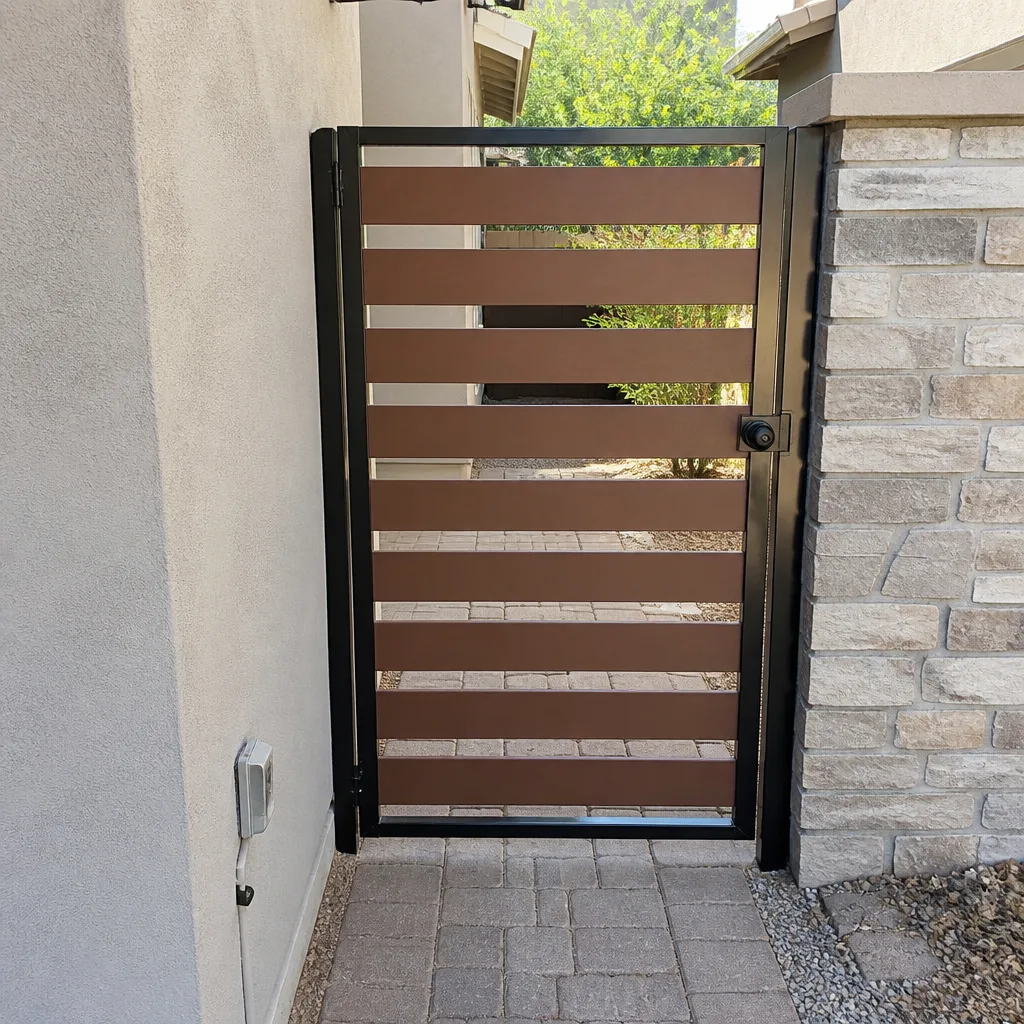 After
After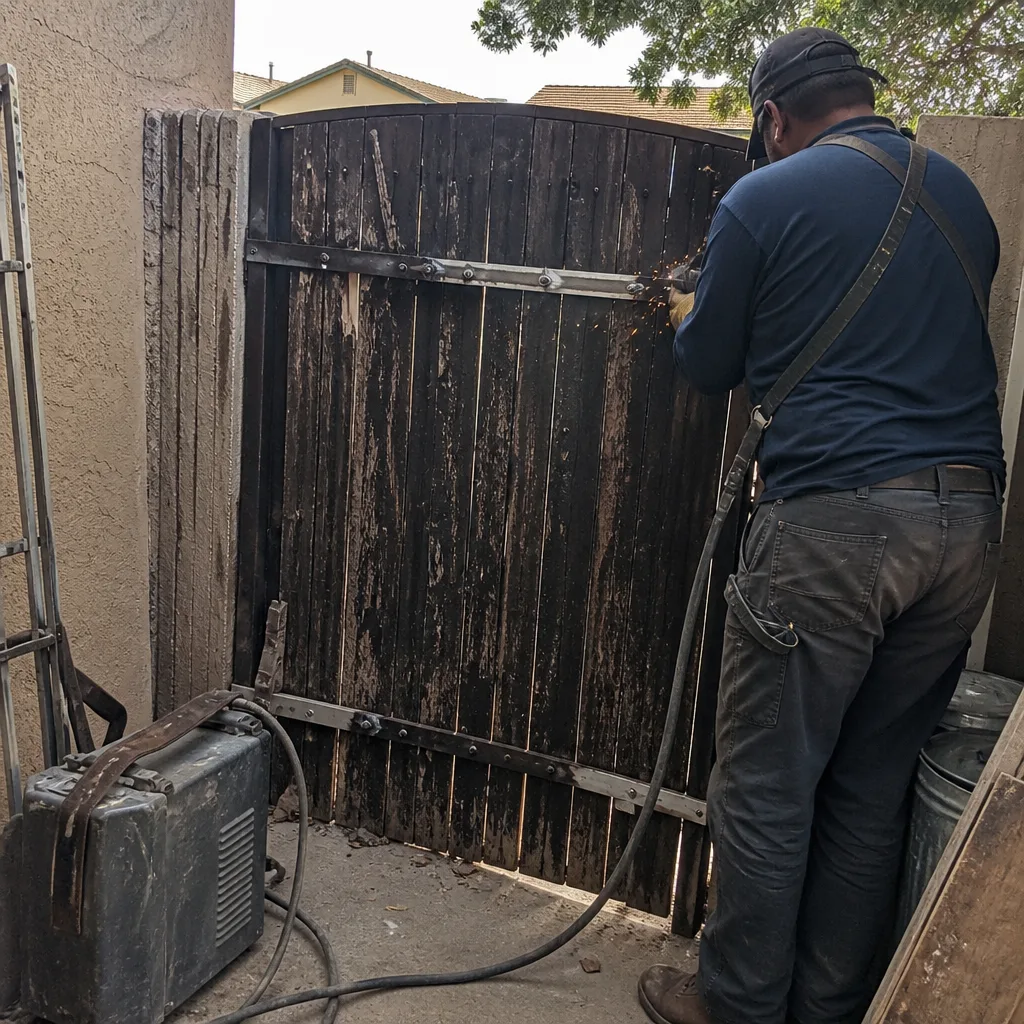 Before
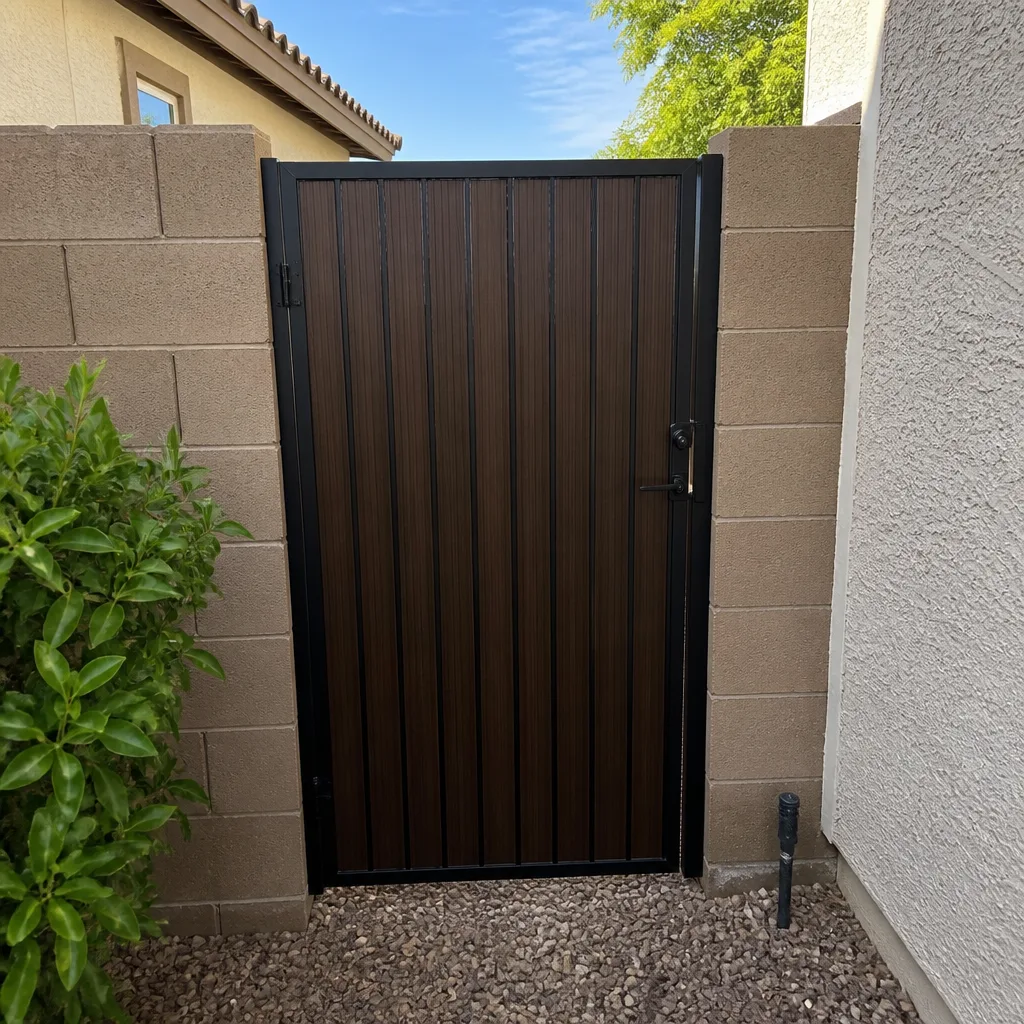 After
AfterGate Repair Permits, Codes & Inspections in AZ: What You Need to Know
Most gate companies in Gilbert will tell you a motor swap is simple - pull the old operator, hang the new one, program the remotes. What they won’t mention is that running new low-voltage wiring from that motor to a control panel or keypad triggers a permit requirement that can stall your project for two weeks. We’ve arrived at jobs in Power Ranch and Agritopia where the homeowner already paid for work that the city later flagged during a routine resale inspection. This guide maps the actual permit triggers in Gilbert’s jurisdiction, explains how Arizona inspectors verify UL 325 entrapment compliance, and shows you how to pull your property’s permit history before a gate repair contractor ever sets foot on your driveway.
Quick Answer
In Gilbert, Arizona, a gate repair typically requires a permit only when the work involves new electrical circuits, structural modifications to the gate frame or support posts, or changes to the entrapment protection system. Simple like-for-like motor replacements on existing mounting brackets usually do not require permitting, though all automated gates must comply with UL 325 safety standards regardless of when they were installed.
Table of Contents
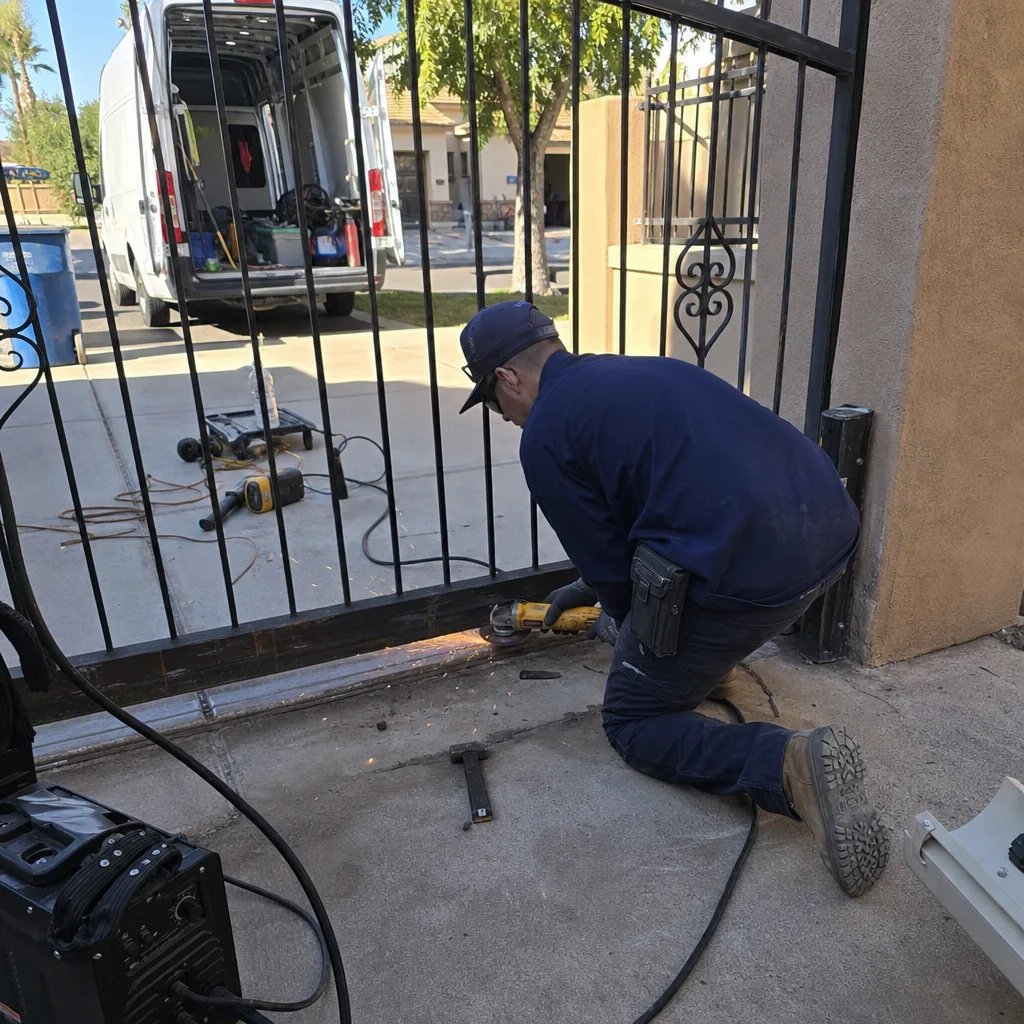
- When Gate Repair Requires a Permit in Gilbert
- Like-for-Like vs. Modified Work: Where the Line Is Drawn
- UL 325 Entrapment Protection: What AZ Inspectors Actually Check
- ROC License Categories and Why Your Contractor’s Paperwork Matters
- How Unpermitted Work Affects Insurance and Home Sales
- How to Request Your Property’s Gate Permit History
- The Inspection Process: What Happens and When
- Costs and Timelines for Permits in Gilbert
 Before
 After
AfterWhen Gate Repair Requires a Permit in Gilbert
Gilbert’s Development Services Department follows the 2018 International Residential Code with local amendments, and their permit trigger for gate work hinges on scope, not cost. A repair that stays within the existing electrical and structural footprint generally moves forward without paperwork. Cross certain thresholds, and you’re in permitted territory whether the contractor mentions it or not.
We’ve found these thresholds through direct coordination with Gilbert plan reviewers and from jobs we’ve had to pause mid-project when a city inspector flagged work already in progress. Here is what actually triggers a permit in Gilbert as of 2024:
- New electrical circuits or wiring runs: Replacing a motor on existing conduit and existing low-voltage wiring is typically exempt. Running new Romex, conduit, or low-voltage cable from the motor to a new location - a relocated keypad, a new intercom, a second photo-eye set - requires an electrical permit.
- Structural modifications to the gate or posts: Welding new brackets to the gate frame, cutting or extending the gate leaf, replacing support posts, or modifying the post footing depth triggers a building permit.
- Changes to entrapment protection devices: Installing new photo-eyes, edge sensors, or loop detectors where none existed before, or relocating existing safety devices to new positions, falls under permit requirements because it alters the UL 325 compliance profile of the installation.
- Conversion between gate types: Changing a swing gate to a slide gate, or vice versa, always requires a permit because the operating mechanics and safety zones change entirely.
- New gate installations: Any gate that did not previously exist at that opening requires full permitting, including zoning review for setback and height compliance.
The Gilbert-specific wrinkle that catches homeowners: the city interprets “new low-voltage wiring” broadly. We’ve seen permits required for running 24-volt control wire to a new keypad location even though the voltage is too low to require an electrician’s license. The permit isn’t about who can do the work - it’s about the city maintaining a record of what safety devices exist at the property. In our experience, this interpretation tightened after 2020, when Gilbert digitized its permit records and began cross-referencing them against home sale disclosures.
Climate factors into this as well. Gilbert’s hard caliche soil and summer monsoon drainage patterns mean that post-footing depth and concrete spec get extra scrutiny. A permit inspection for post replacement will include a probe of the footing depth, and inspectors know that contractors sometimes shortcut the 18-inch minimum in caliche to avoid renting a jackhammer. We’ve had to re-dig footings on jobs we inherited from other companies who skipped this step.
Like-for-Like vs. Modified Work: Where the Line Is Drawn
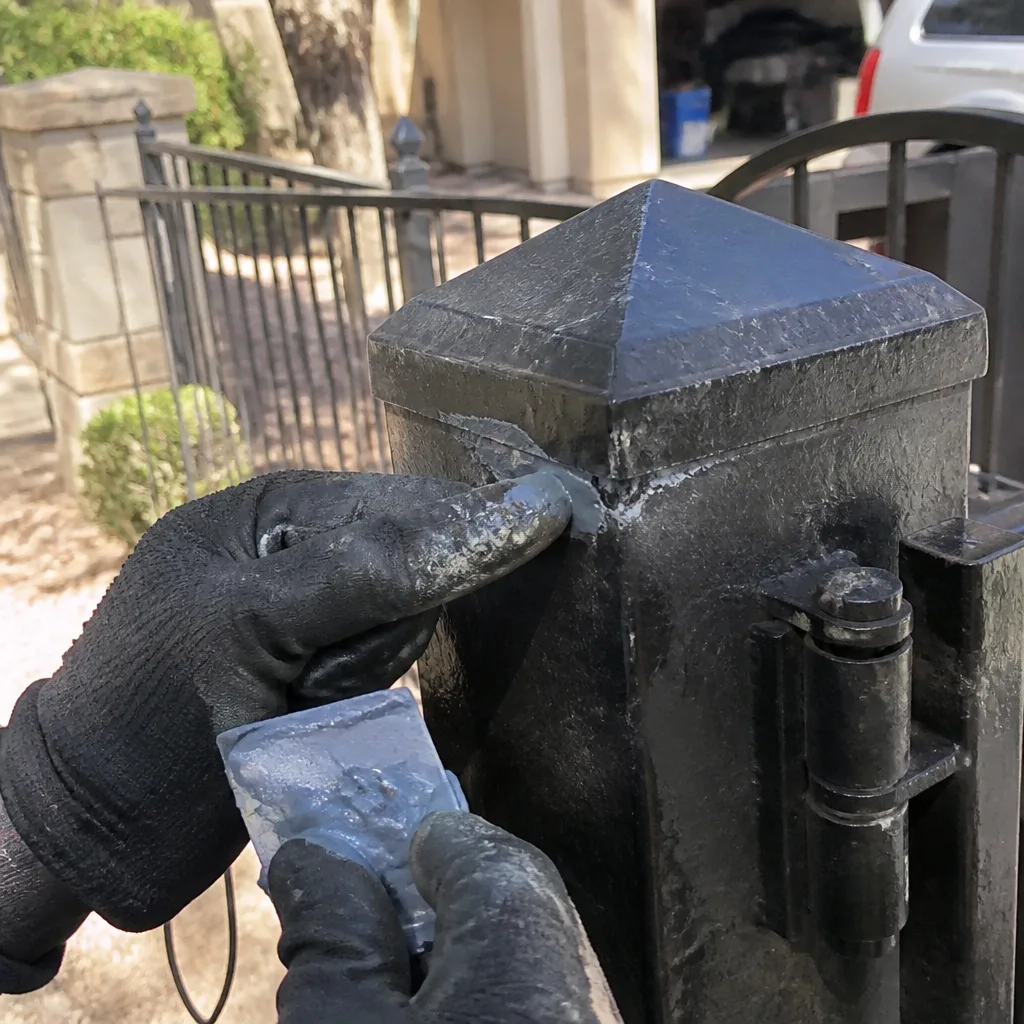
The concept that separates permitted from unpermitted work is “like-for-like replacement,” but Gilbert applies it more narrowly than many homeowners expect. Understanding this distinction before you approve a scope of work prevents the unpleasant discovery that your project needs to pause for permitting after demolition has already begun.
Like-for-like (typically no permit required):
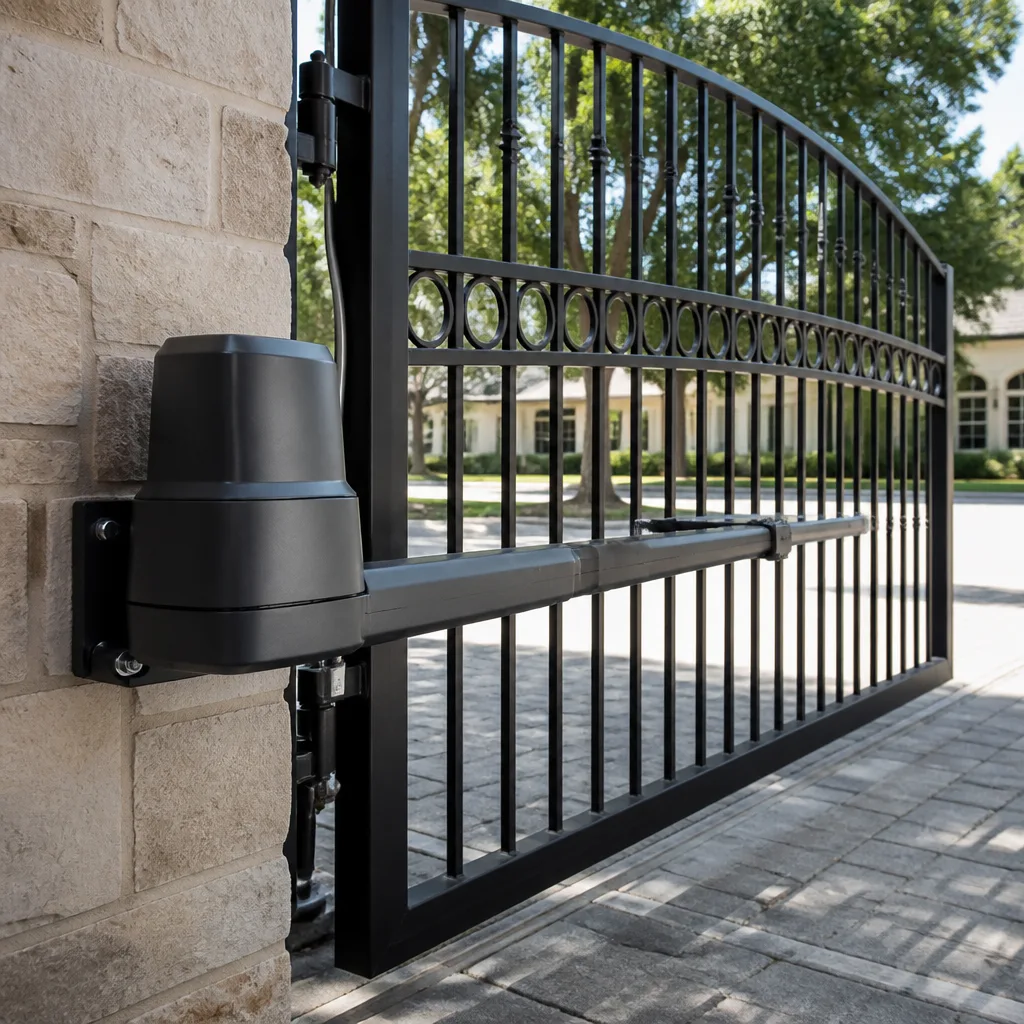
- Motor replacement using existing mounting bracket, existing power supply, and existing control wiring - same brand or different brand, as long as the physical mounting and electrical connections remain unchanged.
- Photo-eye replacement in the exact same location, using the same type of device (through-beam replacing through-beam, retro-reflective replacing retro-reflective).
- Keypad or transmitter replacement with no change to the wiring path or mounting position.
- Limit switch adjustment or replacement without modification to the gate travel path.
- Spring or hinge replacement on a manual gate with no automation components involved.
Modified work (permit typically required):
- Motor replacement that requires a new mounting bracket, new conduit, or relocation of the operator position - even by a few inches.
- Upgrading from a basic photo-eye system to a monitored entrapment protection system (the kind required for UL 325 compliance on all new installations since 2016).
- Adding any access control device - keypad, telephone entry, card reader, vehicle loop - where none existed, or replacing a simple device with a more complex one that requires additional wiring.
- Adjusting gate travel to accommodate a widened driveway apron or modified landscaping that changes the gate’s sweep path.
- Any welding to the gate frame that alters its structural characteristics, including adding pickets, changing the infill material, or reinforcing sagging sections.
We’ve documented this distinction on hundreds of jobs. In one case in the Seville neighborhood, a homeowner hired a company to replace a failed LiftMaster operator with a new unit. The technician discovered the old mounting bracket was corroded from irrigation overspray and fabricated a new one on-site. That fabrication - a structural modification - converted a simple repair into permitted work. The homeowner had no idea until the gate failed inspection during a refinance appraisal two years later. Under the Haven Standard, we photograph the existing bracket before we touch it and flag the homeowner if our assessment shows it needs replacement, so they can decide whether to proceed with permitting or explore alternatives.
UL 325 Entrapment Protection: What AZ Inspectors Actually Check
UL 325 is the safety standard that governs automated gate systems, and Arizona adopted its most recent provisions into state electrical code. Most homeowners in Gilbert have never heard of it. Many gate companies treat it as a checkbox on new installations and ignore it entirely on repairs. Inspectors do not ignore it.
The standard requires that every automated gate have at least one monitored entrapment protection device in each direction of travel and each zone of potential entrapment. “Monitored” means the system can distinguish between a functioning safety device and a failed or bypassed one. An older gate with a single photo-eye that simply stops working when the beam is broken - with no feedback to the control board about whether the eye itself is operational - likely does not meet current UL 325 requirements.
Here’s what Arizona inspectors verify during permitted gate work:
- Photo-eye placement and type: Through-beam photo-eyes (separate transmitter and receiver) must be installed no higher than 6 inches above grade, or supplemental protection must be provided for the gap below. Retro-reflective units count if they’re listed for gate use, but many inexpensive models are not.
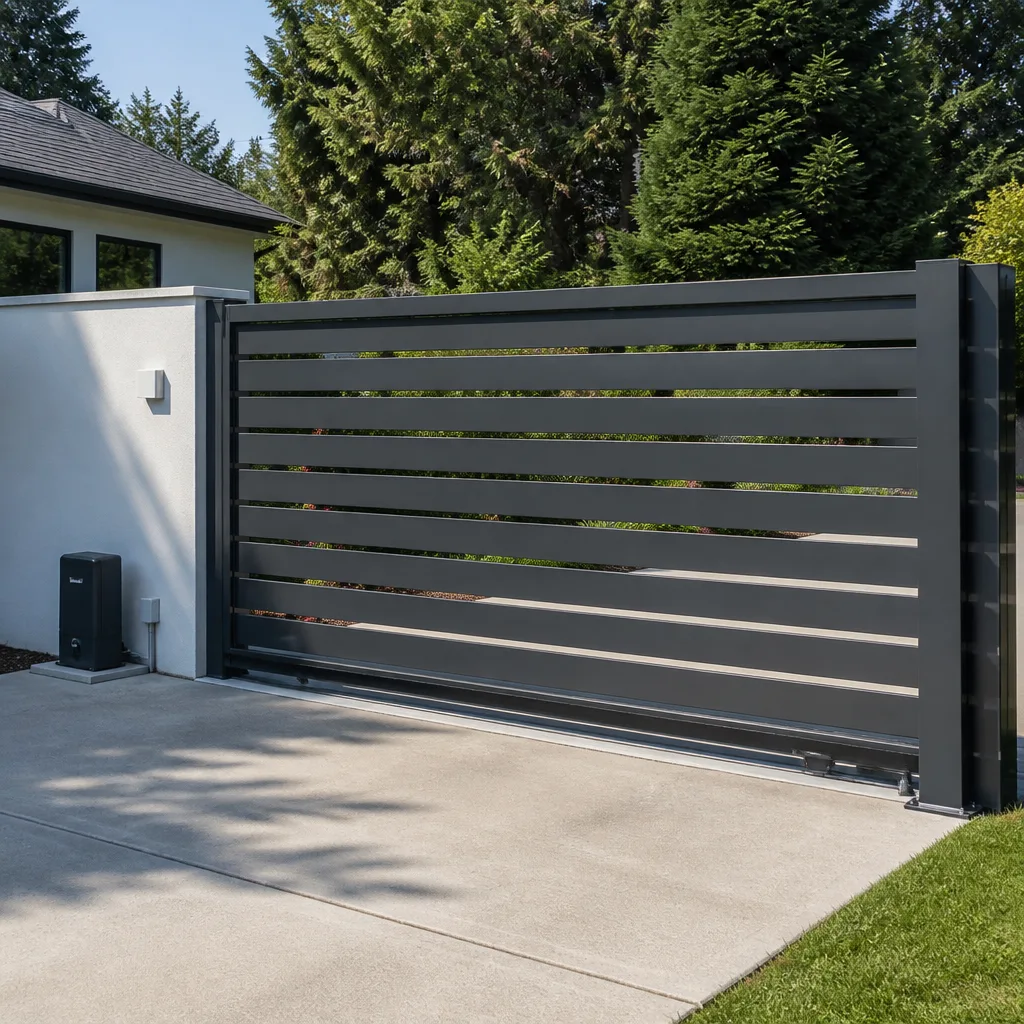
- Edge sensors on leading and trailing edges: For slide gates, contact sensors (sensing edges) are required on the leading edge and often the trailing edge depending on gate geometry. These must be connected through a monitored interface, not simply wired in series with the motor circuit.
- Loop detector functionality: Vehicle detection loops, when present, must be tested for proper sensitivity and must not serve as the sole entrapment protection for pedestrian safety.
- Force limitation: The gate operator must be set to stop and reverse when encountering an obstruction, with force levels tested according to the manufacturer’s specification. Inspectors in Gilbert have begun carrying force gauges on gate inspections, particularly for commercial-adjacent residential properties.
- Warning devices: Audible alarms or flashing lights are required for gates in certain configurations, particularly those with limited visibility from the approach direction.
The critical detail for older gates: UL 325 compliance is not grandfathered. If your gate was installed in 2010 with a single photo-eye and no monitored edge sensor, it was legal then. If you modify that gate now - permitted work or not - the modification must bring the entire entrapment protection system to current standards. We’ve had this conversation with homeowners in Val Vista Lakes and Ashland Ranch who assumed their existing safety setup would suffice. In Gilbert’s interpretation, a motor replacement with modern controls often triggers a full entrapment protection upgrade because the new control board expects monitored inputs and will fault if they’re not present.
We carry gate motor and opener inventory for nine brands, including Mighty Mule, LiftMaster, and FAAC, and we verify UL 325 compatibility before we quote a replacement. Some older operators, particularly early-model Mighty Mule residential units, cannot accept modern monitored safety inputs without adapter modules that cost more than the operator itself. We say so in writing before we start.
ROC License Categories and Why Your Contractor’s Paperwork Matters
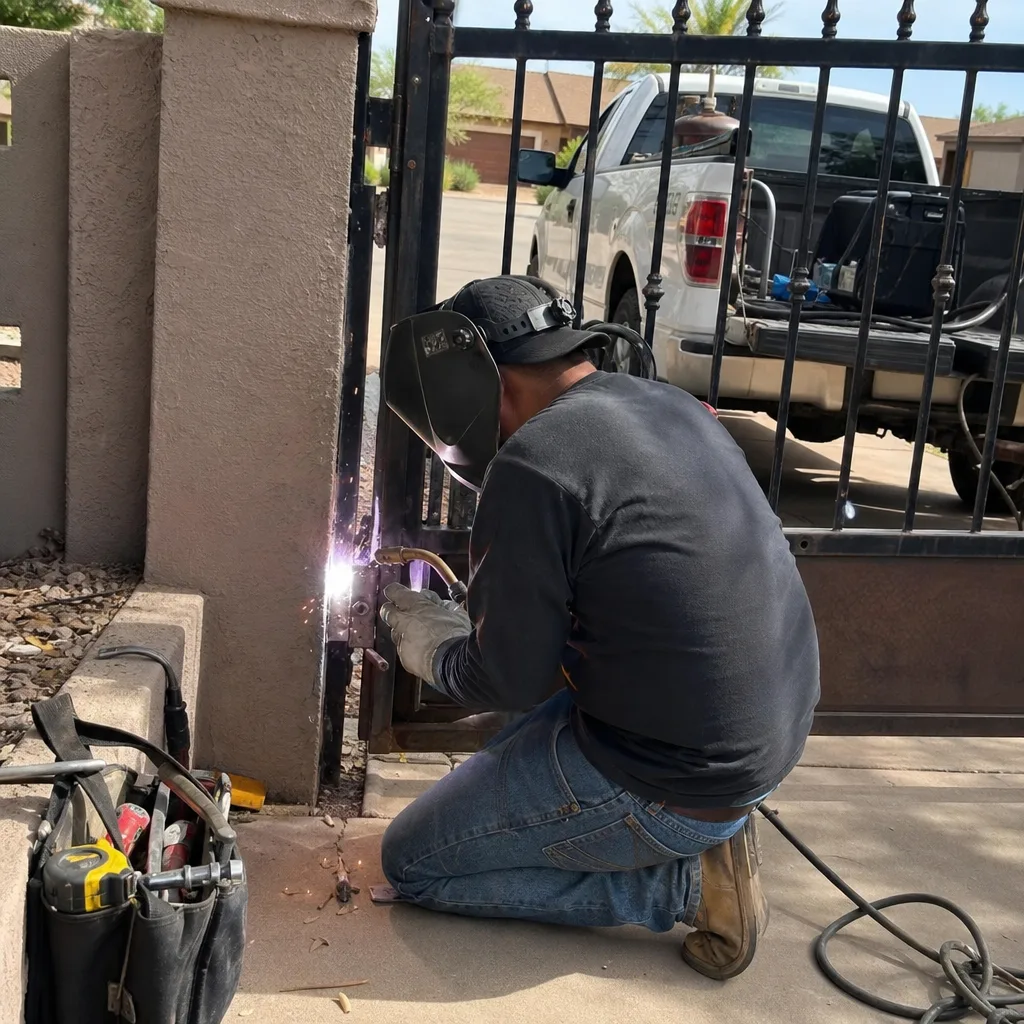
Arizona’s Registrar of Contractors (ROC) issues licenses in categories that determine what work a contractor can legally perform and what recourse you have if something goes wrong. Gate work sits at an intersection of categories, and not every company advertising gate repair holds the correct license for the scope they propose. See our How to Hire a Gate Repair Contractor in Gilbert: A Step-by-Step Guide for details on verifying credentials.
The relevant ROC categories for gate work:
- R-62 (Minor Home Improvements): Covers gate repair and replacement valued under a threshold that adjusts periodically, currently $5,000 including materials and labor. This is the most common license for residential gate companies, but it explicitly excludes new electrical circuits and structural work beyond basic attachment.
- K-11 (Electrical): Required for any new electrical circuit, including low-voltage wiring runs that are part of a new gate installation or significant modification. A company working only under R-62 cannot legally run new conduit or cable from your main panel to a gate location.
- CR-60 (Finish Carpentry): Occasionally relevant for ornamental wood gates, but rarely the primary license for automated gate work.
- A (General Engineering) or B (General Residential): Required for structural modifications involving concrete footings, retaining walls, or gate systems integrated with larger hardscape projects.
The recourse issue is what matters to homeowners. If you hire an unlicensed contractor - or one whose license doesn’t cover the scope performed - and the gate fails, causes injury, or damages your vehicle, their invoice becomes evidence of unauthorized contracting, not a basis for warranty enforcement. Arizona courts have consistently held that unlicensed contractors cannot sue for payment, and homeowners can recover amounts already paid. But that requires litigation, and it doesn’t fix your gate.
We’ve reviewed competitor estimates for homeowners in Gilbert’s Cooley Station and Morrison Ranch developments where the quoted scope clearly exceeded the company’s R-62 limitation - new electrical trenching, concrete post footings, monitored safety system installation - with no mention of the K-11 or B license required. Under the Haven Standard, we note this discrepancy in our free second-opinion review and explain what license category the work actually requires. It’s not about criticizing competitors; it’s about the homeowner understanding what protections they have.
Verify any contractor’s license at roc.az.gov before work begins. Check both the license category and whether the license is in good standing. A suspended license is functionally the same as no license for warranty and recourse purposes.
How Unpermitted Work Affects Insurance and Home Sales
The consequences of unpermitted gate work extend beyond city fines. They surface at the moments when you can least afford delay: an insurance claim after a gate-related injury, or a buyer’s inspection two weeks before closing.
Insurance implications: Homeowner’s insurance policies contain provisions requiring that structures and systems be maintained to code and that modifications be properly permitted. If an unpermitted gate modification - say, a motor upgrade with inadequate entrapment protection - contributes to property damage or personal injury, the insurer may deny coverage based on the unpermitted status of the work. We’ve seen this specifically with gates that injured delivery drivers or damaged vehicles. The insurer’s position is that the unpermitted work voided the policy’s compliance warranty, shifting liability to the homeowner and potentially to the contractor if they can be located and their insurance applies.
The contractor’s insurance may also deny coverage if the work exceeded their licensed scope. A company holding only R-62 that performed K-11 electrical work has, in effect, confessed to unauthorized contracting in their own invoice, giving their insurer grounds to decline the claim.
Home sale implications: Arizona’s residential property disclosure statement requires sellers to disclose known defects and code violations. An unpermitted gate modification discovered during buyer inspection becomes a disclosure item that can trigger renegotiation, repair credits, or deal termination. In Gilbert’s competitive market, a two-week permit resolution delay can cost a sale.
We’ve been called to remediate unpermitted work in the weeks before closing, particularly in 55-plus communities like Trilogy at Power Ranch where HOA architectural review often surfaces permit discrepancies that municipal records missed. The rush fee for expedited permitting and inspection - if the city can accommodate it - typically runs $300 to $500 above normal costs. The alternative is disclosing the unpermitted status and accepting a buyer credit, which we’ve seen range from $1,500 to $4,000 depending on the scope.
The preventive step: before any gate work begins, ask the contractor whether permitting is required for the specific scope proposed. Get the answer in writing. Under Haven Standard Clause 1, we provide this determination in our written quote, with the permit cost itemized separately if applicable. If no permit is required, we state that explicitly, so the homeowner has documentation if questions arise later.
How to Request Your Property’s Gate Permit History
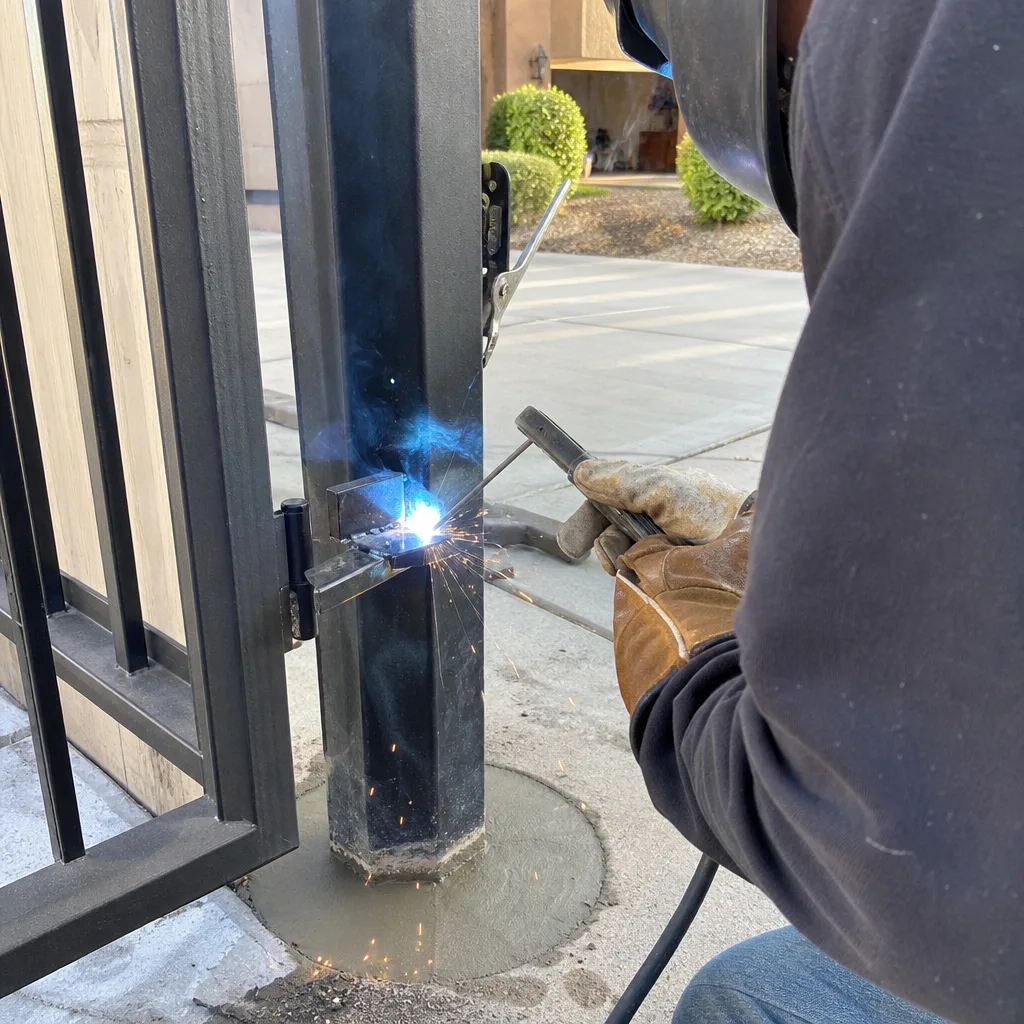
Before you authorize any gate work, you should know what the city already has on file for your property. This history reveals whether previous owners permitted the existing gate, what safety devices were documented, and whether any outstanding violations remain open. In Gilbert, this information is accessible and free, though the process isn’t always obvious.
Step-by-step: pulling your permit history in Gilbert
- Navigate to Gilbert’s Development Services permit portal and select “Permit Search” or “Property History.”
- Enter your property address exactly as it appears on your tax records. Variations in street direction (“E” vs. “East”) or unit number formatting can return incomplete results.
- Review all permits associated with the address, not just those labeled “gate.” Gate work often appears under “electrical,” “building,” or “combo” permits that included multiple scopes. Look for permit descriptions mentioning “automatic gate,” “driveway gate,” “access control,” or specific operator brands.
- Request copies of the approved plans and inspection records for any gate-related permit. These documents show the entrapment protection configuration that was approved, which may differ from what’s currently installed if subsequent unpermitted modifications occurred.
- If the property has an open or expired permit with no final inspection, contact Development Services to determine what’s required to close it. An open permit can block new permits for related work and will appear in title searches.
We’ve used this process to protect homeowners in Gilbert’s Layton Lakes and Spectrum at Val Vista communities from inheriting liability. In one case, a home purchased in 2021 had a gate with a modern FAAC operator and photo-eyes, but the permit history showed only a 2008 installation with a different brand and no safety devices. The current system had been installed without permit by a previous owner, and the new owner faced a $2,800 entrapment protection upgrade to bring it to current standards when they applied for a pool enclosure permit that triggered a full property inspection.
We now include permit history review as a standard step in our pre-work assessment for any property where the gate appears to have been modified since original construction. The 15 minutes spent on this research has saved multiple Gilbert homeowners from discovering unpermitted status at the worst possible moment.
The Inspection Process: What Happens and When
Once a permit is issued, the inspection sequence determines when your gate can return to operation. Understanding this sequence helps you plan around gate downtime, particularly if the gate secures a primary vehicle entrance.
Gilbert’s typical gate inspection sequence:
- Rough electrical inspection: For work involving new circuits, this occurs before any cover plates or conduit are concealed. The inspector verifies wire gauge, grounding, and GFCI protection where required. For gate work, this typically means the conduit run from power source to operator location, with conductors pulled but not necessarily terminated.
- Structural inspection: For post replacement or footing work, this occurs after excavation and formwork but before concrete pour. The inspector verifies depth, rebar placement, and separation from utilities. In Gilbert’s caliche conditions, this sometimes requires a second verification if the contractor hits unexpected rock and adjusts depth.
- Final electrical inspection: Occurs after all devices are installed and operational. The inspector tests GFCI functionality, verifies proper grounding of the operator enclosure, and confirms that the disconnecting means is accessible and correctly labeled.
- Final building inspection: For structural work, this confirms that the completed installation matches the approved plans, with particular attention to gate height, setback from property lines, and visibility from the public right-of-way.
- UL 325 compliance verification: Not a separate inspection type in Gilbert’s system, but incorporated into final electrical and building inspections. The inspector will test photo-eye function, verify edge sensor installation, and may request manufacturer documentation for the safety devices installed.
Scheduling inspections in Gilbert typically requires 24 to 48 hours advance notice through the online portal, with same-day availability rare except for re-inspections of failed items. The practical implication: a permitted gate repair with new electrical work takes a minimum of three business days from permit issuance to final approval, assuming no failures. We’ve had projects stretch to two weeks when inspectors flagged items requiring correction - a photo-eye mounted at 8 inches instead of 6, a disconnect label that didn’t match the panel directory, a loop detector sensitivity set outside the manufacturer’s specified range.
Our documentation practice helps here. Under Clause 4 of the Haven Standard, we photograph every safety device position, every wire termination, and every control board setting before the inspector arrives. If a question arises, we have timestamped evidence of the installation condition. We’ve also found that providing the inspector with the operator’s UL 325 compliance certificate - a document many contractors don’t know exists - streamlines the entrapment protection verification significantly.
Costs and Timelines for Permits in Gilbert
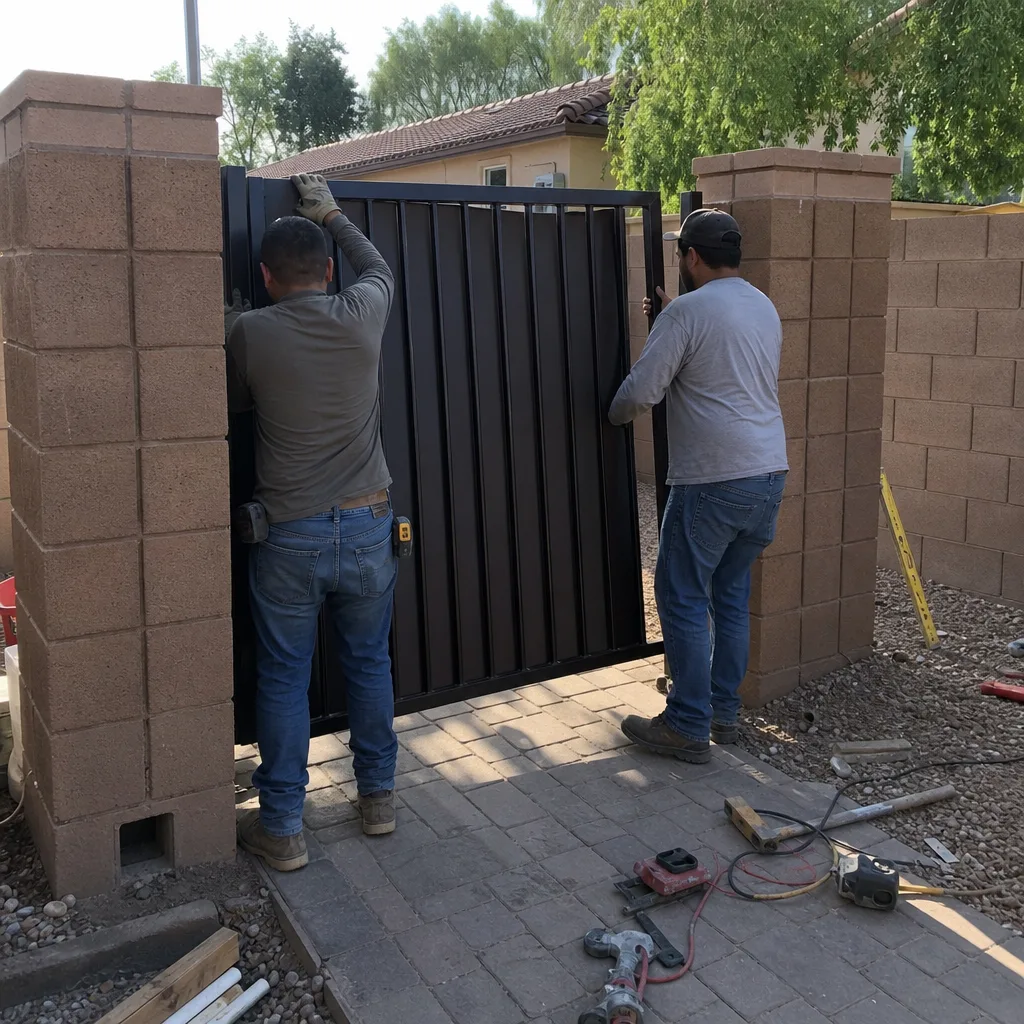
Permit costs in Gilbert are calculated based on project valuation, with gate work typically falling into the lower tiers. The more significant variable is time - both the city’s processing time and the coordination required to keep your project moving.
Typical permit costs for gate work in Gilbert:
| Permit Type | Base Fee | Typical Total with Plan Review |
|---|---|---|
| Electrical (new circuit or wiring run) | $85-$120 | $150-$250 |
| Building (structural modification, new post) | $100-$150 | $180-$320 |
| Combo (electrical + building) | $150-$200 | $280-$450 |
| Expedited plan review (if available) | 50% surcharge | Add 50% to base |
These figures reflect Gilbert’s 2024 fee schedule and include the plan review fee that applies when drawings or specifications must be submitted. Simple electrical permits for like-for-like motor replacement with no new wiring typically don’t require plan review and fall at the lower end. Projects requiring structural drawings - a custom iron gate with engineered wind load calculations, for example - push toward the higher end and may require third-party engineering review that adds $400 to $800.
Timeline expectations:
- Permit application to issuance: 3 to 5 business days for simple electrical permits with no plan review; 7 to 14 business days for building permits requiring drawing review; 2 to 4 weeks for complex projects requiring engineering.
- Inspection scheduling: 24 to 48 hours after permit issuance, with availability varying by season. March through May and September through November are peak construction periods in Gilbert; inspection slots book further out.
- Re-inspection after failure: No additional fee for the first re-inspection in Gilbert; $50 to $75 for subsequent re-inspections of the same item.
- Final approval to operation: Immediate upon passing final inspection, with the approved permit card posted at the electrical panel or gate structure.
We factor permit timelines into every quoted project that requires them. For a homeowner in Gilbert’s Adora Trails neighborhood who needs a gate operational for an upcoming event, we’ll flag whether the permit timeline makes that deadline achievable or whether temporary access solutions are needed. We don’t promise what the city’s schedule can’t deliver.
Common Mistakes to Avoid
- Assuming a motor swap is always permit-free. In Gilbert, the moment new wiring enters the scope - even low-voltage control wire - the permit trigger engages. Ask specifically about wiring before work starts.
- Accepting verbal confirmation that “no permit is needed.” Without written documentation, you have no defense if the city later disagrees. The contractor’s verbal assurance doesn’t transfer liability to them.
- Ignoring the UL 325 gap on older gates. A 2012 installation with a single photo-eye was compliant then. A 2024 repair that touches the control system must bring the entire safety setup to current standards, often at unexpected cost.
- Hiring based on the lowest quote without verifying license category. An R-62 contractor bidding K-11 scope is either unaware of the requirement or planning to perform unlicensed work. Either way, you’re unprotected.
- Failing to check permit history before purchasing a home. Open or expired permits become your problem at closing. A $20 permit search can prevent a $2,000 surprise.
- Concealing unpermitted work from your insurer. If a gate-related claim arises and the insurer discovers unpermitted modifications, coverage denial becomes likely. Disclosure is the safer path, even if it triggers a policy adjustment.
- Scheduling final inspection before all trades are complete. Gilbert inspectors will fail a final if any item from the permit scope remains unfinished, including landscaping restoration or paint touch-up. The re-inspection delay costs more than finishing first.
When to Call a Professional
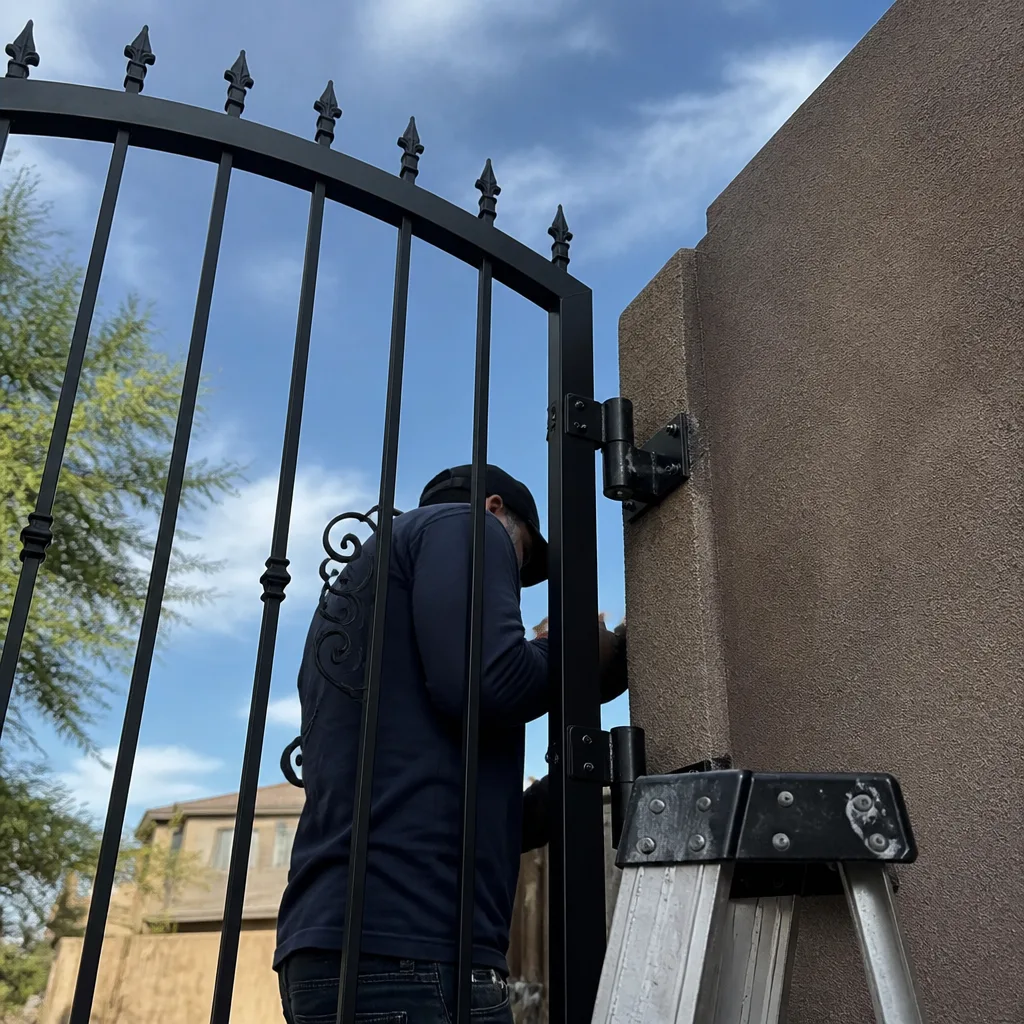
Call a licensed gate contractor when your project involves any electrical work beyond device replacement, any structural modification to the gate or its supports, or any uncertainty about whether your existing entrapment protection meets current standards. The cost of professional assessment is negligible compared to the cost of remediating unpermitted work discovered at sale or claim time.
Vance Gate Repair Gilbert offers free estimates in Gilbert - call (520) 482-3109. Every estimate includes a written scope, a written price, and a permit determination before any work begins. If permitting is required, we itemize the cost and timeline so you can decide with full information. If no permit is needed, we state that in writing for your records. Vance Gate Repair Gilbert home provides additional information about our services and documentation standards.
Frequently Asked Questions
A direct motor replacement using existing mounting hardware, existing power supply, and existing control wiring typically does not require a permit in Gilbert. If the replacement involves new wiring runs, a new mounting bracket fabricated on-site, or relocation of the operator position, permitting is required. Call (520) 482-3109 for a free assessment of your specific setup - estimates are free.
The inspector issues a correction notice listing specific items that must be addressed before re-inspection. You have a limited window - typically 180 days in Gilbert - to complete corrections and schedule re-inspection before the permit expires. The first re-inspection carries no additional fee; subsequent re-inspections of the same item incur a charge. We document every installation to minimize failure risk and handle any needed corrections under our 365-Day Done Right Promise.
Arizona law allows homeowners to perform work on their own primary residence without a contractor’s license, but permits are still required for work that triggers them. The liability risk of self-installed gate automation is significant - improper entrapment protection can cause serious injury, and your homeowner’s insurance may deny claims related to unpermitted or non-compliant work. For safety-critical systems, professional installation with proper documentation protects you beyond the initial cost.
Check for monitored entrapment protection devices - photo-eyes within 6 inches of grade, edge sensors on moving contact surfaces, and a control system that can detect device failure rather than simply responding to beam interruption. Gates installed before 2016 may lack these features. We provide a written compliance assessment as part of our gate repair service in Gilbert, including photographs of existing devices and a clear statement of what would be required to bring the system to current standards.
Yes, if discovered. Arizona’s property disclosure requirements and standard purchase contracts obligate sellers to disclose known code violations. Unpermitted work found during buyer inspection typically triggers renegotiation, repair credits, or deal termination. In some cases, the buyer’s lender may require permit resolution before funding. Checking permit history before listing - and addressing any gaps proactively - prevents closing delays.
For typical residential gate repair and replacement under $5,000, an R-62 (Minor Home Improvements) license is sufficient. For new electrical circuits, structural modifications, or projects exceeding the R-62 threshold, the contractor needs K-11 (Electrical), B (General Residential), or appropriate specialty licensing. Verify any license at roc.az.gov and confirm it covers the specific scope proposed. We provide our license number on every written estimate for direct verification.
Simple electrical permits process in 3 to 5 business days; building permits with plan review take 7 to 14 business days; complex projects requiring engineering review extend to 2 to 4 weeks. Inspection scheduling adds 1 to 2 days after permit issuance. For new gate installation in Gilbert, we provide a written timeline with the estimate so you can plan accordingly - no surprises after you’ve committed.
The Bottom Line
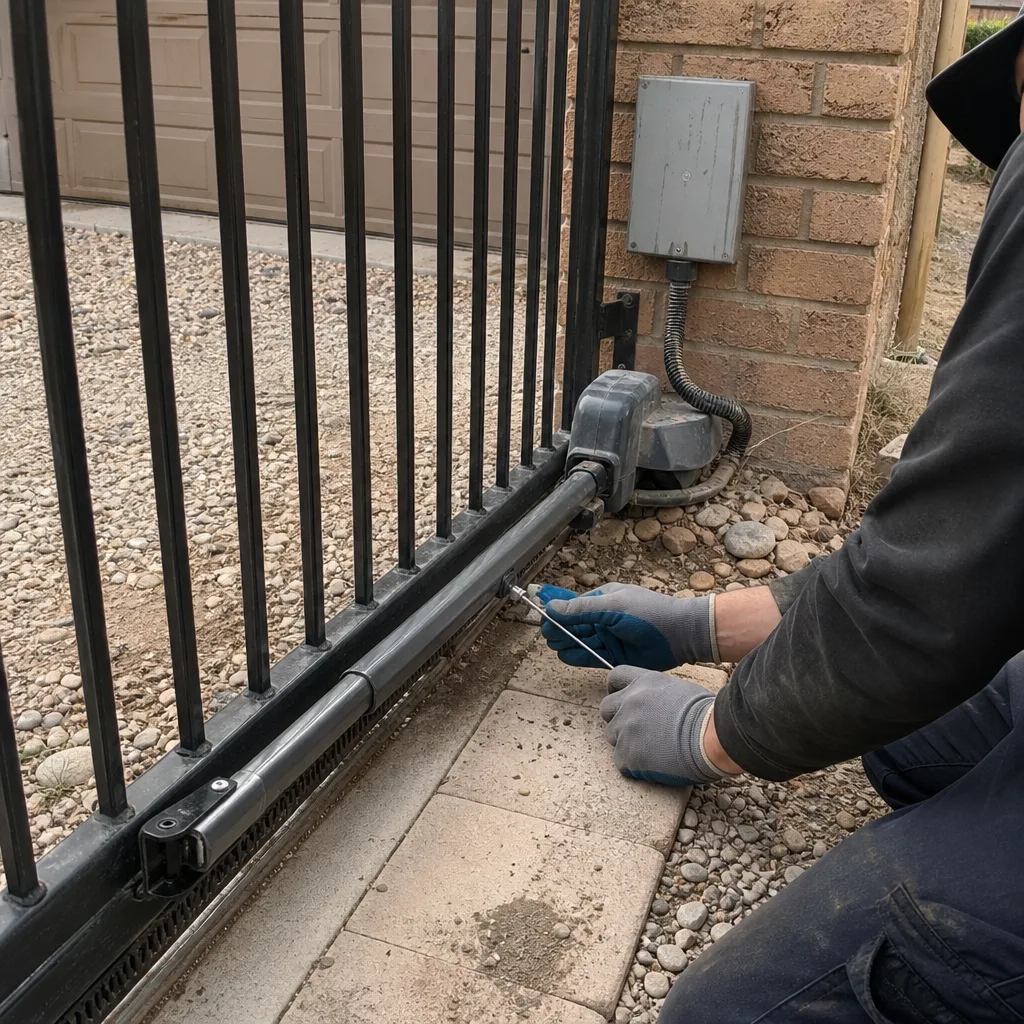
Gate permit requirements in Gilbert aren’t mysterious, but they’re not uniform across project types either. The critical distinction is between like-for-like replacement and modified work - a line that new wiring, new mounting fabrication, or entrapment protection upgrades can cross without obvious warning. Before any gate work begins, verify your property’s permit history, confirm your contractor’s license covers the proposed scope, and get the permit determination in writing. The documentation you gather before work starts becomes your protection at sale time, claim time, and inspection time. For homeowners who want the price visible, the scope defined, and the permit status clear before anyone picks up a tool, that’s exactly what the Haven Standard is designed to deliver. Explore more guides & resources on protecting your property.
Written by Adrian Vance, Owner at Vance Gate Repair Gilbert, serving Gilbert since 2014.